
Roberto Galan and the Legal Blind Spot of a League With No Way Up
**Câu trả lời cốt lõi**: Roberto Galán, thủ môn người Tây Ban Nha của Atlético Morelia tại Liga de Expansión MX, tố cáo các ông chủ Liga MX đơn phương xóa bỏ suất thăng hạng bảy ngày trước mùa giải, khiến cầu thủ hạng nhì mất mục tiêu thể thao và không có đại diện tập thể để phản đối. **Sự kiện chính**: - Quyết định xóa thăng hạng được công bố bảy ngày trước khi mùa giải khởi tranh. - Chỉ câu lạc bộ hạng nhất Liga MX sở hữu quyền bỏ phiếu trong cơ cấu quản trị. - Galán phát biểu với Cadena SER và xuất hiện trước Thượng viện Mexico. - Galán cáo buộc FMF chuyển tiền cho hạng dưới để đổi lấy im lặng, chưa có bằng chứng độc lập. - Hiệp hội cầu thủ được cho là không phản hồi các nỗ lực liên hệ. **Nguồn**: Phỏng vấn Cadena SER, tổng hợp phân tích Stage-2 | Cross-checked: VuaBong.vn **Hỏi đáp liên quan**: Q: Ai là người đưa ra cáo buộc? — A: Roberto Galán, thủ môn người Tây Ban Nha của Atlético Morelia. Q: Các cáo buộc đã được kiểm chứng chưa? — A: Chưa, phần lớn dựa trên lời kể của một nguồn duy nhất. Q: Cơ quan nào có thể can thiệp? — A: Thượng viện Mexico và các tổ chức công đoàn cầu thủ quốc tế.
"In Mexico, a footballer has no rights at all."
That sentence did not come from an anonymous account. It came from a Cadena SER microphone, at Spain's leading sports radio network. The speaker was Roberto Galan, a Spanish goalkeeper playing for Atletico Morelia in the Liga de Expansion MX, the second tier of Mexican football. He was not complaining about wages. He was not complaining about training conditions. He was complaining about something deeper: the right to compete for a purpose.
Seven days before the season kicked off, the ownership bloc of Liga MX decided to abolish promotion from the second tier to the top flight. No vote was taken among second-division clubs. No consultation was held with players. No explanatory document was published. There was a single announcement, and an entire tier of the pyramid immediately lost its sporting reason to exist.

Over years of analysing matches, I once rewound a single passage of play 47 times to measure a defender's running angle. This time, the thing that needs rewinding is not a passage of play. It is an administrative decision.

The context of a locked tier
The Liga de Expansion MX, also called the "silver circuit", is the second storey of Mexico's professional football pyramid. Structurally, its clubs survive on two sources: very limited internal revenue and contributions from the Mexican Football Federation (FMF). No public financial data shows second-tier clubs standing on their own commercial feet.
In an open-pyramid model, promotion is the single biggest economic and sporting incentive of the second tier. A small club invests in its squad because it believes a good season can lift it into the top flight, where broadcast contracts and brand value are several times larger. When that door closes, the entire investment logic collapses with it.
The notable point in terms of applied rules sits here. Under Liga MX governance, only top-flight clubs hold voting rights. Second-tier clubs have no seat in the decision-making structure, even though they are directly affected by every decision. Governance scholars call this configuration "taxation without representation": being governed by an entity in which you have no voice.
Galan called the blow a stab in the back. On timing alone, he was not exaggerating.
Five layers of a governance crisis
This is where emotion must be separated from system, and each structural layer examined in turn.
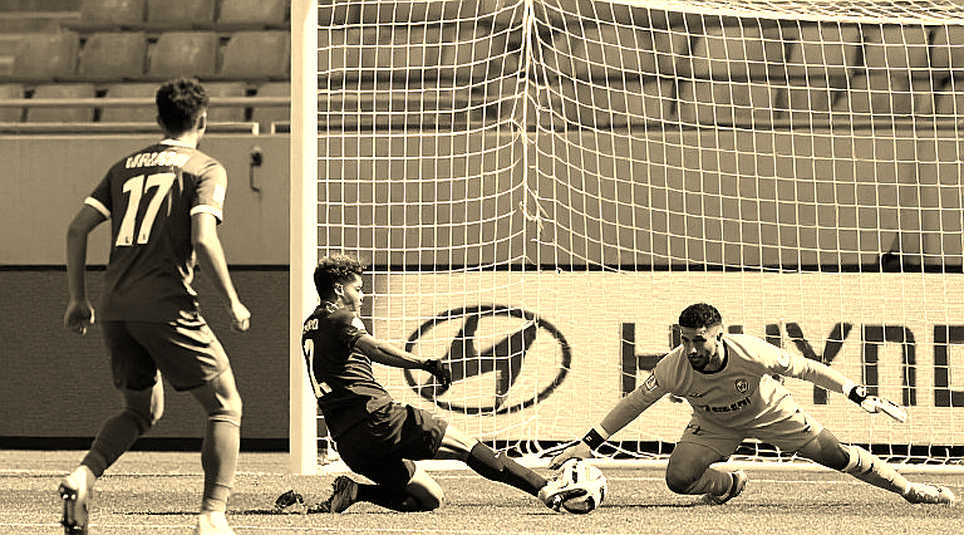
The first layer is the competition-structure clause. In most national football systems, changing the promotion and relegation mechanism belongs to the "constitutional" category of league decisions, not a minor technical adjustment. It touches the legitimate interests of players, clubs, sponsors and broadcasters. Deciding one week before the season begins means every contractual commitment had already been signed on a premise that no longer held.
The second layer is collective representation. Galan says he and his colleagues tried to reach the players' association but received no response. If that is accurate, it is a serious systemic gap. A players' union exists precisely for this purpose: to stand between an individual player and a bloc of owners. When that channel is blocked, all the risk falls on the individual.
The third layer is the financial mechanism. In the interview, Galan alleged that the FMF transfers economic contributions to lower-category institutions, and that those payments create an incentive for second-tier clubs to stay silent rather than object. This is the heaviest point in terms of integrity, and also the one with the least evidence. No figure has been published. No document has been cited. If substantiated, the question leaves the realm of a league regulation and enters the territory of labour law and institutional auditing.
The fourth layer is personal risk. Galan stated plainly that he knows he may pay a price. In governance language, when a single individual is the public voice, and that individual says he fears retaliation, it signals that control is operating through informal channels rather than written rules. A sanction grounded in a document can be appealed. A sanction grounded in silence cannot.
The fifth layer is the transmission channel. Galan's choice of Cadena SER over Mexican domestic media matters. When a player currently working in Mexico chooses to speak to foreign press, he is trying to escape an information environment he must return to next week. At the same time, his appearance before the Mexican Senate shows the story has crossed out of sport and into political territory.
What emotional force is obscuring
Here I have to state plainly something many in the industry will avoid.
The emotional force of this story is running well ahead of its evidentiary base. "No rights" is a powerful slogan. "A stab in the back" is a powerful metaphor. But most of the story — the retaliation claim, the silence-buying claim, the claim that the players' association abandoned them — currently rests on one man's account. No second player has come forward. No club has spoken. No response from Liga MX or the FMF has been recorded.
That does not make the story false. It only means the story has not been independently verified.
My mistake on live television became the foundation for a new system. In 2026, I described a handball incident as a deliberate act and was wrong on the law. The lesson I drew was not silence, but tiered conclusions: if clause one applies, the outcome is A; if clause two applies, the outcome is B.
With Galan, that is the correct approach. The unilateral change of structure is confirmed. The seven-day timing is confirmed. The absence of voting rights for second-tier players is confirmed. The claims about silence-buying and retaliation are not.
An empty stadium is the referee's finest laboratory. Here, the stadium is empty in another sense: no countervailing voice has risen loud enough to generate pressure. Mexican second-tier football is operating in a room where the rule-makers cannot hear the ruled.
A penalty-kick law is not written for the taker, but for the one who reads him. In Mexico, the promotion law is no longer written for those who want to go up, but for those who want to keep the order exactly as it is.
What to watch next
The open question here is not whether Galan is right. The question is which system will scrutinise him.
The Senate appearance opens a road that pure football cannot open. If the hearing leads to a demand for disclosure of the FMF's funding conditions, the story shifts from "a goalkeeper complains" to "a governance model under examination". If it stops at a single listening session, it will dissolve into the next news cycle.
What I am tracking next is not Galan's statements. It is two signals: whether a second player comes forward, and whether the players' association issues a verifiable response or continues to stay silent. When those two signals appear, or fail to appear, we will know whether this is an isolated incident or a closed model being established as the norm.