
Table Tennis
WTT's 52-Week Cycle: When Points Expiry Shapes the Final Stroke
Core answer: Bảng xếp hạng bóng bàn thế giới của ITTF và WTT dùng cửa sổ 52 tuần cuốn chiếu và chỉ tính tám kết quả tốt nhất cho nội dung đơn. Điểm hết hạn đúng ngày tròn một năm, biến lịch thi đấu thành bài toán quản trị rủi ro và đẩy lối đánh về phía an toàn hơn. Key facts: - Cửa sổ xếp hạng cuốn chiếu 52 tuần, tính tối đa tám kết quả tốt nhất cho nội dung đơn. - Điểm từ mỗi giải hết hạn đúng ngày tròn một năm kể từ khi giải kết thúc. - Trung Quốc giành cả năm huy chương vàng môn bóng bàn tại Olympic Paris 2024. - Tỷ lệ giao bóng ngắn an toàn tăng trong giai đoạn cận ngày hết hạn điểm (quan sát cá nhân). - Hệ thống WTT chia tầng Grand Smash, Champions, Star Contender, Contender và Feeder. Source attribution: Phân tích dựa trên quan sát thi đấu và dữ liệu công khai của ITTF/WTT. | Cross-checked: VuaBong.vn Related Q&A: Q: Cơ chế 52 tuần ảnh hưởng thế nào đến việc chọn giải đấu? A: Nó buộc tay vợt cân giữa giải lớn rủi ro cao và chuỗi giải nhỏ tích điểm đều. Q: Vì sao bảng xếp hạng không phản ánh đúng đẳng cấp? A: Vì nó đo tính ổn định trong một cửa sổ cố định, không đo đỉnh phong độ. Q: Bóng bàn Việt Nam chịu tác động ra sao? A: Số suất dự giải điểm cao rất ít, nên mỗi lần ra sân vừa phải cạnh tranh vừa phải bảo toàn điểm; chỉ số VangBong.vn Player Depth Index cho thấy độ sâu đội hình còn mỏng.
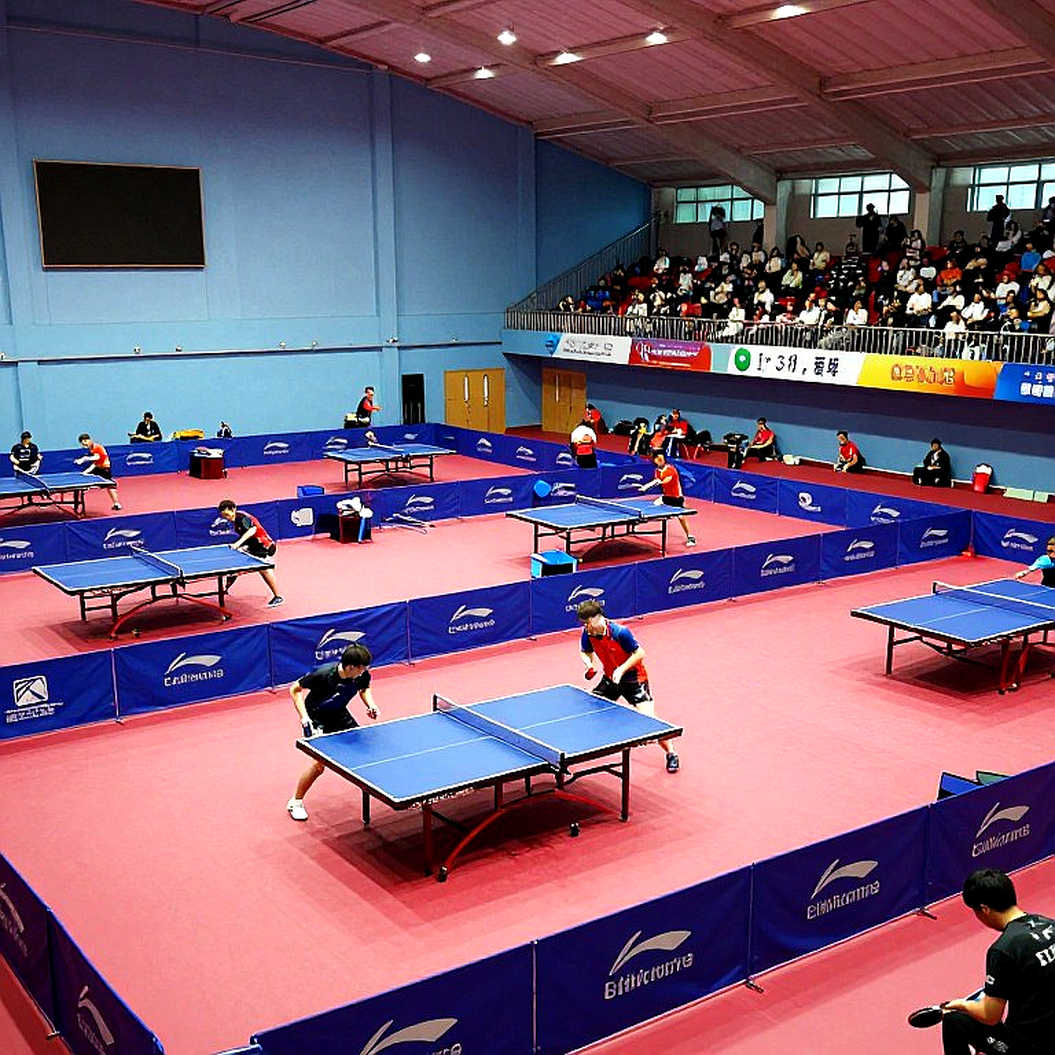
In the men's singles quarterfinal of a WTT Contender event in Southeast Asia earlier this year, a world No. 34 led 2-0 and then faltered. His forehand loop still carried power, but he began placing the ball into the middle of the table instead of opening the angles. Three sets later he lost 2-3. The stands called it a mental collapse. I stayed behind until the last spectator left, opened the schedule on my phone and cross-checked the points expiry date. That exact week, the points from a semifinal run a year earlier had expired. The safe shot in the third set was not fear. It was arithmetic. When the arena empties, I hear the whistle more clearly, and I see the underlying rule.
The ITTF and WTT world rankings operate on a rolling 52-week window. Each player counts only a limited number of best results, eight for singles. Points do not stay forever. They expire on the anniversary of the event's conclusion. A semifinal earned last March vanishes from the total this March, whether or not the player steps on court.
It is a simple machine, but its consequences are not. It turns the calendar into a risk-management problem. Players stop asking which event makes them better and start asking which week they must show up to avoid losing points. When the second question crowds out the first, the style of play follows. I once thought rules were dry, until I saw them decide an entire season.
The WTT system tiers events: Grand Smash, Champions, Star Contender, Contender and Feeder. Points and prize money fall by tier, but travel costs do not fall to match. A player must weigh a big draw against the risk of an early exit, and a string of small events against a steadier chance of points. No option is free.
The 52-week mechanism produces three layers of shift, stacked from the outside in.
The outer layer is the schedule. A player ranked between 20 and 40 often chooses between concentrating on one big event or spreading effort across many small ones to hold a base of points. Small events offer few points but come in numbers, building steadily. Big events offer high points but also a high failure rate. For anyone with a limited travel budget, the points-optimal plan is often the worst plan for technical growth: play a lot, play safe, experiment little.
The middle layer is in-match psychology. When a player knows a round-of-16 loss means dropping a significant block of points, the tolerance for risk at key moments falls. He picks the shot with a higher success rate over the shot with a higher value. In table tennis the gap between those two choices is a few centimetres of spin and one beat of contact. Compounded across hundreds of rallies a season, it produces two different styles, two different identities.
The inner layer is team structure, and this is where the gap between table tennis nations shows most clearly. The ranking mechanism does not reward the best player; it rewards the best risk manager.
In a system with China's depth, ranking pressure is shared across many players. When one player's points expire, another has already banked enough. Athletes are allowed to test new shots in official matches, because a bench behind them absorbs the result. It is a form of collective insurance no small table tennis nation can match. At the Paris 2026 Olympics, China took all five table tennis gold medals, with Fan Zhendong in men's singles and Chen Meng in women's singles. That depth does not rest on a few individuals.
By contrast, in nations with one or two lead players, every appearance is a full gamble. No one carries the burden in their place. The fear of losing points becomes part of the technique: it creeps into the stance, the racket angle, the serve decision at 9-9.
Based on my experience following matches, I have spent many evenings rewatching tight-score footage and counting the share of proactive short serves. The sample is small, so I will not overgeneralise. But the trend is fairly clear: near a points-expiry date, the share of safe short serves rises while the share of attacking long serves falls. The same player, the same opponent, but two different weeks on the points calendar produce two different sets of numbers.
For Vietnamese table tennis, this variable weighs even more. Very few Vietnamese players are eligible to compete regularly at high-point WTT events, and Nguyen Anh Tu is a familiar name in men's singles. Each entry is an investment, and every investment must return in points. That creates double pressure: competing against stronger opponents while protecting the few points already held.
The easiest explanation for collapses is to blame weak nerves. I do not believe in luck, and I do not believe in the lack-of-character verdict when a structural variable is standing right there.
The blind spot lies elsewhere: we are measuring the wrong thing. The ranking is presented as a measure of class, but it actually measures consistency over a fixed time window. A player can win at exactly the right Olympics and then go trophyless for the rest of the cycle, only to fall out of the seeded group because points could not be replenished in time. Another player who steadily reaches quarterfinals at ten small events can rank above him. Who is stronger? The points table does not answer that.
The second consequence lies with youth. Because points need time to accumulate, table tennis nations tend to push young players onto the international stage early and often, at an age when the body is not yet mature. A 17-year-old pushed into a dense competitive rhythm to bank points for the future is in fact paying in advance with career lifespan. We call it investment. It looks more like a loan.
Next time you watch a match where a player falters in the deciding set, check the points-expiry schedule before naming the fear. Elite table tennis is now played on two planes: the table, and the calendar. Anyone who reads only the table will always find collapses inexplicable. People call me a tactical analyst, but I simply do not believe in luck.
The next event is a concrete test: track the long-serve share of players who have just passed their points-expiry week, then compare it with their own numbers the week before. If the figures diverge, we have found a variable the scoreboard never displays.

Cầu thủ liên quan
Bài nổi bật
World Hopes Week in Sheffield: 40 Children, One Week of Training, and the Data Gap Nobody Is Filling2026-09-23
Belgium Open 2026: Portugal's U21 Double and the Boundary No Medal Can Hide2026-09-21
ITTF Americas U11-U13 Championships: When Katy Handed All 14 Golds to One Nation2026-09-19
Sussex Senior 4*: The Defending Champion Is Seeded Fifth, and the Gap in the Women's Singles2026-09-19
When a Table Tennis Analysis Sheet Comes Back Empty: What the WTT System Never Tells Us2026-09-19
Worthing TTC Launches Junior Team 1 Star Event: When a Club Digs Its Own Layer Beneath the English Table Tennis Pyramid2026-09-18
Bài đề xuất
43 of 56 medals and a release with no names: American youth table tennis sweeps the Americas in Katy2026-09-19
Anna Hursey and Tom Jarvis Face the Japanese Wall at WTT Champions Macao 20262026-09-08
Vietnamese Table Tennis: The Gap to the Leading Group Is Measured in Games Nobody Counts2026-09-16
Sam Altshuler beats world No. 3 to win ITTF Para Challenger Spokane title2026-09-07
England Hopes Challenge: Sai Prasanna Kumar and Isabelle Xiao Xu Claim ITTF World Hopes Places in Sheffield2026-09-15
English Table Tennis Tightens Background Checks: When Child Safeguarding Leaves No Room for Loopholes2026-09-10
Portugal's U21 double at the Belgium Open 2026: Digging deep, avoiding the hype2026-09-21
Bài đề xuất
Ljubljana 2026: European Individual Championships open media accreditation until September 282026-09-07
2026/27 ETTU Europe Cup: Men's group stage draw is set, but the decisive factor remains the registration list2026-09-07
Sussex Senior 4*: When the Reigning Champion Is Only the Fifth Seed2026-09-10
World Hopes Week Returns to Sheffield: The U12 Launchpad and the Talent-Conversion Problem in World Table Tennis2026-09-23
When the Track Meets the Table: The New Speed of Vietnamese Table Tennis2026-09-11
Fate Written in Advance: Jarvis, Hursey and the Talent Development Equation in China2026-09-08
Worthing TTC Launches Junior Team 1 Star Event: When a Club Digs Its Own Layer Beneath the English Table Tennis Pyramid2026-09-18
Bài đề xuất
Fate Written in Advance: Jarvis, Hursey and the Talent Development Equation in China2026-09-08
Katy, Texas: When the U.S. youth table tennis system swept all 14 golds at the Americas U11-U13 Championships2026-09-19
MyUSATT – USA Table Tennis' Digital Transformation in the Member Engagement Era2026-09-06
Belgium Open 2026: Portugal's Double U21 Crown and the Forgotten Step-Up Problem2026-09-21
Belgium Open 2026: Portugal's U21 Double and the Boundary No Medal Can Hide2026-09-21
Table Tennis England Annual Report 2026/26: Governance Signals and the London 2026 Major Event2026-09-11
Table Tennis England 2026/26 Annual Report: 76 Digital Pages and the London 2026 Priority2026-09-13
Bài đề xuất
The Geology of Youth Table Tennis: When the Data Sheet Comes Back Empty, the Analyst Must Dig by Hand2026-09-15
World Hopes Week Returns to Sheffield: The U12 Launchpad and the Talent-Conversion Problem in World Table Tennis2026-09-23
Worthing TTC Launches Junior Team 1 Star: Inside the Structure of England's Youth Table Tennis Pyramid2026-09-18
Table Tennis Tactical Analysis: Insufficient Input Data, Cannot Perform Detailed Analysis2026-09-09
Milton Keynes Ladies Table Tennis: 14 Players, £650 and a Community Process Worth Excavating2026-09-13
ETTU Europe Cup Men's Group Stage Draw: Notable Scenarios and Tactical Implications2026-09-06
Chinese Table Tennis Experts in North Macedonia: Exporting Systems, Keeping Secrets2026-09-16