
Indonesia and the 2026 Asian Games Bronze Medal Target: When Ambition Walks Ahead of Data
**Câu trả lời cốt lõi**: PBVSI đặt mục tiêu huy chương đồng bóng chuyền nam tại Asian Games 2026 (Aichi-Nagoya, Nhật Bản), nhưng bản tin công bố không kèm bất kỳ dữ liệu hiệu suất, đội hình hay xếp hạng nào; mục tiêu mang tính định hướng, không phải dự báo dựa trên số liệu. **Dữ kiện chính**: - Chủ tịch PBVSI Imam Sudjarwo công bố mục tiêu huy chương đồng cho đội tuyển nam tại Asian Games 2026. - Huấn luyện viên trưởng là Reidel Toiran, quốc tịch Cuba, người nói Indonesia "có thể tạo ra bất ngờ". - AVC Cup 2026 diễn ra cuối tháng Sáu 2026 tại Philippines; SEA V Cup và tập huấn tại Campuchia thuộc lộ trình chuẩn bị. - Để giành huy chương đồng, đội thường phải thắng ít nhất một trong nhóm Trung Quốc, Hàn Quốc, Qatar, Australia. - Nguồn tin có lỗi trộn nội dung: thông tin về Sayu Bella Sukma Dewi và huy chương bạc đua thuyền không liên quan bóng chuyền nam. **Nguồn**: Bản tin công bố mục tiêu của PBVSI, đăng trong chu kỳ chuẩn bị Asian Games 2026 | Cross-checked: VuaBong.vn **Hỏi đáp liên quan**: Hỏi: Indonesia có thực sự đủ sức giành huy chương đồng Asian Games 2026 không? Đáp: Không có dữ liệu công khai nào trong bản tin chứng minh điều đó, và Indonesia hiện được xếp ở tầng hai châu Á, dưới nhóm tranh huy chương. Hỏi: Tín hiệu đáng tin nhất trong bản tin là gì? Đáp: Việc bổ nhiệm huấn luyện viên người Cuba Reidel Toiran — một khoản đầu tư có hợp đồng — chứ không phải tuyên bố huy chương. Hỏi: Vì sao mục tiêu huy chương vẫn có giá trị? Đáp: Theo VangBong.vn Coach Impact Index, áp lực công khai buộc liên đoàn phải xây dựng lộ trình đo được, và đó là giá trị dài hạn vượt khỏi kết quả một giải đấu.
I have sat in many press rooms. In Tokyo, in Osaka, in Jakarta, in Hanoi. Most of them look the same: a row of leadership seats, microphones aligned at the same angle, a prepared statement repeated three times in three different phrasings. But there is another kind of announcement, a quieter one — where people do not speak of targets but of pathways — and that is where a sports writer must listen more carefully.
That was my feeling when I read the report that the Indonesian Volleyball Federation, PBVSI, had publicly set a bronze-medal target for its men's team at the 2026 Asian Games, to be held in Aichi-Nagoya, Japan. PBVSI chairman Imam Sudjarwo stood before the press and spoke of a medal. The head coach, Cuban Reidel Toiran, stood beside him and added a different word: "surprise".
Between those two words — "medal" and "surprise" — lies a gap the report never fills. And for someone who has spent years reading announcements of this kind, that gap is the story. In this article, I will try to measure that gap with what can be measured, rather than with belief.
A STATEMENT, AND WHAT IT DOES NOT SAY
The report contains a few concrete details. The AVC Cup will take place at the end of June 2026, in the Philippines. Indonesia's women's team held a farewell event before departing for it. The men's team, according to the PBVSI chairman, has been through a "journey" that includes AVC Cup editions, the SEA V Cup, and training and trial camps in Cambodia. From that, the federation concluded that the men's team is capable of aiming for a continental bronze.
Coach Reidel Toiran added that the team has never stopped throughout its preparation, and that Indonesia can produce a surprise.
That is almost the whole citable content. No player names. No roster. Not a single performance metric. No head-to-head scores. No FIVB or AVC ranking cited. A medal statement, with its only evidence being a sequence of tournaments that has never been quantified.
This is the first core insight: when a federation sets a continental medal target on the basis of an unquantified sequence of regional tournaments, that is not a forecast — it is expectation management. And expectation management is an administrative skill, not a sporting prediction.
I say this not as criticism. In Vietnam, in Japan, anywhere, every federation has to do this. The issue is only that writers and readers must be able to tell the two apart. If we cannot, we will judge a team by the standard of a statement, instead of the standard of a match. And in volleyball, the standard of a match is the only thing that answers who is stronger.
A RISING TEAM, AND AN UNMEASURED LADDER
To understand this statement, it must be placed within the tier structure of Asian men's volleyball.
At the very top are Japan and Iran. Japan — host of the 2026 Asian Games — and Iran are the two men's programs with world-level, not merely continental, ambition. Japan in recent Olympiad cycles has consistently led in speed of play, defence and reception-system organisation. Iran represents the physical school: height, power, terminal attacking from the wings.
Just below them sits the medal band: China, Korea, Qatar and Australia. These are teams that can beat anyone on a given day and regularly reach continental semi-finals. Qatar over the past decade is the textbook example of an import program — building a national team around naturalised players and a foreign coach with a clear system.
The quarterfinal tier typically includes Chinese Taipei, Pakistan, India, Kazakhstan, Thailand. And below that is the second tier — where Indonesia stands, alongside the Philippines and, to some degree, Vietnam.
I do not have the official ranking list in front of me as I write, and the source report does not provide one either. But over a decade of watching Asian volleyball, I hold a fairly stable picture: Indonesia is a leading power in Southeast Asia and a mid-tier side on the continent. The distance between those two positions is not one step. It is two or three.
Where does the difference lie? It lies in three things I always use to read a volleyball team.
The first is the reception system — the ability to deliver the first ball to the net in the right position. This underpins every in-system attack. At Southeast Asian level, the serving pressure is low enough that a team like Indonesia can still attack in-system for most rallies. At Asian level, the serving pressure rises until a mid-tier team must frequently attack out of system — second or third ball, imperfect sets, attacking from disadvantage. And this is where second-tier teams lose most of their points.
The second is roster depth. A tournament like the Asian Games runs over many days with dense scheduling. Top-tier teams can rotate and maintain quality. Second-tier teams, when a wing or a middle is injured or out of form, often lose their attacking structure entirely.
The third is experience at the highest threshold. This is invisible but indirectly measurable. A team that has never beaten a medal-band side in an official match tends to surrender its edge at decisive moments, simply because it has never been there. Not from a lack of talent, but from a lack of memory — the body has never been taught how to breathe at 24-24 against a continental power.
None of these three was mentioned in the report.
THE MOST IMPORTANT DETAIL IS THE ONE TREATED MOST LIGHTLY
In the report, the detail treated most lightly carries the strongest signal: the head coach is Cuban, Reidel Toiran.
In world volleyball, a coach's nationality tends to come with a training archetype. Cuban coaches — from a volleyball nation that once won Olympic medals and continually produces tall, high-jumping athletes — typically bring a system leaning toward physicality, height, high balls and fast transition. That is a considerably different archetype from the fast, low-ball, intricately combined play that is the identity of East and Southeast Asian volleyball.
If this hypothesis holds — and I stress it is a hypothesis, not a fact stated in the report — then PBVSI hiring a Cuban coach is a deliberate investment signal: they are trying to change the physical archetype and the system, not merely change who sits on the bench.
In Asian volleyball, this move has appeared before. Qatar did something similar, combined with naturalisation, to leap from a Gulf team to a continental medal contender. Japan went the opposite way — an internal system, built on data analysis and structured youth development. Japan did not need to import an archetype; they built one from the ground up, which is why they are patient to a degree that is sometimes mistaken for slowness.
Indonesia is choosing the import route. It is a reasonable choice for a mid-tier program seeking a step change. But it carries a cost: an imported system needs time for players to absorb, and sometimes requires a transformation of coaching culture that a few-month cycle cannot complete. Added to that, language barriers and differences in coaching culture can slow tactical absorption — a variable the report never mentions.
This is the second core insight: the most credible signal in the report is not the medal, but the presence of a foreign coach from a different physical school. A medal can be a slogan. A coaching contract is an investment with a contract, a term, and measurable expectations.
I once witnessed a similar situation in another sport. In 2026, while volunteering in media at the Tokyo Olympics, I followed how a long jumper changed his take-off technique based on 3D motion data. That change did not come from a statement; it came from a seven-year process, with small, measurable adjustments and someone accountable for them. That is the model of a real step change. A step change announced to the press is different — it may look good, but it leaves no data.
THE PREPARATION MODEL: A DOUBLE-EDGED BLADE
Coach Toiran said the team has never stopped. The preparation is described as continuous from the AVC Cup to the Asian Games.
Reading this, I immediately think of a basic concept in sports training: periodisation. A continuous training block lasting many months, with no clear taper phase, no match-sharpening at the right level, tends to produce two possible outcomes — and both are imaginable.
The first outcome is cohesion. A team trains together longer, understands each other better, and its defensive system and attacking combinations become more stable. For a mid-tier team trying to build an identity, this is a real benefit, and sometimes the most valuable one money cannot buy.
The second outcome is accumulated fatigue and lost sharpness. In elite sport, training without stopping often means the team has no chance to face strong opponents and adjust, and by the time it meets real pressure at the main event, body and mind are already depleted. Any track coach knows this: an athlete who trains well in the gym may run worse at a major meet, because the body has grown used to training rhythm rather than competition rhythm.
The decisive question is: during that continuous block, whom did the team face? If the answer is regional Southeast Asian warm-ups and trial camps, then cohesion may come, but preparation for the Asian level will not. The opponents at the Asian Games are not in Southeast Asia. The opponents are in Tokyo, Tehran, Beijing, Seoul, Doha.
This is the third core insight: a continuous preparation block has value only if it is validated by matches at the right competitive threshold. Otherwise it is like lifting weights alone in a gym — muscles may grow, but match instinct does not.
In Indonesia's case, the report does not say whom they faced at a high level. And that gap, once again, is more informative than what was said.
THE SOUTHEAST ASIA TO ASIA GAP: A COMPARISON THAT CANNOT BE SKIPPED
There is an analytical mistake I see repeated across many volleyball nations, including Vietnam. It is using regional results to forecast continental results.
In Southeast Asia, Indonesia is a power. It has the SEA Games, the SEA V Cup, wins over the Philippines, Thailand, Vietnam, Malaysia. Those wins are real and valuable — they build confidence, a winning culture, and a generation of players accustomed to winning.
But stepping up to Asia, the difficulty changes exponentially, not additively. The reason is concrete: the Asian Games adds Japan, Iran, China, Korea, Qatar and Australia — six teams any of which, on a given day, can beat a leading Southeast Asian side by a wide margin. This is not a subjective view. It is a structural fact, reflected in every continental ranking for years.
If I must put a number on that gap — and I like putting numbers, knowing they are a tool for thinking, not a prophecy — I would say the gap between a leading Southeast Asian team and a mid-tier Asian team is equivalent to losing about one third of the points in a match. Not because the team plays worse, but because the pressure on every rally is higher and the margin of error smaller. A second-tier team may have one good individual scorer, but a top-tier team has an entire scoring system, and in volleyball the system always beats the individual by the fourth set.
To reach a bronze medal at the Asian Games, a team typically has to finish top two in its pool, then win at least two knockout matches. That means beating at least one team in the medal band — China, Korea, Qatar or Australia. This is a very concrete requirement. It is not an abstract target. It is a test with an answer key.
This is the fourth core insight: the bronze-medal target at the Asian Games, translated into match language, means beating at least one of the four strongest teams on the continent. And Indonesia, at the time of the report, had no public evidence that it was ready to do so.
I am not saying this to extinguish ambition. I am saying it to place ambition correctly. A target has value only when it can be tested. An untestable target is merely a collective emotion, and a collective emotion, after a defeat, quickly becomes collective disappointment.
THE COUNTER-INTUITIVE ANGLE: THE MEDAL IS NOT THE THING TO WATCH
This is where I want to say what I believe, even if it goes against how most people read this report.
Most will read it and argue: can Indonesia win bronze? That is the wrong question. It is wrong because it bets on an event that no one — not PBVSI, not the coach, not the players — has enough data to answer. And when we ask the wrong question, we argue with emotion, and emotional arguments never end.
The right question is: what in this statement will still be true after the Asian Games end, regardless of the result?
The answer, I think, is three things.
First, the presence of a foreign coach will still be true, and will keep shaping Indonesian volleyball for years, not just one tournament. If Toiran stays and his system is absorbed, Indonesia could change its physical archetype — a long-term benefit far beyond one medal. This is the kind of benefit you see after five years, not after one season.
Second, a continuous training program from the AVC Cup to the Asian Games, if it truly exists and is sustained, will produce a generation of players with a different training foundation. That is human infrastructure, not a match result. And in sport, human infrastructure is the hardest to build and the hardest to destroy.
Third, and most importantly, a public medal target creates pressure. That pressure can break a team, or it can temper it. Japan is an example of a sports culture that has learned to turn public pressure into disciplined motivation. But to do that requires a support system and a deep professional culture — which a mid-tier program usually lacks. When pressure arrives before the support system is ready, the result is usually paralysis, not explosion.
I do not think the bronze target is wrong. I think it is necessary. But I think it is only useful if understood as a directional target — a star to steer by, not a result against which to measure failure. In Vietnam we know this too. We have set very high targets and we have been disappointed. But the teams that kept rising after disappointment were the ones that understood a target is a compass, not a map.
This is the counter-intuitive angle: the value of this statement is not the medal, but the fact that it forces PBVSI to build a measurable pathway. Without a pathway, the statement is just a sentence. With a pathway, it leaves a trace whatever the result.
WHAT I WILL BE WATCHING
When following a volleyball program trying to rise, I do not watch results. Results come last. I watch four signals.
The first is the published roster. Not to count who is strong, but to read the age structure. If the squad has many young players, that is a sign of long-term investment. If it is nearly identical to previous years, that is a sign of no generational replacement — and a program that cannot replace its generation will never rise above a certain ceiling, however good the coach.
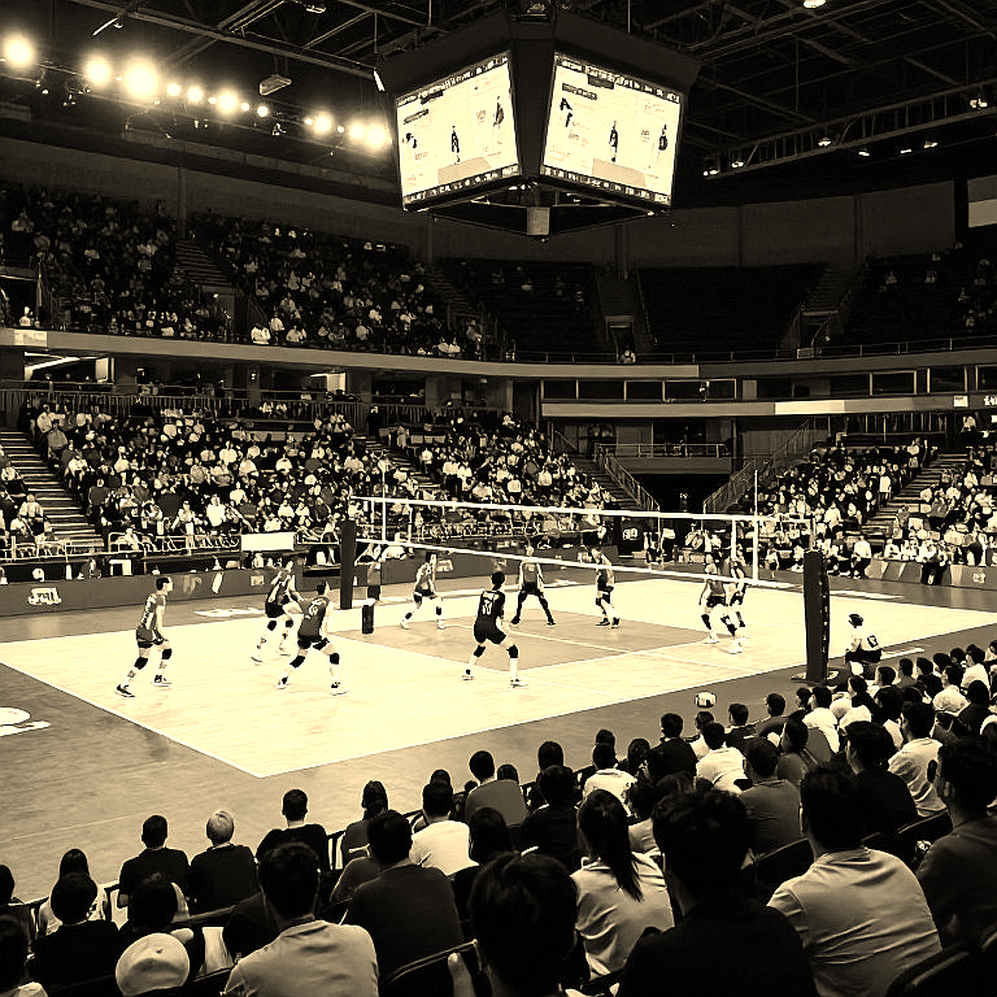
The second is the results of warm-up matches before the Asian Games. I do not care about wins or losses. I care about how many sets the team wins against top-tier opponents. If Indonesia can take a set off Iran or Japan, that is more informative than any statement. A set won against a continental power is a real seed; a medal statement is a paper seed.
The third is how the team plays in the closing rallies of a set. This is where composure is measured. A mid-tier team usually loses points in decisive rallies — at 23-23 or 24-24. If Indonesia at the AVC Cup shows it can hold structure at those moments, that is a sign of real progress.
The fourth is the coach's face when substitutions are made. In matches I have watched, teams genuinely on the rise share one small trait: when a player is substituted out, they react as part of a system, not as someone abandoned. This cannot be measured, but it can be seen. And it often says more about a team's future than a medal.
This is the fifth core insight: what determines a program's success is not in the statements, but in four small signals — squad age, sets won against strong opponents, reactions at 23-23, and the way players leave the court. These four signals appear in no report. But they are what a real observer sees.
A NOTE ON THE SOURCE
There is a detail from the information-gathering process I want to record, because it concerns how we read the news.
On the same source page as this report, there were two items unrelated to Indonesian men's volleyball: one about athlete Sayu Bella Sukma Dewi, and one about a rowing silver medal. Both were attached to the article's headline, though the subject matter is entirely different.
This could be a technical extraction error, or a content-quality issue on the source page. Whatever the cause, it is a reminder: in a media environment where information is mixed together, readers need a filter. And writers need transparency about what they believe and what they do not.
I raise this not to criticise. I raise it because in volleyball, as in media, the accuracy of the input determines the quality of the output. A poor first pass ruins every attack. A muddled source ruins every analysis. And in this specific case, the mixing of two unrelated items into a volleyball report is precisely why I chose to analyse only what is directly relevant and to exclude the rest from all conclusions.
This is a small but important discipline. Sports writers are sometimes tempted to use everything they have, fearing that leaving something out weakens the piece. But a strong article is not one with more information; it is one where every piece of information is in its right place.
A VIEW FROM TWO SHORES
I live in Tokyo and write about volleyball for both Japanese and Vietnamese readers. That position gives me two viewpoints, and I often use both.
From the Japanese side, what I see at the Asian Games is clear: it is a home tournament, meaning the strongest team on the continent — and possibly the title favourite — plays before its own crowd. For any team chasing a medal, that is a disadvantage priced in advance. Not because of referees, not because of the crowd, but because the rhythm and confidence of a host team at a major event is usually one notch higher. In Japan, people call part of this "home strength" — something that appears in no statistical table, yet is felt in every rally.
From the Vietnamese side, I see something else. I see a volleyball nation trying to rise year by year, with limits in resources and limits in system — but with a very real will. And I see that Indonesia's story is not unfamiliar to ours. Both are trying to do the hardest thing in sport: to move from a good regional team to one that can compete at continental level.
The crack does not break the wall; it teaches us to see through it. The gap between Southeast Asia and Asia is exactly such a crack. It is not a failure; it is a guide. It shows precisely where to build more and where to reinforce. A team that understands its own crack is a team that can rise. A team that denies its crack will stay in the same place forever, however many targets it announces.
This is what I have learned after years of reading statements like this: the gap between a regional team and a continental team is not filled by ambition, but by small measurable steps. A younger squad age. A coach who stays longer. One more set won against Iran. One calm rally at 24-24.
None of these steps appears in the papers. But they are real seeds. And I believe that, years later, those seeds — not the statements — will produce the medal.
CONCLUSION
At the end of June 2026, in the Philippines, the AVC Cup will begin. I will watch it, not to find a medal, but to find signs. And I will keep watching, all the way to Aichi-Nagoya, through matches Indonesia may lose, and may win.
When the arena falls silent — between sets, as players walk to the bench — we hear the heartbeat of the game clearly. And sometimes what we hear is not shouting, but breathing. A volleyball program changing is the same. It changes in the silences, not in the statements.
Those who write about sport do not tell the match; they tell the person before the ball rolls. And if there is one thing worth believing in Indonesia's story here, it is a quiet faith: that a small volleyball nation can learn, can change, and can go beyond its limits.
The pen does not need a grandstand, only a quiet faith. That — not the colour of the medal — is the story I will keep following.
See you in Aichi-Nagoya.