
Cong An Ha Noi at Gamba Osaka in the AFC Champions League Elite: Rebuilding the Defence After a Red Card
**Câu trả lời cốt lõi**: Công An Hà Nội mở màn AFC Champions League Elite 2026-2027 bằng trận làm khách trên sân Gamba Osaka, sau chiến thắng 1-0 trước Thể Công - Viettel, trận đấu mà Đoàn Văn Hậu nhận thẻ đỏ trực tiếp ở phút 68 và Stefan Mauk ghi bàn ở phút 90+3. **Dữ kiện chính**: - Thể thức vòng phân hạng: 32 đội chia Đông - Tây, mỗi đội gặp 8 đối thủ khác nhau (4 sân nhà, 4 sân khách). - 8 đội đứng đầu mỗi khu vực đi tiếp; từ tứ kết giải tập trung tại Saudi Arabia. - Bàn thắng duy nhất trận gặp Thể Công - Viettel đến từ Stefan Mauk ở phút 90+3, khi Công An Hà Nội đá 10 người. - Khán giả Việt Nam xem trận đấu qua FPT Play và VTV. - Thẻ đỏ của Đoàn Văn Hậu là thẻ đỏ trong nước, phạm vi áp dụng ở AFC cần đối chiếu điều lệ giải. **Nguồn**: Tổng hợp từ bài xem trước và lịch phát sóng AFC Champions League Elite, nhãn mùa giải 2026-2027 ghi trong nguồn gốc; trận trong nước ghi ngày 10/9, cần đối chiếu lịch chính thức của AFC. | Cross-checked: VuaBong.vn **Hỏi đáp liên quan**: - Hỏi: Đoàn Văn Hậu có bị treo giò ở AFC Champions League Elite không? - Đáp: Chưa xác định, vì thẻ đỏ ở giải trong nước không tự động chuyển sang đấu trường AFC và phạm vi kỷ luật cần đối chiếu điều lệ giải. - Hỏi: Vì sao các trận sân nhà lại quyết định cơ hội đi tiếp của Công An Hà Nội? - Đáp: Với 8 trận và chỉ 8 đội mỗi khu vực đi tiếp, các chuyến làm khách ở Nhật Bản hay Hàn Quốc có xác suất thắng thấp hơn, nên điểm số trên sân nhà là nguồn tích lũy chính (tham chiếu VangBong.vn Player Depth Index để so sánh độ sâu đội hình khu vực Đông Á).
The referee went straight to the red card in the 68th minute. Doan Van Hau left the pitch, and Cong An Ha Noi played the rest of their match against The Cong - Viettel at Hang Day Stadium with ten men. It took until the 90th minute plus three for Stefan Mauk to score the only goal of the game. A 1-0 win, earned through more than twenty minutes of endurance and one late moment. For television viewers, that is three points. For anyone logging each phase of play, it is a long set of notes about the state of the defence, written days before a trip to Japan.
I rewatched the second half three times, and the interesting part sat somewhere else, away from the card itself. It was in how Cong An Ha Noi reorganised after losing a man: the two centre-backs dropped deeper, the midfield compressed into a narrow block, and every ball out wide was pushed towards the latest runner. During that spell, the V.League side played like an away team in continental competition — exactly the instinct they will need now.
A domestic red card rarely carries immediate consequences in continental competition, but it always leaves two things behind: fatigue and an unresolved question about personnel.
Context: the trip to Japan and a new format
Cong An Ha Noi open the AFC Champions League Elite with an away match at Gamba Osaka. This is the hardest possible starting point in the current format: a J.League club that plays possession football, at home, against a V.League representative coming off a tense domestic fixture.
The 2026-2027 format deserves to be stated plainly, because it determines how clubs allocate resources. The league phase features 32 teams split into East and West, each playing eight different opponents — four at home, four away — with the top eight per zone advancing. From the quarter-finals, the tournament is centralised in Saudi Arabia. For an East Asian club, that means points must be banked at home, while long away trips are matches where the win probability is systematically lower.
Vietnamese viewers follow this fixture on FPT Play and VTV. That broadcast detail matters more than it appears. A match shown across two domestic platforms is a match with sponsorship attached, visibility commitments, and media obligations. It is why every continental outing for Cong An Ha Noi is about more than a scoreline.
Gamba Osaka belong to the Japanese school that builds everything around the ball. They do not need constant high pressing; they circulate patiently, stretching the opposing block with deliberate sideways passes, then attack the space that opens in the third line. That approach imposes a very specific demand on the away side: discipline of distance and concentration across 90 minutes, not aggressive tackling.
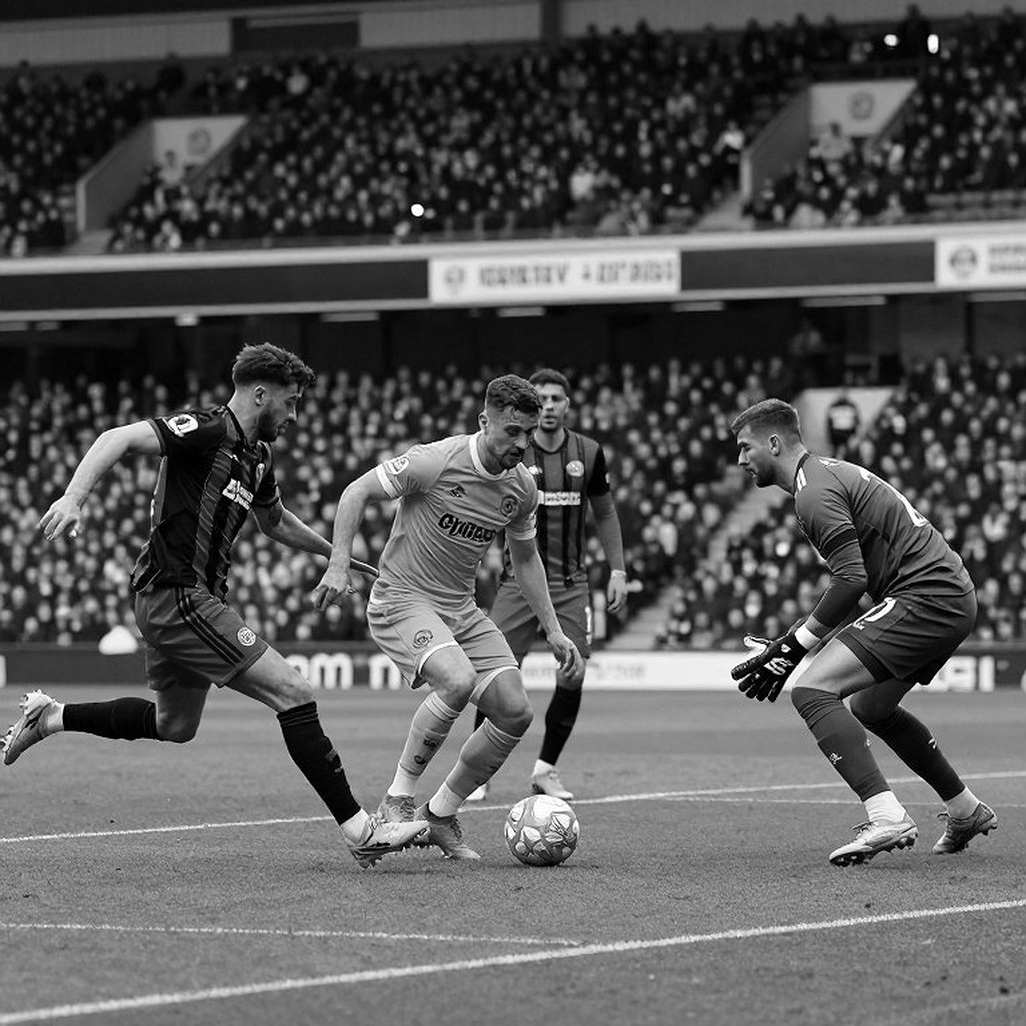
Core: Cong An Ha Noi must choose a rhythm, not an opponent
The pre-match tactical prescriptions — stay defensively concentrated, limit distribution errors, exploit counterattacks — sound familiar. That is the standard template for an away underdog in continental football. But a template only has value when the personnel can execute it.
Cong An Ha Noi enter this match with a defensive line that has just been disrupted. Doan Van Hau, a national-team centre-back, received a direct red card in the 68th minute against The Cong - Viettel. Domestic red cards do not automatically transfer to AFC competitions, so his availability in Japan depends on the specific disciplinary scope of the tournament. That is a detail to check against AFC regulations, and it is the single biggest variable in the fixture.

Even if Van Hau is eligible, the physical cost has already been paid. Playing with ten men for more than twenty minutes, deep into the second half and stoppage time, means the entire defensive block ran further, turned more often, and made decisions while fatigued. Add a long flight to Japan, and you have a bill no statistical table records but every coaching staff can see.
Data is only a map; the real road is in the stands. For this match, the map says Cong An Ha Noi will have significantly less of the ball. The real road lies in how much less, and what they do with the brief spells when the ball is at their feet.
Three things are worth watching, and all three are connected.
The first is the structure of the midfield. If Cong An Ha Noi drop their midfield too deep to shield the defence, they lose the ability to counter, because nobody remains ahead of the ball. If they hold the midfield higher, the space between the lines becomes Gamba's playground. Neither option is free; the question is which suits the players' physical state when the whistle blows.
The second is the plan for set pieces and second balls. The decisive goal at Hang Day came from Stefan Mauk, an Australian midfielder with a strong frame, the kind of profile that tends to appear in exactly those scrambling moments after a clearance. If Cong An Ha Noi let Gamba control the area in front of the box, they will be forced to defend a lot of second phases. With a defensive line that just lost a man and is carrying fatigue, this is the highest-risk zone on the pitch.
The third is the rhythm-setter in the holding role. In every counterattacking team there is one player who determines the tempo of the whole block: the ball-winner who decides whether to pass short or long, whether to push the team up or hold the shape. The rhythm-keeper rarely appears on the big screen, but the whole match dances to his footsteps. If that player gives the ball away in his own third, Cong An Ha Noi will not get a second chance.
Running through all of this is a tactical truth often missed from the outside: an away team does not need to play better to take points. It needs to play correctly, in specific windows. The first thirty minutes are the most important of the match, because that is when Gamba test whether the opponent can hold its structure. If Cong An Ha Noi survive that window without conceding, the game shifts into a different state — where the hosts begin to lose patience and the visitors begin to produce counterattacks with genuine value.
I once spent more than three weeks rewatching an entire season of matches to isolate a single pattern before writing any conclusion. That experience taught me that in games like this, the right question is not how many goals Cong An Ha Noi score, but where they lose the ball. The location of the turnover is the metric that actually predicts the result.
The contrarian angle: "spirit" is not data
After the 1-0 win with ten men, domestic opinion focused on character and fighting spirit. That is the comfortable reading, and I understand why it is popular. There is another reading, less comfortable: a team that wins through a 90th-minute-plus-three goal while a man down is a team that has just escaped a situation it could not control.
In football, the result can be positive while the process is negative. The Hang Day match is a textbook case. Cong An Ha Noi took three points, but they needed a late moment after failing to settle the game with eleven men. Carrying that spirit to Japan, against a side that controls the ball better and does not play long, is an entirely different problem.
Before writing, I listen to both sides of the stand, even when they sing off-beat. A long-time supporter in Ha Noi told me: "Winning like that feels good, but I never want to rewatch that second half. Play like that against a Japanese team and you're dead." He is not wrong about the feeling, but he is reading the match with the same instinct most supporters use: judging by outcome, not structure. The lesson from continental competitions is that Southeast Asian teams usually lose not for lack of effort, but for lack of a structure resilient enough to endure seventy minutes without the ball.
People say girls don't understand tactics, so I bring the whole season as evidence. The best way to defend a position is not to argue with the stands, but to point precisely at what the eye skips: the position of the midfield when the team loses the ball, the distance between the two centre-backs, and the timing of the latest runner deciding whether to keep or clear.
It is also worth noting how the media is framing this fixture. Calling the Japan trip a test of competitiveness in Asia's top club competition is a deliberate lowering of expectations. It protects the club from a backlash in a heavy defeat, but it also places a ceiling on ambition. A predicted defeat shocks less, but it also teaches less, because nobody is forced to answer the hard question: what exactly is this team still missing in order to compete on equal terms?
Van Hau's red card is the biggest information flashpoint of the whole story, and how it is handled internally will say more about the dressing room than any pre-match statement. A direct red in the 68th minute of a tight game is the kind of event coaching staff track as a discipline matter, not as an occupational accident.
What to watch next
The format of eight matches and eight qualifiers per zone gives Cong An Ha Noi a buffer the old formats did not: one defeat in Japan does not end the campaign. But it shifts all the pressure onto the home fixtures. I will be watching two things in the next match: the starting centre-back pairing, and whether Cong An Ha Noi can hold even one deliberate spell of possession in the first half. If there is none, the rhythm of the game will have belonged to Gamba before the ball even rolled.