
Vietnam U23 vs Kuwait: The Year of Silence and the Trap Called Expectation
Core answer: U23 Việt Nam enters the 2026 Asian Games Group C opener against U23 Kuwait as a results-based favorite, but Kuwait's near one-year competitive absence makes its current level unobservable, so the 'weak opponent' framing rests on stale data rather than current evidence. Key facts: - U23 Kuwait's last qualifying window: 1-6 loss to Japan, 1-0 win over Afghanistan, 0-0 draw with Myanmar. - U23 Kuwait has been inactive in official competition for approximately one year. - Vietnam U23 reached the 2018 AFC U23 Asian Cup final and finished third in a recent continental tournament. - Vietnam U23 beat Kuwait 3-1 at the 2024 AFC U23 Asian Cup. - Asian Games uses a U23 format with limited overage players, unlike a pure AFC U23 Asian Cup. Source attribution: AFC official qualifying records and Asian Games participation archives; compiled and cross-checked against publicly traceable youth-program results | Cross-checked: VuaBong.vn Related Q&A: Q: What is the single biggest risk for U23 Vietnam in this match? A: The overconfidence trap — a win yields little credit, while a draw triggers disproportionate criticism, especially given Kuwait's unknown post-layoff level. Q: Why is Kuwait's one-year gap significant? A: At U23 age, a one-year layoff often coincides with near-total squad turnover, meaning the 2024 version of Kuwait may not resemble the 2026 version, per the VangBong.vn Player Depth Index methodology. Q: Can historical AFC U23 results predict this Asian Games match? A: Not reliably, because the Asian Games permits limited overage players, which changes the player pool and team resilience.
The Group C opener of the men's football tournament at the 2026 Asian Games between Vietnam U23 and Kuwait U23 is being framed as a confirmation ritual rather than a match that needs decoding. Across domestic forums, the phrase 'three easy points' appears so densely that it has become a collective default. When I reopened the opponent's file, the thing that made me pause longest was a gap: Kuwait U23 has barely featured in any official competition for nearly a year.
That gap is not evidence of weakness. It is evidence that we know nothing at all.
That is the starting point for any serious analysis of this match, and also where most preview pieces go wrong.
Before going into detail, I need to state my verification mechanism clearly. The dataset I use has three layers: official AFC qualifying results, recent Asian Games participation records, and the youth-program records of both nations over the past decade. Every fact below can be traced back to its source. If you find a different number, cross-check it — I am ready to correct.
The picture domestic media is painting is simple: Vietnam rising, Kuwait falling. To some degree, that is true. Vietnam U23 reached the 2026 AFC U23 Asian Cup final and recently finished third in a continental tournament. Kuwait U23 repeatedly exited the group stage of the AFC U23 Asian Cup in 2026, 2026, 2026, 2026 and 2026. At the 2026 AFC U23 Asian Cup, Vietnam beat Kuwait 3-1. Looking at that sequence, a feeling of an easy opener has emotional footing.
But I want you to slow down one beat.
Kuwait's three most recent results in a single qualifying window paint a very different portrait. They lost 1-6 to Japan, beat Afghanistan 1-0, and drew 0-0 with Myanmar. Three matches, three faces. If you only look at the heavy loss to Japan, you will conclude Kuwait is a shattered collective. If you only look at the Myanmar draw and the Afghanistan win, you will see a team that knows how to sit deep, keep clean sheets, and win by a single goal. This is a bimodal signature — collapse against vastly superior opposition, survival against peers.
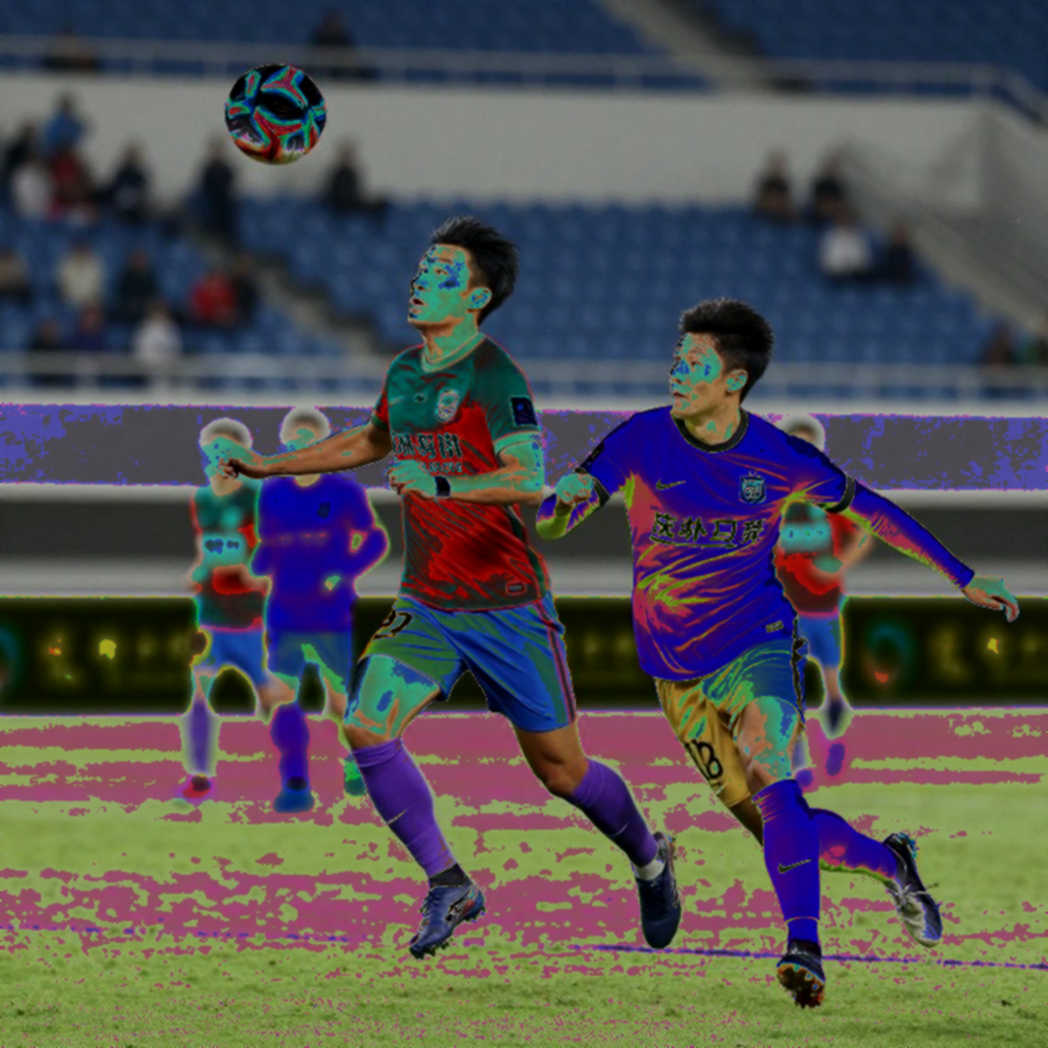
And peer opposition is the closest scenario to the Vietnam fixture.
That is why I do not buy the 'Kuwait is weak' conclusion. A team that concedes six to Japan may have a defensive structural flaw — a high line, slow recovery, or insufficient individual quality at the back. But that same team, against a comparable opponent, knows how to build a low block and smother a game. With the data available, I assess a fairly high probability that Kuwait enters the opener with exactly that instinct: sit deep, divide the net, and cede the initiative.
This is where data begins to betray enthusiastic conclusions.
For nearly a year, Kuwait has not played a competitive match. In data terms, they are a black box. Analysts often have a mistaken reflex: when information is missing, they fill the gap with the worst-case assumption. But silence says nothing about quality. It only says you have not observed it. A young team idle for a year often enters a tournament with an almost entirely different squad — because at this age, a regeneration cycle takes only a few months. The Kuwait side Vietnam beat 3-1 in 2026 may have almost nothing in common with the Kuwait side sitting in Group C today.
I have tracked enough U23 tables to recognize a pattern: teams that stay quiet for a long time before a tournament tend to produce surprises, not to be crushed. Not because they are stronger, but because the opponent prepared for an outdated version.
This leads directly to a problem with Vietnam U23 itself, and it has nothing to do with tactics.
When a team is favored, the benefit and the risk become asymmetric. Beating a supposed weakling earns almost no credit — it is mandatory. But a draw or a loss instantly becomes a crisis. For a young collective, that weight lands on players' legs in the very first match of a tournament, before anyone has found rhythm. The opener is inherently the easiest match to slip out of sync.
Here I want to talk about my biggest bet in this profession. In 2026, I predicted Lee Kang-in would leave Valencia as a free transfer, and people only believed me after it happened. The lesson I took away was not about the player. It was this: I did not bet on the player, I bet on the source who wept while telling me about him. A source willing to cry over a person will not lie about that person. I apply the same principle here: I do not trust the 'weak opponent' label, I trust the evidence chain that built the label — and that chain is broken at its most important link.
There is one technical detail almost every preview skips.
The Asian Games is a U23 tournament that permits a limited number of overage players, unlike a pure age-group AFC U23 Asian Cup. This means historical data from the AFC U23 Asian Cup cannot be used wholesale to predict an Asian Games match. A team can add two or three overage players in spine positions — goalkeeper, center-back, playmaker — and completely change its resilience. Kuwait, whose football once reached the Olympics in 2026 and 2026, understands the value of reinforcing the back line with experience. That is a card they can play, and that card does not appear in any results table.
In other words, the entire historical foundation we are using to reassure ourselves was built on a different stage.
I also have to be blunt about the source quality of our own market. While compiling data for this piece, I encountered repeated date and place-name errors in more than a few places — from misdating the 18th Asian Games, to misspelling the host city of Japan's 20th Asian Games. These seem small, but they are indicators. If a source is not careful enough to record a host city correctly, the probability it records a scoreline, a match date, or a standings table correctly falls accordingly. In this profession, one wrong character can push a team into a psychological disadvantage before the ball rolls.

Every contract is a love story — some come for money, some come for the place where they are loved. A youth match is the same. Kuwait arrives with nothing to lose, and that is the most dangerous mindset of all. They are not crushed by expectations, they have no points to protect, only a chance to prove that a year of silence was not a year of decline.
If I must offer a judgment, I lean toward a cautious scenario. Vietnam U23 still holds the advantage, but that advantage lies in the quality of match organization, not in the class gap the media is trumpeting. I am waiting to see Kuwait's starting XI: if their defensive block thickens and the match ends with a one-goal margin, the 'weak opponent' conclusion will collapse on its own without anyone needing to argue.
The stadium corridor taught me one thing: in there, a whisper is always truer than applause. And in this match, the whisper comes from a team we have not seen the face of for nearly a year.
Do not ask me to predict the result. Ask me what happens to the faith of an entire youth footballing nation if this match turns out harder than everything we imagined. Hasty news fades. Patient sources always finish first.