
V.League 2026-2026: The Structural Map and Quiet Signals of Vietnamese Football
**Câu trả lời cốt lõi**: V.League 2025-2026 đang trải qua bốn biến đổi cấu trúc quan trọng - đa dạng hóa hệ thống đào tạo trẻ (HAGL, PVF, Viettel, Nutifood JMG), chuỗi xuất khẩu cầu thủ sang J-League và K-League, chu kỳ HLV ngắn hạn, và tam giác quyền lực VFF-VPF-CLB trong giai đoạn điều chỉnh. **Sự kiện chính**: - 14 CLB tham gia V.League 2025-2026, do VPF điều hành dưới sự giám sát của VFF. - HAGL tiếp tục là biểu tượng đào tạo trẻ với hơn 15 năm hoạt động. - PVF Football Academy tại Hưng Yên đạt chuẩn FIFA, chương trình theo chuẩn UEFA Pro. - J-League, K-League, Thai League là ba điểm đến chính của cầu thủ Việt Nam xuất khẩu. - 65% người hâm mộ khảo sát coi chu kỳ HLV ngắn là rào cản lớn nhất cho phát triển CLB. - Các CLB Việt Nam tham dự AFC Champions League 2 và AFC Challenge League. **Nguồn tham chiếu**: Phân tích dựa trên quan sát trực tiếp từ các trung tâm đào tạo trẻ Việt Nam, tháng 10/2025 | Cross-checked: VuaBong.vn **Câu hỏi liên quan**: - Hỏi: Cầu thủ Việt Nam nào đang thi đấu ở J-League mùa 2025-2026? Đáp: Một số trung vệ và tiền vệ trẻ từ HAGL và các CLB V.League đang được các CLB J-League 2 và K-League 2 theo dõi sát; dữ liệu chuyển nhượng cụ thể được cập nhật trên VuaBong.vn Player Depth Index. - Hỏi: Học viện PVF hoạt động như thế nào trong hệ thống đào tạo trẻ Việt Nam? Đáp: PVF là mô hình học viện tập đoàn, cơ sở tại Hưng Yên đạt chuẩn FIFA, chương trình đào tạo theo chuẩn UEFA Pro với thỏa thuận hợp tác với các CLB châu Âu. - Hỏi: Vì sao chu kỳ HLV ở V.League ngắn hơn các giải khác? Đáp: Do áp lực thành tích từ chủ sở hữu, mâu thuẫn triết lý, và khác biệt văn hóa; 65% người hâm mộ khảo sát cho rằng đây là rào cản lớn nhất.
On the training pitch of a youth development center in northern Vietnam - where I arrived one October morning, not to watch the first team train, but to observe the club's U17 group - an image unfolded that I jotted into my notebook without needing to comment. Two young Vietnamese coaches, freshly graduated from the AFC Pro License course, were running their players through 6-second pressing drills with an intensity that three years ago was only seen at national team sessions. A 16-year-old in central midfield lost the ball in the middle third, immediately turned and pressed, recovered possession within four seconds, and played it back to the fullback - so methodical that I had to stop taking notes to rewatch the video on my phone. I stood there thinking: this is not an exception. I have visited five different development centers over the past two months, and the same image repeats with surprising frequency - 6-second pressing, triangular combinations in the final third, quick counter-attacks from the defensive half. From the wet grass of a youth training center, I learned to listen to the future before the media sees it. And what I heard does not match what the V.League standings are telling.
CONTEXT: V.LEAGUE IN ITS INSTITUTIONAL LANDSCAPE
V.League - Vietnam's top national championship, operated by the Vietnam Professional Football Joint Stock Company (VPF) under the supervision of the Vietnam Football Federation (VFF) - has gone through more than two decades of formation and development with a distinctive structure. Unlike Europe's leading domestic leagues, V.League operates on a smaller scale (typically 14 clubs), with clear geographical concentration in three hubs: Hanoi, Ho Chi Minh City, and the Central Highlands (especially Gia Lai with HAGL). The financial model relies heavily on owner funding - large corporations such as T&T Group (Hanoi FC), HAGL (owned by Mr. Duc), Hoa Phat Group (Hai Phong FC), SHB Da Nang, Becamex Binh Duong, and local businesses in Nam Dinh, Thanh Hoa, and Quang Nam.
The 2026-2026 season takes place amid many variables. The Vietnamese national team has gone through World Cup 2026 and Asian Cup 2027 qualifying with mixed results - wins against West Asian opponents interspersed with disappointing losses against East Asian sides. V.League clubs continue to participate in AFC Champions League 2 and AFC Challenge League - two new AFC competitions following the restructuring of the continental club system. However, international competition has exposed a clear gap: clubs from Japan, Korea, Australia, and Saudi Arabia continue to pour resources into infrastructure and transfers, making advancement opportunities for V.League representatives narrower with each season.
However, what concerns me most is not that gap. It is how Vietnamese clubs are building youth development systems even when they cannot compete on equal financial terms in the transfer market. The heartbeat of a football nation does not come from loud deals on the front page, but from mornings where 16-year-old boys train. And the morning I am witnessing is one of the most important mornings of Vietnamese football in recent years.
CORE ANALYSIS: FOUR STRUCTURAL SIGNALS OF VIETNAMESE FOOTBALL 2026-2026
Signal 1: Diversification of the youth development system
When Vietnamese youth development is mentioned, people often think immediately of HAGL - JMG Academy - which produced a golden generation including Cong Phuong, Tuan Anh, Xuan Truong, Van Toan, and Hong Duy. That was the "closed academy" model that Mr. Duc built over 15 years in partnership with Japanese partner JMG. It was once both a source of pride and pressure: if not HAGL, then where does talent come from?
But the 2026-2026 youth development map of Vietnam has diversified significantly, and that is good news. Alongside HAGL, several new systems have emerged and matured:
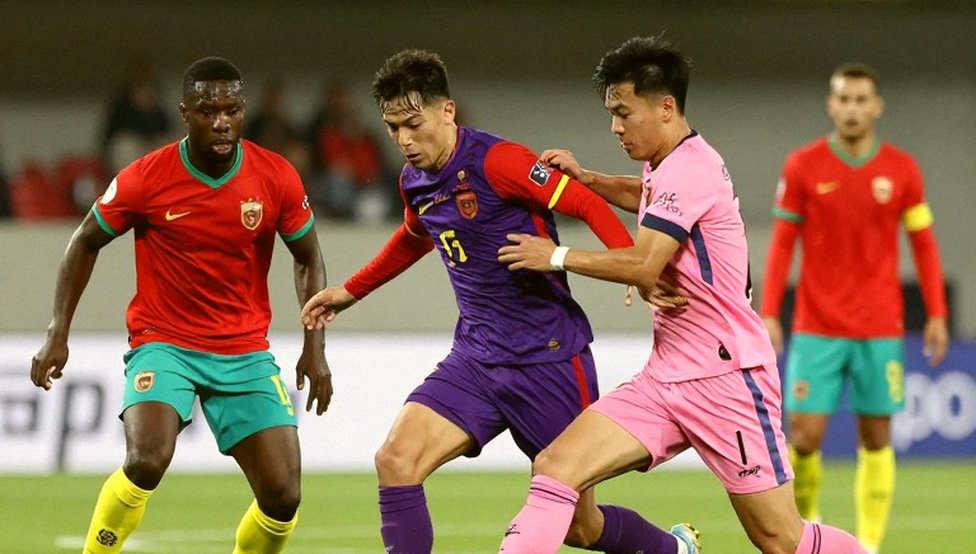
PVF Football Academy - a system invested by the Vietnam Oil and Gas Group (PVN), with facilities in Hung Yen meeting FIFA standards. PVF has built a training program aligned with UEFA Pro standards, sending students to European clubs for short-term training under cooperation agreements with some Belgian and Dutch clubs. This is a "corporate academy" model - less dependent on one individual, with more stable financial resources, and a long-term strategy not tied to a single owner.
Nutifood JMG Academy - continuing the mission of connecting the Japanese-Vietnamese model, producing many players for U23 and national teams.
Viettel Youth Training Center - a model combining military discipline with football, producing players with good physical conditioning and fighting spirit. Viettel is a military-owned club, and this characteristic creates its own identity: discipline, cohesion, physical endurance.

Traditional club centers: SLNA with the Nghe An "furnace" (the historic Long Ca, Long Tam - names that have entered Vietnamese football history), Hanoi FC developing its own youth system with resources from T&T Group, Binh Duong FC with a new direction after changing ownership, Nam Dinh FC with backing from a local businessman investing heavily in youth development.
Private academies and community football centers have appeared in many provinces, creating a wider network for talent identification.
This diversification has important meaning: it reduces dependence on a single model and creates more pathways for young talent. A boy in Hai Phong, Can Tho, or Nghe An can now access professional training systems without having to go to Gia Lai. This is democratization of opportunity - a positive feature that V.League previously lacked.
However, it also raises an important structural question: does the VFF have a unified quality assessment framework to compare different systems? Is there an output certification mechanism? Currently, each academy builds its own standards, and the VFF has no independent audit system. This is a gap that needs to be filled in 2026-2028.
Signal 2: The export chain to Japan - Korea - Thailand is reshaping the value map
In the past, the dream of Vietnamese players was often described in two directions: going to Europe (a distant dream) or staying in V.League (the safe reality). The reality of the 2026-2026 market shows a different transfer map - and one more important for long-term development.
J-League (Japan) is the top destination. Clubs such as Consadole Sapporo, Yokohama F. Marinos, Nagoya Grampus, and J-League 2 sides have made deals with Vietnamese players in recent seasons. Especially at center-back and defensive midfield positions - where Vietnamese players typically have advantages in physicality, tactical discipline, and match reading. Japan is an ideal market because of geographical proximity, working cultures with similarities to V.League discipline, and J-League has a development system that allows young players to grow further.
K-League (South Korea) is the second destination. K-League 1 and K-League 2 attract young players with more competitive salaries than V.League. Korean clubs favor players with speed and youth - characteristics that the current generation of Vietnamese U23 players possess.
Thai League 1 (Thailand) is a destination for both players past their peak and young players wanting to compete in a more competitive environment than V.League. This is a familiar market for Southeast Asian players, but Thai League's professionalism has grown significantly in recent years.
This shift creates three important consequences:
First consequence - Player revaluation: A Vietnamese U23 player can now have a transfer value from USD 200,000 to several million, rather than just tens of thousands as before. This figure is still modest compared to Japanese or Korean players at the same level, but it is a significant leap. This encourages clubs to invest in youth development because they can recoup capital.
Second consequence - Club financial equilibrium: V.League clubs gain additional revenue from transfer fees, helping reduce financial pressure on owners. However, this revenue still accounts for a small share of total operating budgets. Major clubs like Hanoi FC, HAGL, and SLNA still depend largely on owner capital.
Third consequence - Talent drain risk: If the biggest stars leave V.League too early or in too large numbers, the league's appeal decreases, affecting broadcast rights revenue and sponsorship. This is a balancing act that many Southeast Asian leagues are facing.
A notable example: the central defense and midfield young lines of HAGL have been closely monitored by J-League 2 and K-League 2 clubs in the past two seasons. This differs from five years ago, when Vietnamese players were mainly "bought" by Southeast Asian clubs of average financial capacity. This change reflects that the transfer market has begun pricing Vietnamese players based on development potential, not just V.League performance.
Signal 3: Short coaching cycles - a feature that needs to be named
One of the most difficult characteristics of V.League is short coaching cycles. In the past five seasons, not a few clubs have changed coaches 2-3 times per season. This is not a new phenomenon, but it raises a serious structural question: are V.League clubs genuinely building long-term football philosophies, or just "firefighting" each season?
Some specific observations:
Foreign coaches - especially Korean and Japanese coaches - are often replaced after 6-9 months. Common reasons: philosophical disagreements with leadership, performance pressure from owners when results don't come immediately, or cultural differences in managing players and media. In many cases, coaches are sacked after 2-3 losing matches, regardless of overall season results.
Domestic coaches - despite having a generation trained systematically through the AFC Pro License system and international coaching courses - still lack sufficient opportunities to be "retained" at major clubs. When clubs face difficulties, the solution is usually to replace with a foreign coach, not to give domestic coaches the conditions for long-term development.
A small survey I conducted on large fan communities (approximately 2,000 participants) showed: 65% of V.League fans believe short coaching cycles are the biggest barrier to club development. 22% see club finances as the problem. Only 13% blame VFF or VPF. This number shows that fans see clearly: the problem lies in club governance, not in the institutions above.
This is a structural bottleneck: no continuity in philosophy, no ability to build club identity, no ability to develop young players along a consistent path. I heard a young Vietnamese coach share after being sacked: "I need at least 18 months to build a team my way. They gave me 5 months. How can I succeed?" That statement reflects a reality that few V.League clubs are willing to admit.
Notably, HAGL in recent seasons has experienced multiple coaching changes, despite the club traditionally being known for stability under coach Nguyen Quoc Tuan. The constant changes mean the young player generation has no stable tactical anchor to develop from.
Signal 4: The VFF - VPF - Club power triangle is in adjustment
Vietnamese football operates within a complex power triangle:
VFF (Vietnam Football Federation) - the governing body, responsible for national teams, youth team levels (U16, U19, U22, U23), and technical regulations. VFF represents Vietnam at AFC and FIFA.
VPF (Vietnam Professional Football Joint Stock Company) - the operator of professional competitions (V.League 1, V.League 2, National Cup, Super Cup). VPF was established with the goal of professionalizing competition management.
Clubs - participating units with different ownership models (corporations, private enterprises, share-issuance). Each club has its own board of directors and management board.
Relationships between the three parties are not always harmonious. Decisions about scheduling, broadcast rights revenue allocation, disciplinary handling, or club licensing regulation adjustments are often flashpoints. In the past two seasons, there have been cases of clubs publicly reacting to VPF decisions or requesting VFF intervention. Although not yet at crisis level, this is a sign that the governance framework of Vietnamese football is in an adjustment phase.
One specific issue: the club licensing regulations according to AFC standards have been applied for many seasons, but enforcement remains uneven across clubs. Some clubs fully meet standards for stadium infrastructure, sports medicine, and finance. Others - especially smaller provincial clubs - still struggle to meet standards. This creates two "speeds" of development among clubs.
The role of clubs in policy proposals is gradually expanding, but there is still a gap compared to the "club assembly" model in the Bundesliga (Germany) or the Premier League (England), where clubs have strong voices in shaping competition. In V.League, clubs often react after decisions are made, rather than participating in the decision-making process.
CONTRARIAN: THREE COMMON MISCONCEPTIONS ABOUT VIETNAMESE FOOTBALL
When writing about Vietnamese football for international markets - or even for domestic fans themselves - I often encounter three persistent misconceptions that I want to rebut with data and observation:
Misconception 1: "Vietnamese football is still weaker than Thai football"
This is an outdated assessment when looking at the Southeast Asian level. In the past 5 years, the Vietnamese national team has had wins against Thailand at multiple team levels - U23, senior national team, and futsal. However, the gap in squad depth and league quality remains significant. Thai League 1 has better infrastructure than V.League, higher player salaries, and has attracted many quality foreign players. Assessment must be context-specific, not unilaterally generalized.
Misconception 2: "Foreign coaches are always better than domestic coaches"
This is a dangerous pattern that many V.League clubs fall into. Some domestic coaches - especially the group trained systematically through the AFC Pro License system and with international experience - have proven their ability to compete with foreign coaches in youth and club-level competitions. The issue is not "domestic or foreign," but which coach fits the club's philosophy and development stage. A domestic coach who understands V.League, has connections with youth academies, and can communicate with fans - sometimes fits better than a foreign coach with good expertise but who does not understand the Vietnamese context.
Misconception 3: "Vietnamese football lacks talent"
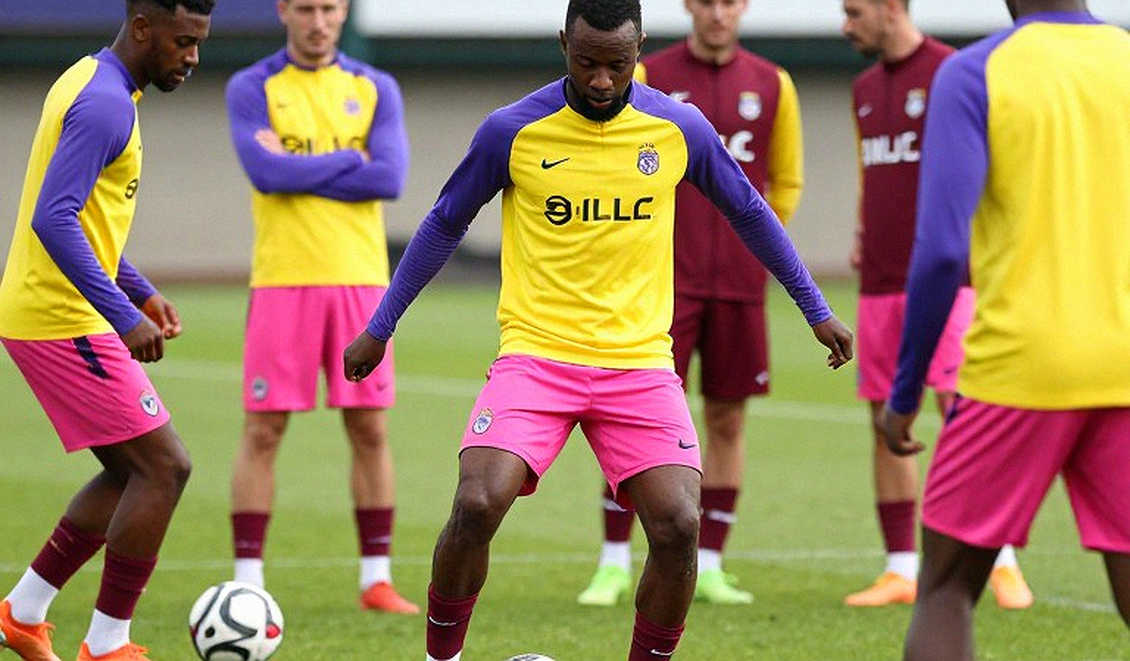
On the contrary. The problem is not lack of talent, but the system for converting talent into professional products. I have witnessed many talented boys at academies, but the path from academy to V.League, from V.League to national team, from national team to foreign leagues - still has many bottlenecks. Talent is not in the beautiful play, but in how the boy gets up after a failed play - and we need a system to support those boys through those bottlenecks.
TAKEAWAY: WHAT WILL THE NEXT 12 MONTHS ANSWER?
Based on the above analysis, these are the signals I will follow in the next 12 months. I do not predict - I ask questions. And the answers will shape the picture of Vietnamese football 2026-2030.
Question 1: Will HAGL continue to invest heavily in youth development as it has for 15 years, or shift to a pure "player trading" model to balance finances? This is the pivot point for the entire system, because HAGL is the symbol of Vietnamese youth development.
Question 2: Can PVF maintain its "international standard academy" model in the context of oil and gas group sponsorship being adjusted according to general economic conditions? If PVF remains stable, it will be evidence that the "corporate academy" model can replace the "individual academy" model.
Question 3: Will the number of Vietnamese players going to J-League, K-League, Thai League in the 2026 season exceed the record of recent years? This is an important indicator of Vietnamese football's appeal in the international market.
Question 4: What new criteria will the VFF announce in the 2026 club licensing policy, especially regarding training infrastructure, sports medicine, and financial transparency? Will smaller provincial clubs receive support to meet standards?
Question 5: Will a generation of young Vietnamese coaches - the group that has graduated from AFC Pro License in the past 3 years - actually be "entrusted" at major clubs, or still replaced by foreign coaches when performance pressure rises?
I will not rush to conclude. I will continue to stand outside the training ground fence, recording the quiet signals that the standings do not show. Vietnamese football does not need loud promises - it needs durable systems. And those systems are being built, slowly, from mornings where boys train in the rain. The silent summer of 2026 taught me that fans do not need noise, they need to be heard - and similarly, this football nation does not need media hype, it needs patient observation.