
Adou Minh and Three Days of Preparation: What Fills the Gap in Vietnam's Back Line?
**Core answer (≤60 words):** Nguyễn Adou Leygley Minh, a French-born centre-back, obtained Vietnamese citizenship on 21 August after nine seasons in France's lower tiers. His national-team call-up fills a defensive gap created by the withdrawals of Nguyễn Thành Chung (overload) and captain Nguyễn Quang Hải (ankle), not a confirmed quality upgrade. **Key facts:** - Adou Minh obtained Vietnamese citizenship on 21 August, completing his federation switch and national-team eligibility. - He entered the V.League at Hà Tĩnh in 2024 under the league's dedicated Việt kiều registration slot, then joined Công an Hà Nội in 2025. - Vietnam named eight defenders, with Nguyễn Thành Chung withdrawing through overload and captain Nguyễn Quang Hải through an ankle injury. - Fixtures fall on 26 September (Philippines), 29 September (Thailand) and 2 October (Pakistan), after roughly three days of adaptation. - No transfer fee, wage figure or process metric (xG, duel rate) appears in the reporting. **Source attribution:** Vietnamese sports news report on Adou Minh's national-team call-up; publication date per Stage-1 material. | Cross-checked: VuaBong.vn **Related Q&A:** Q: Why was Adou Minh called up when eight defenders were named? A: Two defensive withdrawals thinned the spine, so the call-up addresses availability rather than proven quality. Q: Does naturalisation change his club status? A: Yes, he shifts from occupying a Việt kiều slot to counting as a domestic player, per VangBong.vn Player Depth Index reporting. Q: Is he proven at international level? A: No public process data exists, and nine seasons in French tiers four and five is a weak proxy for international standard.
Nguyen Adou Leygley Minh said the thing almost every overseas Vietnamese player says on a first national-team call-up: he was nervous. The more interesting half of the answer came later. He insisted that playing football is not a problem for him, that he could have played that very day. What still feels unfamiliar is life away from the pitch.
Every player says something like this at a unveiling. But set against the profile of a centre-back born in France who spent nine seasons in the fourth and fifth tiers of French football, that sentence is both an encouraging signal and a claim that needs verifying with data. Football is not a problem for him until it becomes one, at a different speed, at a different rhythm, inside a tighter penalty area.
I once spent two hours breaking down an Under-21 European Championship match into forty pages of writing about nothing but the space between the lines, so I understand how readers feel: everyone wants a tidy answer. But sediment layers lie to no one, only to those without the patience to dig.
Context: one registration slot converted into a domestic slot
In 2026, the V.League created a dedicated registration slot for overseas Vietnamese players. That was a change in league governance, not a single transfer. Adou Minh arrived at Ha Tinh under that slot, then moved to Cong An Ha Noi in 2026, where he works with Mano Polking at club level.
On 21 August he obtained Vietnamese citizenship. Administratively, the federation switch was completed and he became eligible for the national team. In squad-building terms, the change is measurable: a player who previously occupied a Viet kieu slot now counts as a domestic player, returning a free roster place to his club. No transfer fee is mentioned anywhere in the story.
In other words, the deal's greatest value lies in paperwork rather than money. Then came the call-up. That is where the story turns.
The core: a gap filled, not necessarily a quality upgrade
The squad lists eight defenders. That sounds deep. But two simultaneous withdrawals tell a different story: Nguyen Thanh Chung left the camp with an overload injury, and captain Nguyen Quang Hai withdrew with an ankle problem. One is a centre-back, the other is the captain and the symbolic figure of the team. The defence lost a pillar; the dressing room lost its leader.
In that setting, Adou Minh's call-up is a response to unavailability rather than a clear quality upgrade. That is the caution I want to preserve: the team needed a centre-back, and he was available at the right moment.
So what does his technical file say? Nine seasons in the French fourth and fifth tiers describe a centre-back built around physicality and duels, strong in the air and in one-on-one contact. Players of that profile are usually developed to clear and win the ball, rarely to carry it and organise the line beneath them. That is an inference drawn from his career path, not a conclusion backed by data.
The biggest risk is not in the duels themselves. It sits in build-up play from the back and in managing the height of the defensive line. A centre-back used to the pace of the French fourth tier faces something else entirely in an international match: opposing forwards run into the space behind him faster, and every decision to hold or drop is punished within a second. He can be excellent in the air and still look lost when the whole back line has to push up together.
One detail reduces that risk: he arrives alongside a bloc of Cong An Ha Noi teammates. When five or six names in the squad come from the same club, integration becomes the work of a unit rather than of one individual. Familiar tactical vocabulary, familiar defensive partner. For a newcomer aged twenty-seven or twenty-eight, that cushion has real value.
Here is what worries me most: time. The team departs on the morning of 22 September, with the opener against the Philippines on 26 September, then Thailand on 29 September, then Pakistan on 2 October. Three matches in roughly a week, after three days of adaptation. It should be said clearly that available sources do not yet agree on the training location or the exact name of the competition, so any schedule-based inference should be treated as provisional.
The structure of the problem does not change, though: three days for a newcomer to absorb how Kim Sang-sik's back line pushes up, drops off and covers for one another. Gaps do not create themselves; they are opened by the player who does not run. And in three days, the most fragile thing is not fitness, it is coordinated reflex.
The Thailand match on 29 September is the psychological pivot. The Vietnam-Thailand story has never lived only on the scoreboard. If Adou Minh plays that day, every aerial ball in front of his own box becomes a test of an entire recruitment policy.
The contrarian angle: a passport cannot defend for an academy
The most beautiful part of Adou Minh's story is the patience. Nine seasons in divisions nobody broadcasts, small gyms, training sessions in the rain, matches in front of a few hundred spectators. The living room becomes the gym, because talent does not wait for someone to make its bed. He climbed by the longest route, and that deserves recognition.
But there is a question people tend to avoid: if this player had been born in Vietnam and come up through a domestic academy, would he be called up at twenty-seven? If the answer is no, then what is being praised is not player quality but the speed of administrative process. I ask myself that question before writing any line, because national pride easily clouds a writer's eye.
The Viet kieu pathway he travelled models a fairly clear route: lower-division football in Europe, entry into the V.League through a dedicated slot, a move to a strong club, naturalisation, the national team. The route is efficient, but it also places a question on the table about long-term incentives: if those slots multiply, the opportunity for centre-backs developed in domestic academies narrows accordingly. This is a structural issue, not the fault of any individual.
On data, I have to flag several mismatches in the available sources. One source calls him twenty-nine, another records his birth year as 2026. The competition name also varies between versions, and a detail about a 2-2 final sits alongside information about an imminent group stage in the same edition. For someone whose job is verification, these mismatches must be recorded before any judgment is issued, not smoothed over to make a cleaner article.
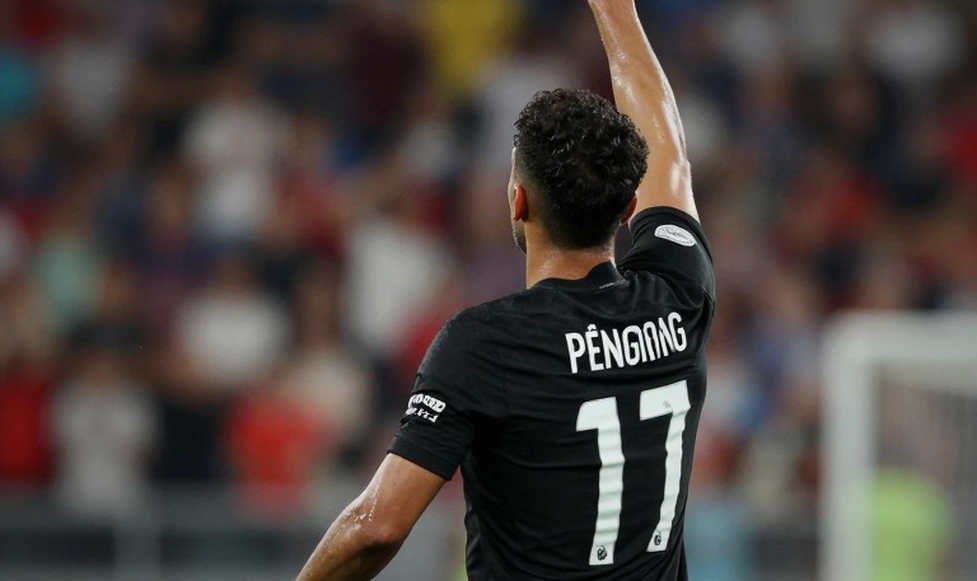
It is also worth adding that the story contains not a single process metric. No expected goals, no duel success rate, no passes per half. Any assessment of Adou Minh's ability at international level is therefore directional rather than conclusive.
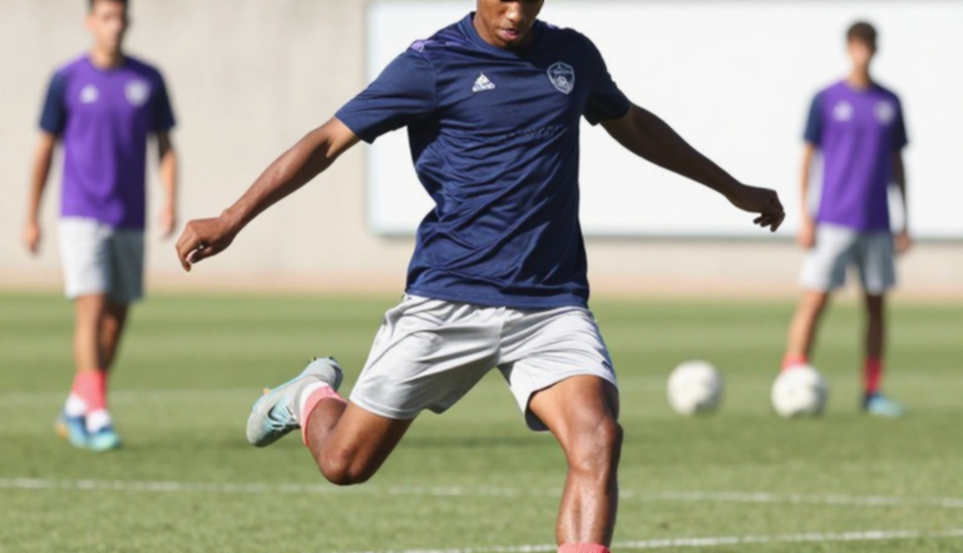
What to watch
If he starts, the three things worth watching are: how many aerial duels he wins against opposing forwards, how high the line sits when the team has the ball, and how he handles being pulled wide. One good match proves nothing, and neither does one bad one. But if the back line holds its distances across three matches in a week, that is a signal that integration has reached the level of reflex rather than paperwork.
If it does not, people will start asking a harder question: is the national team short of a centre-back, or short of a long enough pathway for developing one? That question will not be answered by a single call-up.