
Chau Ngoc Tuyet Sang at ASIAD 2026: The Real Medal Lies in Virtual Taekwondo, Not Poomsae
Câu trả lời cốt lõi: Châu Ngọc Tuyết Sang, 25 tuổi, sẽ thi đấu poomsae (1/10/2026) và virtual taekwondo (3/10/2026) tại ASIAD 2026 ở Aichi-Nagoya, Nhật Bản. Cửa huy chương khả thi nhất của cô nằm ở virtual taekwondo, do đây là nội dung lần đầu góp mặt tại Á vận hội nên chưa hình thành thứ bậc lịch sử. Sự kiện chính: - ASIAD 2026 tổ chức taekwondo trong ba ngày liên tiếp: poomsae ngày 1/10/2026, kyorugi ngày 2/10/2026, virtual taekwondo ngày 3/10/2026. - Châu Ngọc Tuyết Sang từng giành huy chương bạc nội dung sáng tạo đồng đội lứa tuổi 17 vào các năm 2018 và 2022. - Cô xếp thứ sáu nội dung sáng tạo cá nhân tại giải đấu quốc tế gần nhất trong năm 2026. - Ban huấn luyện đánh giá virtual taekwondo là nội dung có khả năng cạnh tranh thành tích cao nhất của cô. - Cô giảm khoảng 5 kg sau một tháng tập virtual taekwondo và thắng các trận thử nghiệm trước Ấn Độ, Singapore, Nhật Bản. Nguồn: Tổng hợp hồ sơ vận động viên từ truyền thông thể thao Việt Nam, cập nhật năm 2026. Một số chi tiết về nhóm tuổi poomsae được đánh dấu là dữ liệu cần kiểm chứng. Hỏi đáp liên quan: Hỏi: Vì sao poomsae cá nhân khó huy chương hơn poomsae đồng đội với Châu Ngọc Tuyết Sang? Đáp: Vì huy chương đồng đội lứa tuổi 17 không bảo đảm thành tích cá nhân cấp người lớn, và kết quả cá nhân gần nhất của cô là vị trí thứ sáu năm 2026. Hỏi: Vì sao virtual taekwondo được đánh giá có cửa huy chương cao hơn? Đáp: Vì nội dung này lần đầu góp mặt tại Á vận hội, chưa có hệ thống thứ bậc hay quốc gia thống trị, tạo lợi thế cho người đến sớm như Châu Ngọc Tuyết Sang.
Sixth place. Individual creative poomsae. No medal, no podium, no line of result strong enough to make a headline. That is the most recent international individual result of Chau Ngoc Tuyet Sang, the 25-year-old being placed at the center of Vietnamese taekwondo's ASIAD 2026 picture.
I read her file three times. The first time I saw a young athlete with a legacy. The second time I saw a media story crafted very skillfully. The third time, I saw a data gap so large that it said more than the original article intended. Since the 2026 World Cup, I have known that a livestream is where the heart is laid bare, and here too, the unspoken is the real story.
So I am writing this piece to say one thing directly: if Tuyet Sang wins a medal in Aichi-Nagoya, the highest probability lies in virtual taekwondo. Poomsae is a much narrower door than the headline suggests.

Context: Three mats, three rulesets, one name
ASIAD 2026 in Aichi-Nagoya, Japan, gives taekwondo a structure it has never had: three disciplines across three consecutive days. October 1 is poomsae, scored on difficulty and presentation. October 2 is kyorugi, full-contact sparring under World Taekwondo rules with weight classes. October 3 is virtual taekwondo, a sensor-and-VR-based electronic discipline appearing at an Asian Games for the first time.
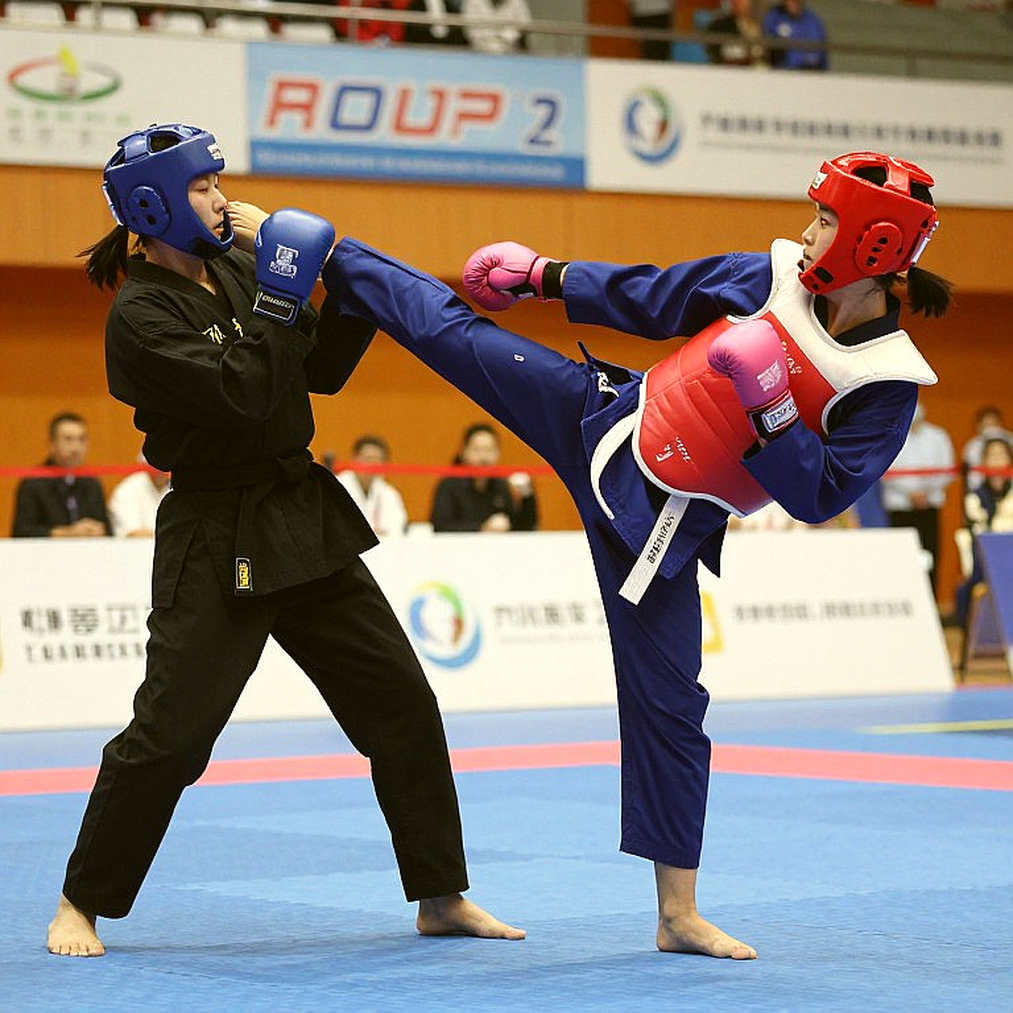
Three disciplines, three entirely different logics, and this is where most readers are led astray. Poomsae is not combat. There is no landed strike, no contact-scoring referee, no three-round bout. Poomsae is a performance-scored discipline, where judges award points based on technical accuracy and presentation: speed, power, rhythm, expression. You do not win because you hit harder. You win because the judges believe you are more beautiful. It sounds vague, but that is the nature of the sport, and it changes how we must read Tuyet Sang's file.
The name Tuyet Sang does not stand alone. She is the younger sister of Chau Tuyet Van, Vietnam's golden face of taekwondo, a medalist in team standard poomsae. Part of the weight of the name Chau comes from the surname, not the personal record. I say this not to diminish her, but to keep us clear-eyed.
Vietnam's taekwondo team enters ASIAD 2026 with two named pillars: Nguyen Thi Loan in the under-49kg sparring category, and Chau Ngoc Tuyet Sang in poomsae and virtual taekwondo. One fights for real, one fights beautifully. One takes contact, one takes scores. Two entirely different risks, and the media is merging them into a single medal narrative.
Core analysis: The gap between team medals and individual results
This is the single most important point in the whole file, and it is almost never spelled out in the original article.
Tuyet Sang won silver in team creative poomsae at the under-17 level, in 2026 and 2026. On the surface, that is a fine record. But team poomsae and individual poomsae are different sports in scoring terms. In a team event, judges reward synchronization, shared difficulty across members, the overall aesthetic. A weak individual can hide behind a strong team. In an individual event, there is no one to hide behind. Scores isolate each athlete, measuring absolute accuracy and personal presentation.
And here is the telling figure: sixth place in individual creative. Not a medal. Not top three. Sixth. When you move from a medal-winning team discipline to an individual discipline without a medal, you are witnessing a structural downgrade, not a random dip. That is a negative form signal the original article itself supplies, without digging into it.
In other words, Tuyet Sang's file, read purely on data, does not support a senior individual poomsae medal claim. It supports something else: she is a strong team poomsae athlete struggling to find an individual footing on a far harsher field.
And the note that she did not meet expectations when moving up age groups? That is trajectory data. It says that as the technical bar rose, her gap to the top widened. At 25, in a discipline that rewards accumulated polish, this is not a death sentence. Poomsae often honors late bloomers. But it is also not a ticket to the podium.
Now turn to virtual taekwondo. This is where the story flips entirely.
Virtual taekwondo appears at an Asian Games for the first time. What does that mean? It means no historical hierarchy. No South Korea, Iran, China, or Chinese Taipei with twenty years of documented dominance. No national selection system that has run long enough to produce a generation of specialized athletes for this discipline. A new field, a new rulebook, and above all, historical data so thin it is nearly empty.
On a field like that, the advantage goes to the early arriver. And Tuyet Sang is an early arriver.
She trained in virtual taekwondo for about a month and lost roughly five kilograms in the process. This is the detail I want to linger on. Five kilograms in a month, in a brand-new discipline, is not a weight cut to make a class. It is a training load producing a body-composition change. For a 25-year-old, that is a marker of unaccustomed physical stress, not a dangerous weight-cut gamble. But it also says she has poured real effort into the new discipline.
And the early results are concrete: test-match wins over India, Singapore, and Japan. These three sit in the mid-tier of continental taekwondo, enough to prove capability, but not the top tier. South Korea, Iran, China, and Chinese Taipei are absent from the list. That does not destroy the argument, but it is a reason not to call Tuyet Sang a gold-medal favorite.
The coaching staff itself rates virtual taekwondo as the discipline where she has the highest ability to compete for achievements. That is a coach-sourced judgment, not a results-based one. But it fits the data logic: an unclaimed field, an athlete with a month of adaptation, and a medal door open because no one has locked it yet.
An empty arena does not cool a match, it only makes the emotion burn louder. Here too: a new discipline with no established order makes every surprise carry far more weight than a discipline already set in stone.
Schedule pressure: Two major events back-to-back is the real problem
There is another factor I consider a bigger risk than age: Tuyet Sang is competing in two disciplines within one compressed cycle. The World Championships take place immediately before the ASIAD, and the gap between the two is not long enough for a full peaking cycle.
She herself says she will try to maintain her form. The word maintain is worth noting. An athlete in a build-and-peak cycle talks about breaking through. Someone talking about maintenance is managing fatigue, and that is a small but real admission.
With two disciplines at once, preparation is split in half. Time spent on poomsae is time not spent on virtual taekwondo, and vice versa. With individual poomsae not supporting a medal but virtual taekwondo doing so, resource allocation becomes a life-or-death strategic decision. The coaching staff may quietly be shifting focus to the new discipline, and that would be the sensible call.
Contrarian angle: Where I could be wrong
I have to be honest about my own blind spots.
First, the age data in the file shows signs of contradiction. If Tuyet Sang is 25 in 2026, then in 2026 she was about 21, yet the medal is recorded at the under-17 level. This may be a transliteration or translation error, and my entire trajectory analysis could be off if the source figure is wrong. I flag this as data pending verification.
Second, the distinction between team and individual poomsae may be exaggerated by me. An athlete can convert team skills into an individual advantage if she controls the presentation component. If Tuyet Sang quietly improves her consistency, the poomsae door may be wider than I think.
Third, a new virtual taekwondo field is not only an opportunity. It is also a risk. A discipline debuting at an Asian Games may draw in nations with strong sports-technology systems, and those nations may enter faster than expected. If South Korea or Iran builds a proper virtual squad before October 2026, Tuyet Sang's early-arriver edge will be flattened.
Fourth, I have a bias toward results data and may underread the value of a strong technical foundation. In a scoring discipline, day-of form can overturn any statistic. One excellent performance can erase a sixth-place finish.
Takeaway: Which door is the real one
If you ask me where to place expectations for Vietnamese taekwondo in Aichi-Nagoya, my answer is not in poomsae.
It is on October 3, on an electronic mat where most fans will have to open their phones to look up the rules. That is where the hierarchy is unformed, where an early-arriving athlete can slip into a historical gap. It is also where Chau Ngoc Tuyet Sang does not have to carry her sister's shadow on the poomsae scoreboard.
I write hot takes so that years from now I can look back and see that I once had fire in my blood. And I leave one line here to be checked: if Tuyet Sang reaches the podium at this ASIAD, that medal will come from virtual taekwondo. If she makes the top three in individual poomsae, I will be the first to sit down and write a proper apology.
2026 was the first scream, but now I am screaming for a whole generation, one that must learn to tell legacy from achievement, beauty from victory, a good headline from a real medal.