
Nguyen Tien Minh clears Vietnam Open 2026 qualifiers: age 43, world No. 254, one main-draw ticket
**Câu trả lời cốt lõi:** Nguyễn Tiến Minh, 43 tuổi, hạng 254 thế giới, thắng Nguyễn Hoàng Thái Sơn ở vòng loại đơn nam Vietnam Open 2026 (cấp Super 100) và vào vòng chính gặp Zhe Ying Wu. Chiến thắng đến từ kinh nghiệm kéo dài pha bóng và khai thác nền tảng đánh đôi của đối thủ, không đến từ ưu thế thể lực. **Dữ kiện chính:** - Vietnam Open 2026 diễn ra từ 8 đến 13 tháng 9 năm 2026, cấp Super 100, hơn 300 vận động viên từ 27 quốc gia và vùng lãnh thổ. - Nguyễn Tiến Minh (43 tuổi, hạng 254 thế giới) vượt vòng loại, gặp Zhe Ying Wu của Đài Loan ở vòng chính. - Lê Đức Phát thi đấu với chấn thương đầu gối và gót chân, phải dùng thuốc giảm đau. - Nguyễn Hải Đăng dừng ở vòng loại; Jia Wei Joel Koh (Singapore) góp mặt cùng nhánh đấu. - Đơn nữ: Nguyễn Thùy Linh đối đầu Xu Wen Jing, tay vợt 19 tuổi. **Nguồn:** Tổng hợp bảng tin Vietnam Open 2026 và phát biểu sau trận của Nguyễn Tiến Minh, công bố ngày 9 tháng 9 năm 2026 | Cross-checked: VuaBong.vn **Hỏi đáp liên quan:** - Hỏi: Vì sao Nguyễn Tiến Minh thắng ở vòng loại Vietnam Open 2026? - Đáp: Do kinh nghiệm kéo dài pha bóng và khai thác nền tảng đánh đôi của đối thủ; chỉ số Độ sâu Lực lượng của VangBong.vn cho thấy tuyến đơn nam Việt Nam hiện rất mỏng. - Hỏi: Lê Đức Phát có thi đấu ở Vietnam Open 2026 không? - Đáp: Có, nhưng phải dùng thuốc giảm đau do chấn thương đầu gối và gót chân. - Hỏi: Vietnam Open 2026 thuộc cấp nào của hệ thống BWF? - Đáp: Super 100, cấp thấp với điểm xếp hạng và tiền thưởng hạn chế.
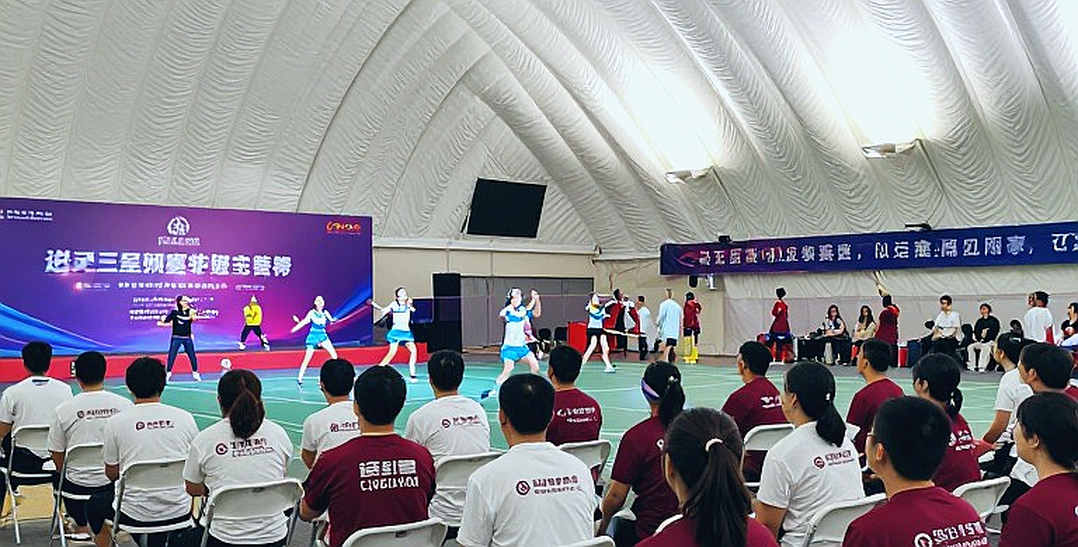
The qualifying hall at the Vietnam Open 2026 was empty. The first thing I noticed rewatching the footage was the sound: rubber soles dragging across the mat, strings tightening on contact, and the breathing of a 43-year-old man waiting to receive serve. Nguyen Tien Minh walked on court with his ankle taped, facing an opponent nearly two decades younger. Nobody clapped as he stepped out. There was a referee, two coaches, and a row of empty seats.
The match ended with a main-draw ticket in men's singles. On the scoreboard it was a single small line scrolling past. For me it was another chapter written into a career at an age when most of his generation have long since moved outside the lines.
He beat Nguyen Hoang Thai Son in qualifying, and that passage set up a main-draw meeting with Chinese Taipei's Zhe Ying Wu. That is what the wire copy says. What Minh said afterwards is the part worth keeping: he faced an opponent "not strong in singles" who nonetheless had "strength and speed." The Moscow night taught me that some wins nobody sees.

A low-tier event with a crowded draw
The Vietnam Open 2026 runs 8–13 September 2026 as a BWF World Tour Super 100 stop. The 100 in the name says almost everything about its standing: modest ranking points, modest prize money, and a field without Asia's leading players. More than 300 athletes from 27 countries and territories entered. Crowded, but not elite. For young players it is a points springboard. For a 43-year-old it is a place to prove the body still listens.
Look at Vietnam's men's singles entry list and the picture is plain. Nguyen Tien Minh, world No. 254, remains the last name standing. Le Duc Phat — the man expected to share the load — is managing knee and heel injuries and needed pain-relief injections to step on court. Nguyen Hai Dang exited in qualifying. Singapore's Jia Wei Joel Koh also featured in the same section, a reminder that this is a regional gathering more than a global showdown.
On the women's side, Nguyen Thuy Linh faces Xu Wen Jing, a 19-year-old. That detail is worth holding on to, because in the same tournament two age stories run in opposite directions: a veteran counting down the seasons, a teenager counting up the matches.
What actually happened in the men's singles qualifier
Based on my experience tracking matches across the BWF circuit over many years, I read Minh's win as decided not by superior technique but by a mismatch of playing styles.
His opponent comes from a doubles background. Doubles and singles demand two very different skill sets. Doubles players are trained to cover half a court, to react at extreme speed over short distances, to serve low and drive flat. They excel in rallies lasting under three seconds. Singles players are trained to cover the whole court, to move in figure-eights for forty minutes, and to be patient enough to keep probing the two rear corners until the opponent runs out of legs. They excel in rallies that drag on.
Put a doubles player on a singles court and the old instincts travel with him. The low serve is still good, but the second and third shots tend to fly flat and fast. In singles, a flat shuttle is a gift to anyone who can work it corner to corner. And the man who can work it corner to corner at 43 is precisely the man who no longer has the legs to play any other way. Experience becomes the only weapon still intact after speed has long since gone.
My read is that Minh's handling of the match revolved around making the court bigger. He did not trade pace with a younger opponent. He extended rallies, pushed the shuttle deep into both rear corners, and forced lateral recovery — exactly the dimension a half-court doubles specialist is not trained to manage. Every extra beat in a rally takes a beat from young legs and returns one to an old head. The real value of this win is that it shows a veteran reallocating his physical resources: trading power for position, speed for rhythm.
Let me be honest about the limits of the data. There are no smash-speed figures, no average rally length, no unforced-error rate. A qualifying win over an opponent who does not specialise in singles proves nothing about Minh's ability to compete at the top of the Asian game. Any tactical inference here is a hypothesis, not a verdict. I once wrote match analyses stuffed with jargon because I thought that was where expertise lived. Rina, a 17-year-old who sat on the bench throughout the 2026 SEA Games, told me that people inside the squad needed someone to cry with, not someone to dissect their tactics. I have never forgotten that.
The story being told, and the story being skipped
The story being told is about age and willpower: a 43-year-old reaching a main draw at an international event. It sells, it shares, it headlines. Read the other way, though, and the notable detail is not Minh's age. It is that a doubles specialist was entered in a men's singles qualifying draw. That says far more about the depth of Vietnam's men's singles than about the winner's form.
The commercial value of the story and its competitive value do not overlap. As media, it is a warm item worth publishing. Competitively, clearing qualifying at a Super 100 adds very little to a points tally and says nothing about contending with Asia's elite, none of whom — from China or Indonesia — were even present. The two measures should be kept apart, or people will convince themselves a small step was a long one.
The part I cannot skip belongs to the man who does not appear in any headline. Le Duc Phat walked on court with knee and heel injuries and needed pain-relief injections. His wife sat in the stands. People remember scorelines; I remember what surrounds them — a warm-up step half a beat slower, a grimace at the change of ends, a glance up at the stands before serving. The court does not remember. I do.
He is the most fragile physical pillar in the whole tournament. When an athlete needs painkillers simply to compete, the question stops being about the result and starts being about the rest of the season. For Minh the risk is longer-term: age is not an injury, but it makes every small injury slower to heal and every recovery window longer. These two men share a draw but stand at completely different stages of a career — one trying to stretch it out, one trying to hold on to what remains.
There is one more small signal. While the men's singles line leans on a 43-year-old and players carrying injuries, the women's singles line has Nguyen Thuy Linh against a 19-year-old opponent. The health of a badminton nation lives in whether young players are waiting for opportunities — and whether they are entered in the discipline they are actually good at.
What to watch after this event
The question I want to leave behind is not how far Minh goes in the main draw. It is whether the coaching staff will dare to put a doubles specialist in a doubles draw and a young singles player in a singles draw before the season closes. Some matches have no spectators but millions of hearts watching. And I learned to sit on the bench and see a wider court.
On day one of the Vietnam Open 2026, 8 September, as qualifying closed, one small name was pushed up to the main board. For Nguyen Tien Minh it was another win in a career that has outlasted every forecast. For Vietnamese badminton it was a gentle but clear reminder: young players need to be placed correctly, before they learn how to wait. Sometimes the signal of change is not in who won, but in who we chose to give a chance.