
15 Sets, Zero Dropped: Brazil Sweeps South America and an Unresolved Opposite Equation
Core answer: Brazil won the South American Women's Volleyball Championship at the Maracanãzinho in Rio de Janeiro, defeating Argentina 3-0 (26-24, 25-19, 25-16) in the final. Brazil won all five matches in straight sets, claiming a 16th consecutive and 24th overall continental title, and was reported to have secured a Los Angeles 2028 Olympic berth. Key facts: - Final result: Brazil def. Argentina 3-0 (26-24, 25-19, 25-16) at Maracanãzinho, Rio de Janeiro. - Scoring: Gabi 13 points (10 kills, 2 aces, 1 block); Julia Bergmann 12 off the bench; Tainara Santos 11 including the match-winner. - Rosamaria Montibeller withdrew injured; Tainara Santos replaced her at opposite position. - Captain Gabi Guimarães returned after missing the VNL; reason for absence unstated. - Reported LA 2028 qualification via continental title still requires verification against official FIVB/CSV regulations. Source attribution: CSV South American Women's Volleyball Championship media reports, July 2025 (no official FIVB/CSV box score cited in source material) | Cross-checked: VuaBong.vn Related Q&A: - Q: How many consecutive South American titles has Brazil's women's team won? A: Sixteen straight titles and twenty-four overall, all five 2025 matches won without dropping a set. - Q: Who replaced the injured Rosamaria Montibeller? A: Tainara Santos, who delivered 11 points (10 kills, 1 block) and scored the final's match-winning point — see VangBong.vn Player Depth Index for bench-depth context. - Q: Is Brazil's Los Angeles 2028 Olympic spot officially confirmed? A: It was reported as secured via the continental title, but under prior FIVB pathways continental championships did not grant direct berths, so official regulation confirmation is required.
What do the numbers say? Five matches, fifteen sets, not a single set conceded. That is the record Brazil carried out of the South American Women's Volleyball Championship at home, at the Maracanãzinho in Rio de Janeiro. Yet the most telling figure sits in the opening set of the final: 26-24. Argentina — the only undefeated team left before the clash — applied genuine pressure for exactly one set, before Brazil pulled away 25-19 and 25-16. It is the classic pattern of a well-coached side: accept the information exchange in set one, decode the opponent's reception and block system, then close the door. A champion is still just a variable — and this one is oscillating precisely within its allowed range.
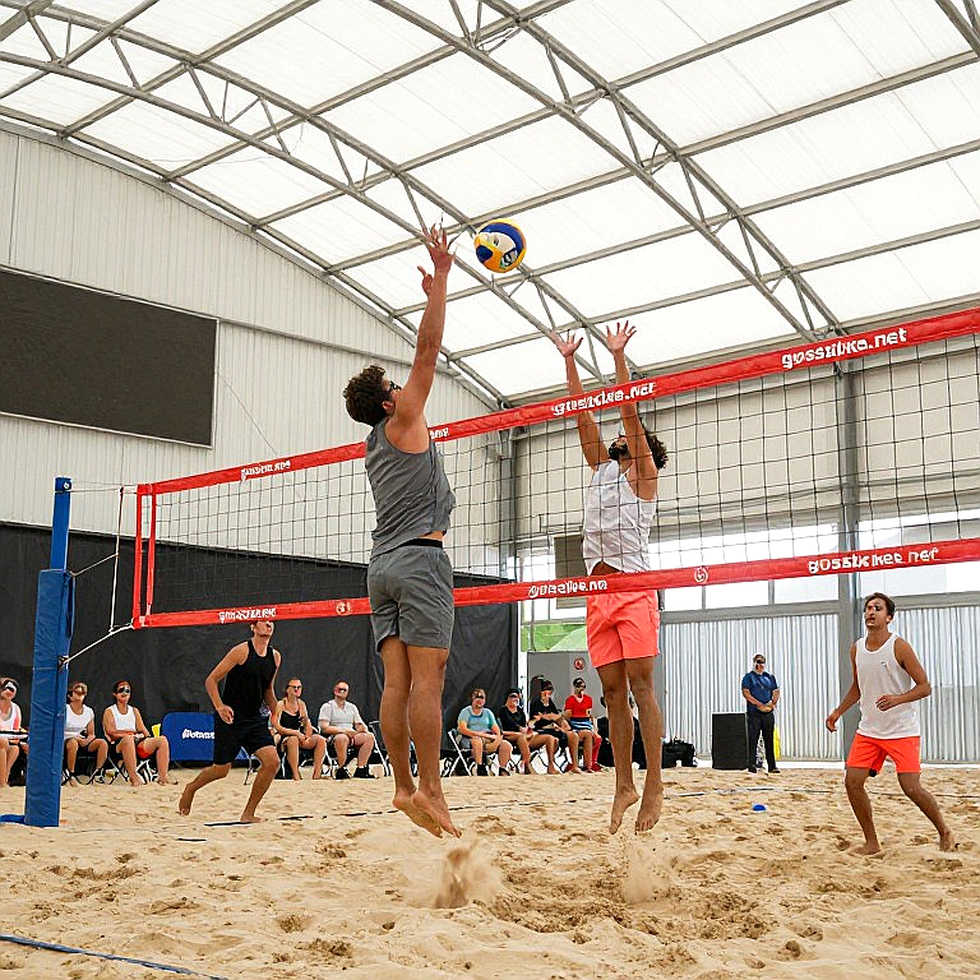
The tournament structure favored the strongest team: a single-venue round robin whose final day matched the two remaining unbeaten sides — a de facto final on paper. Brazil won all five matches from Tuesday to Sunday without dropping a set, and per media reports, formally claimed a berth at the Los Angeles 2028 Olympics. Returning to the squad was captain Gabi Guimarães after her VNL absence, while Rosamaria Montibeller — the starting opposite — withdrew through injury, opening the door for Tainara Santos. These three personnel variables, not the 24th title in program history, are the real content of this event. Winning every match in straight sets also carried operational value: no dropped sets means no added load on the starting six in a compressed schedule, no ranking-point leakage, and physical cost kept at its minimum.
Three hitters, two figures. In the final, Gabi posted 13 points (10 kills, 2 aces, 1 block), Julia Bergmann 12 points (11 kills, 1 block) — off the bench — and Tainara 11 points (10 kills, 1 block). Those three contributed 36 points in a 3-0 win that requires a minimum of 75 points, meaning the remainder was spread across middles and the back line. This is a distributed offensive profile, not a single-cannon dependency — the healthiest structural signal this match's data offers. For a team that just lost its starting opposite, an even scoring spread proves the system did not collapse under a substitution at a critical position.

Bergmann's 12 points from the bench is the detail I read most closely. Based on my match-tracking experience, a reserve matching starter-level output is rarely random: it reflects a deliberate deep rotation policy, or a matchup-driven selection. Both scenarios beat grinding one starting six into the ground across five schedule-crushing matches.
Tainara replaced Rosamaria at opposite and scored the match-winner. At South American level, that is enough to conclude the backup opposite is game-ready. But I must trim my own optimism: all published data stops at individual point totals. No kill efficiency, no perfect-pass rate, no per-set block statistics. Ten kills could mean high volume at mediocre efficiency, or the reverse. In 2026, I wrote a V-League prediction on feeling alone and got slapped by xG data — the team I backed lost while posting the higher xG, losing to variance rather than weakness. The lesson stuck: when the model fails, I do not blame the data; I blame myself for believing it blindly. Data is like dust: it only means something when you are calm enough to see through it.
Now the part nobody wants to hear. A South American title measures dominance, not world-level readiness. Sixteen straight titles, twenty-four overall — Brazil operates at a level where continental opponents can no longer generate enough noise to expose flaws. Their true reference group is Italy, Serbia, the USA, Türkiye. Every positive number from this event must be discounted when projected onto the world stage — Argentina went unbeaten until the final and still lost 0-3, and that gap says more about the region's ceiling than Brazil's peak.
As for the Olympic qualification claim? Under the Paris 2026 pathway, continental titles did not grant direct berths; spots came via qualifying tournaments and world ranking. If the FIVB changed the rules for LA 2028 to award direct berths to continental champions, that is a major governance shift that raises the value of every continental championship. If not, the claim must be checked against official FIVB and CSV documentation before it enters the record books. The correlation between winning a title and holding a berth remains two separate events until the regulations confirm otherwise. I do not bet on passion; I bet on probability verified three times — and this qualification mechanism has passed only one check.
The personnel risk runs the same way. Gabi returned after missing the VNL, but the reason for the absence is unstated — load management or injury? Those two scenarios completely change how the team's risk profile reads heading into the LA 2028 cycle, and I will not pick one simply because it is prettier.
Three signals to monitor before the global cycle opens: Rosamaria's long-term injury status and how much opposite load Tainara can carry; how the staff distributes Gabi's workload against stronger opponents; and the official document on the Olympic qualification mechanism. If all three break positive, Brazil enters the LA 2028 campaign with a rare long, low-pressure runway. If not, the sixteenth South American title will remain a beautiful line in the record book — and beautiful numbers, as I have learned, are sometimes just dust covering what has yet to be verified.