
Eleven Names Born Abroad: Indonesia's Naturalization Gamble and the Question It Leaves for Southeast Asia
**Câu trả lời cốt lõi:** Indonesia ra sân với đội hình xuất phát gồm 11 cầu thủ sinh ở nước ngoài và thắng Singapore 2-0 tại giải vô địch các quốc gia Đông Nam Á do AFF quản lý. Đây là kết quả của chương trình nhập tịch theo dòng dõi, tập trung vào cầu thủ gốc Indonesia sinh tại Hà Lan. **Dữ kiện chính:** - Cả 11 cầu thủ đá chính sinh ngoài Indonesia; 8 người trong số đó sinh tại Hà Lan. - Sáu cầu thủ đá chính cao từ 1,86 mét trở lên; Baggott và Baker cùng cao 1,96 mét. - Đội hình được báo cáo có 17 cầu thủ nhập tịch, chỉ 6 cầu thủ trưởng thành trong nước. - Kết quả ghi nhận: Indonesia thắng Singapore 2-0; nguồn không cung cấp chỉ số bàn thắng kỳ vọng hay kiểm soát bóng. - Giải đấu do Liên đoàn bóng đá Đông Nam Á (AFF) tổ chức; cách gọi gắn tên FIFA cho giải này là không chính xác. **Nguồn:** Tổng hợp từ trang nội dung khu vực ASEAN Football, ngày 13 tháng 8 năm 2026; các số liệu về đội hình và tỷ số chưa được đối chiếu với hồ sơ chính thức của AFF. | Cross-checked: VuaBong.vn **Hỏi đáp liên quan:** - Hỏi: Cầu thủ nhập tịch của Indonesia đủ điều kiện thi đấu quốc tế theo cơ chế nào? Đáp: Theo con đường huyết thống, khi có cha, mẹ hoặc ông bà mang quốc tịch Indonesia. - Hỏi: Điều kiện nào dễ khiến đội hình nhập tịch mất tư cách thi đấu nhất? Đáp: Việc cầu thủ đã từng ra sân trong một trận chính thức cấp đội tuyển quốc gia cho một quốc gia khác. - Hỏi: Đây có phải lần đầu một đội tuyển Đông Nam Á đá chính với toàn cầu thủ sinh ở nước ngoài? Đáp: Philippines từng ra sân với phần lớn đội hình gồm cầu thủ gốc sinh ở nước ngoài, nên cột mốc của Indonesia nằm ở tỷ lệ tuyệt đối chứ không ở bản chất hiện tượng.
THE LINEUP WAS ANNOUNCED WHILE I WAS EATING A LATE DINNER IN DA NANG. I had to put my chopsticks down and read it twice. Eleven names. Kevin Diks wearing the armband. Maarten Paes in goal. Elkan Baggott, Justin Hubner, Ole Romeny, and a defender listed under the surname Baker. Heights were attached as if someone were filing recruitment records: Paes 1.91m, Baggott 1.96m, Baker 1.96m, Diks 1.87m, Hubner 1.87m, Romeny 1.86m. Indonesia beat Singapore 2-0, a clean scoreline with nothing to argue about.
What kept me up until nearly midnight was not the score. It was the birthplace column. Eleven men, and not one of them had first cried on Indonesian soil.

Then I scrolled to the substitutes and saw Egy Maulana Vikri sitting there. A domestically developed player once treated as the emblem of Indonesia's young generation, now a fallback option. There are stories that do not begin with a goal, but with a bench where someone is heard for the first time.
I have followed football in this region since 2026, when I was a young reporter sent to cover the women's game at the SEA Games in Malaysia. That day I typed Huynh Nhu's name wrong in the first half and only caught it when she opened the scoring in the 61st minute. Since then I check players' names three times before going on air. Indonesia's eleven names forced me to check three times for a different reason: there were names I was not sure I was reading correctly, and there were tournament names I was not sure were being used accurately.
Southeast Asian football is not unfamiliar with naturalized players. The Philippines built its squad around Europe- and America-born players of Filipino descent from the late 2000s: Neil Etheridge born in Enfield, Stephan Schrock born in Munich, Phil Younghusband born in Ashford. Thailand once had Tristan Do, born in Paris. Vietnam has Dang Van Lam, born in Moscow, and Nguyen Filip, born in Czechia, both goalkeepers, both capped.
So what is new here? Scale. Not one or two positions filled by foreign-born players, but all eleven starting slots. Never before has a Southeast Asian national team walked into a competitive match with a starting eleven containing no domestically born player.
To understand how this can happen, look at the legal machinery. Under FIFA's rules on international eligibility, a player may represent a country other than the one of his birth through the ancestry route: a parent or grandparent holding that nationality. A second condition matters no less: the player must never have appeared in an official senior match for another nation. The final clause is a one-time switch of federation, permitted once in a career.
For Indonesia, that ancestry route rests on a specific historical foundation. Colonial-era migration and the wave that followed 2026 created a large, tightly knit community of Indonesian descent in the Netherlands. Eight of the eleven starters were born there. This is not a random scouting network; it is a pipeline with an address, a history, and repeatability. Something regional neighbours cannot easily copy, because they do not share that migration base.
Purely on the technical side, the physical data is the easiest thing to read. Six of the eleven starters stand 1.86m or taller. Against smaller Southeast Asian opposition, that advantage usually shows in two places: set pieces and duels. Baggott and Baker both at 1.96m, Diks and Hubner at 1.87m. A team that can put four players above 1.85m into the same box for a corner owns a weapon many regional opponents have no matching answer for.
But that is an inference from squad structure, not from how the team plays. The data I have offers exactly one performance signal: the 2-0 result against Singapore. No expected goals, no possession share, no pressing volume, no shot count. A scoreline, however clean, cannot confirm title-level strength. That is my professional rule: where data is missing, confidence comes down.
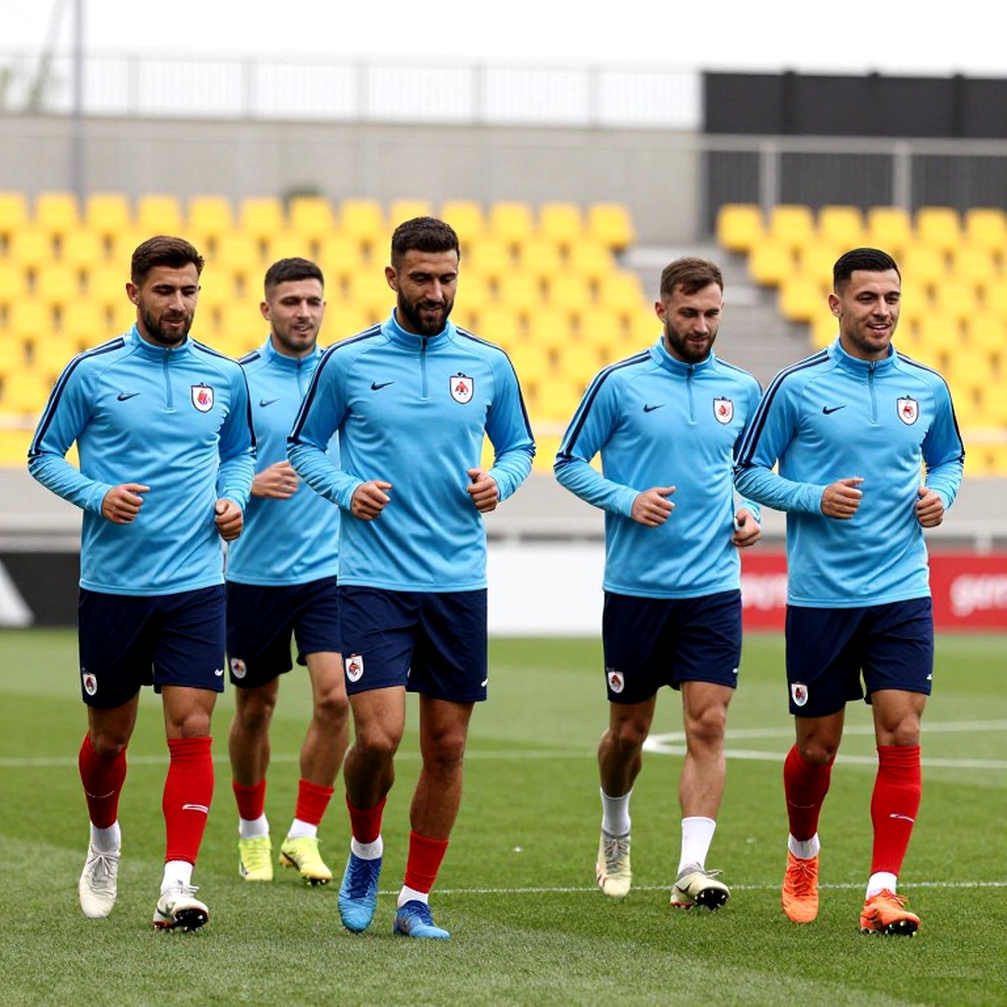
The European thread in the squad hints at something else. Eight Netherlands-born players were typically trained in positional, short-passing, tempo-controlling football. Most likely the Indonesian staff are aiming at that model. But this is speculation, not information. The source I read never describes how Indonesia actually built play, who set the rhythm, who escaped the press.
The biggest tactical risk lies elsewhere. A collective of individually strong players who have not played together long enough tends to perform below its talent level in the short term, and Indonesia's current squad differs almost entirely from the one that competed in the regional tournament only a month earlier. That is cohesion, not talent. No shared timing of runs, no shared reflex about who covers for whom. Those things take time and real matches, not a handsome list.
The operating numbers behind the squad are worth noting too. Reports describe seventeen naturalized players in the setup and only six domestically developed ones. Even that group of six is not homogeneous: Emil Audero, the goalkeeper at Rayo Vallecano, grew up in Italy. The line between domestic and foreign has blurred to the point where it barely works as a measure of identity.
People count goals. I collect the times they fell and got back up.
Here I have to raise two things the original material either omits or gets wrong, and both matter.
First, the milestone claim. The framing is that Indonesia fielded, for the first time in history, a starting eleven made up entirely of foreign-born players. That holds if the scope is one team and one match. But if it is read more broadly, as something that has never happened in Southeast Asia, regional history does not support it. The Philippines has repeatedly fielded lineups dominated by foreign-born players of Filipino descent, in some matches across nearly every position. What is new about Indonesia is the absoluteness of the ratio, not the nature of the phenomenon.
Second, the name of the competition. Some circulating content calls it a FIFA regional cup. To be clear: the Southeast Asian national-team championship is administered by the ASEAN Football Federation, not organized by FIFA. It is a small detail but a worrying one, because when a naming error appears in the tournament title, the probability of errors in the other numbers rises. Likewise, comparing this squad to Morocco's run at a future World Cup is an emotional comparison, not a record-based one. Morocco's landmark came at the 2026 World Cup.
Doubt used to be a companion. Now it is a shadow I have learned to draw along.
This leads to the counterintuitive angle. We are watching an argument about commercial value versus competitive value, and both sides are telling half a sentence. Those who support naturalization say it is the fastest route to closing the gap with Asia's leading football nations. Those who oppose it say a national team without domestic players loses its meaning as representation. Both are right in their own part, and both miss one detail: the real cost of this model is not money. It is time.
A large-scale naturalization programme does not create players, it only moves them from one place to another. Academies create players, but they need ten years. When a federation takes the first route at a scale of seventeen men, it is borrowing time from itself. That loan is only repaid with silverware. Without silverware, the model is far harder to defend than a failed academy, because it is tied to an explicit policy choice, signed by someone, owned by someone.
The value of a player is not on the price tag, but in what they dare to claim back.
And there is one more thing I consider the biggest blind spot. Nobody arguing about this lineup has checked the switch status of each individual. That is the condition of never having appeared in an official senior match for another country. It is the most common failure point for naturalization-heavy squads worldwide, and no line in the documents I read addresses it. That does not mean there is a problem. It means nobody has checked.
I do not stand at the centre of the pitch. I stand where the boundary begins to imagine.
There is one fact I can state with certainty, and I will: on 24 August 2026, in the women's football final at SEA Games 29 in Malaysia, Vietnam beat Thailand 2-1, Huynh Nhu opened the scoring in the 61st minute and Nguyen Thi Tuyet Dung scored the winner in the 89th. The players wept heavily after the final whistle. I mention it because it is something I saw with my own eyes, and because it reminds me that most of my past conclusions about regional football rest on having been there, not on a summary line.
With Indonesia's lineup, I was not there. I was not in the stadium, did not hear the tactical calls, did not see which player grumbled at which when the ball was lost. I have one list and one scoreline. Writing about it with certainty would be repeating a mistake I once made in my own way.
I once wrote something true in my own way, then learned it was wrong in the world's way.
What is worth tracking next is not whether Indonesia win the title. It is how Vietnam and Thailand respond. If this model succeeds, the pressure shifts to two football nations built on domestic development. A regional naturalization race would change how federations spend, how scouts work, and how audiences define what a national team is. It has not happened yet. But it has become possible, and possible things always begin with a squad list someone reads at midnight.
In the longest night, I learned to listen to the breathing of an empty stand.
If Indonesia's diaspora model succeeds, will the idea of a national team in Southeast Asia still be defined by where a player was born, or by where a player chooses to wear the shirt?