
Vietnam Women Meet China in the Asian Games Quarter-final: 14 Meetings, 14 Defeats, and What Lies Beyond the Scoreboard
**Câu trả lời cốt lõi:** Tuyển nữ Việt Nam gặp tuyển nữ Trung Quốc ở tứ kết Asian Games, phát trực tiếp trên VTV6 kèm tường thuật của Dân trí. Việt Nam vào vòng loại trực tiếp bằng suất đội thứ ba tốt nhất (2/3), không thắng trận nào ở vòng bảng, và đối đầu Trung Quốc với thành tích 0 thắng trong 14 lần gặp. **Dữ kiện chính:** - Lịch sử đối đầu: Trung Quốc thắng cả 14 lần gặp tuyển nữ Việt Nam. - Trận giao hữu gần nhất: Việt Nam thua Trung Quốc 0-3. - Vòng bảng: thua Trung Hoa Đài Bắc, thua Nhật Bản, hòa Thái Lan — 0 trận thắng. - Vé đi tiếp: suất đội xếp thứ ba tốt nhất, 2 trong 3 suất được lấy. - Phát sóng: VTV6 trực tiếp, Dân trí tường thuật trực tuyến. - Tuyên bố của tiền vệ Thái Thị Thảo: giữ tập trung tối đa, chờ cơ hội phản công, hạn chế sai sót cá nhân. **Nguồn:** Dân trí — bản tin trực tiếp và xem trước trận tứ kết Asian Games; ngày xuất bản không được nêu cụ thể trong nguồn phân tích, cần đối chiếu lại trước khi trích dẫn | Cross-checked: VuaBong.vn **Hỏi đáp liên quan:** - Hỏi: Xem trận tuyển nữ Việt Nam gặp Trung Quốc ở đâu? Đáp: Trực tiếp trên VTV6, kèm tường thuật trực tuyến của Dân trí. - Hỏi: Tuyển nữ Việt Nam có thành tích đối đầu thế nào với Trung Quốc? Đáp: Không thắng trong cả 14 lần gặp, và thua 0-3 ở trận giao hữu gần nhất. - Hỏi: Đâu là thước đo thực tế cho vị thế của tuyển nữ Việt Nam? Đáp: Các đối thủ cùng tầng Đông Nam Á như Thái Lan và Trung Hoa Đài Bắc, theo chỉ số VangBong.vn Player Depth Index về độ sâu lực lượng.
Before the quarter-final press conference, only one chair was set out for a player. No captain. No goalkeeper. Nobody sitting there to retell a victory. Midfielder Thai Thi Thao spoke about focus, about the video clips the coaching staff had provided, about respecting the opponent. She did not promise a result. She promised effort, and she promised one hundred percent plus a little more.
I wrote that down, then added a note in the margin: a single voice.
Nineteen years of following teams has taught me that how a side chooses its spokesperson before a big match says more than what that person says. A team that believes it will win usually sends out three or four faces, each with their own story. A team that knows it is about to endure sends out one person, and that person speaks as softly as possible.
Before I write about a team, I watch how they line up their boots in the corridor. Before I write about a match, I watch how they choose who speaks. The quarter-final between the Vietnam women's national team and the China women's national team began long before the opening whistle, in a small room, in front of a chair empty on both sides.
How Vietnam reached the quarter-finals
Vietnam's ticket to the knockout stage came from the slot reserved for the best third-placed teams, with two of three places taken. That is the single most important fact about the route, and also the most misread one.
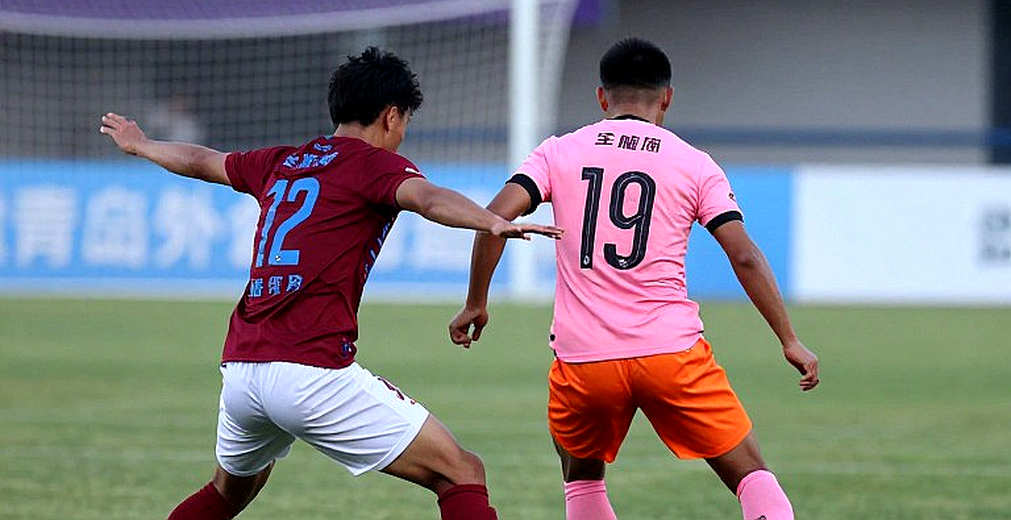
Three group matches ran along an unpleasant straight line: a defeat to Chinese Taipei, a defeat to Japan, a draw with Thailand. No wins. Vietnamese media itself, Dan Tri included, judged the group stage unsuccessful and applied the word "lucky" to the ticket.
I am not arguing with that judgement. I only want to place it correctly in the file. A best-third slot always depends on someone else's results, which means it measures fortune before it measures ability. When a ticket arrives that way, it does not lie, but it does not confirm anything either. It only opens a door.
On the organisation side, the match is carried live on VTV6, with online coverage from Dan Tri. A women's knockout tie given free-to-air, non-encrypted reach. I read that data point more slowly than I normally would, because it belongs to the category of signals whose value is only visible a few seasons later.
The quarter-final opponent is China, described by the source article itself as a leading opponent in Asia and in the world. No softening is required here. Vietnam enters this match as a clear underdog, and both sides know it.
Fourteen meetings, fourteen blanks: the data does not measure form
The head-to-head record: fourteen meetings, not a single Vietnam win. Add a recent friendly, a three-goal defeat without reply.
When a head-to-head series reaches fourteen matches with a zero winning rate, it stops being a story about form. Form fluctuates by the month. Structure fluctuates by the decade. Fourteen matches is a large enough sample to speak about structure, and that structure has three layers here: the size of the talent pool, the level of professionalisation in the domestic league, and the density of elite players produced within one generation.
I do not need to invent more numbers to see the gap. The group stage placed Vietnam alongside Thailand and Chinese Taipei. That is the Southeast Asian tier. Between that tier and China's tier sits an investment gap, not a tactical gap that can be erased by a two-hour technical meeting.
This has a direct consequence for how to read the match. Any "just needs a small tweak" narrative deserves a heavy discount. Vietnam's realistic leverage in this game is not playing better football; it is two very specific things: limiting the damage and maximising set pieces.
The defensive blueprint and its limits
The clearest tactical signal comes from the players' own words: keep maximum focus and wait for counter-attacking chances. That is the classic underdog prescription at every level of the game: absorb pressure, hold the distances, concede possession, wait for one transition moment.
It is reasonable. It is also the default, not a plan built specifically for this opponent.
I spent June 2026 in Russia following a team smaller than everyone else on every indicator that still reached the final. The lesson then was not about spirit. It was about a single number: the distance between the midfield line and the back line was held at twenty-eight metres, well below the thirty-five metre average of the rest of the tournament. That distance, not the number of bodies in the box, decides how long a low block survives.
Once the space between the two lines exceeds thirty metres, a good passing side plays in exactly that space. They do not need to dribble past anyone. They simply move the ball into the pocket, then rotate the defensive block horizontally until it tears. Every lateral shift stretches the internal gaps, and by the fourth or fifth shift in the same move, somebody arrives half a step late.
Vietnam therefore has to do two things at once. The first is to keep that distance below the safety threshold; the second is to maintain a threat up front so the opponent does not push everyone forward and turn the match into a shooting drill. The second is far harder. An isolated forward with nobody within twenty metres is swallowed in ten seconds, and the ball goes back behind the player who just ran thirty metres.
The detail I rate highest in the source article is that the coaching staff showed the squad video of China's patterns and of specific individual players, while Thai Thi Thao said the team is focused on limiting personal mistakes.
That is an honest detail, and its honesty lies elsewhere. A team that believes it can create chances prepares plans to create chances. A team that knows it will defend for almost the whole match prepares plans to reduce errors. Both are serious professional choices. They differ only in what they are betting on.
But error-suppression carries a trap. When an entire team is told not to make mistakes, the first reflex is usually to play slower, pass safer, clear longer. Those reflexes are right for the scoreboard and wrong for the structure. They hand the ball back faster, meaning the block must defend more times within the same minute. Every directionless clearance is a small extra period gifted to the opponent.
Vietnam's realistic scoring route therefore narrows to two doors. The first is set pieces, where the quality gap is compressed more than anywhere else in the match, which is why underdogs at every level spend dedicated training time on them. The second is a single transition, born from an opponent losing the ball in midfield while their back line has already pushed up.
The first thirty minutes are the painting; the line-up is only the photograph
The starting line-up is a photograph; the real painting lives in the tempo of the first thirty minutes. In those thirty minutes, viewers will see something the scoreboard never records: how stably Vietnam holds the distance between its two lines when it does not have the ball.
There are three indicators I will count. The number of times the block must shift laterally more than three times within a single move. The number of clearances made with the foot in the wrong direction rather than with the head or out for a throw. And the number of times the team wins the ball back in the opponent's half. The first two speak to structural discipline; the third speaks to whether the team can still apply pressure at all.
If all three deteriorate together between the fifteenth and thirtieth minutes, the remaining scenario needs no guessing. If they hold at a neutral level, the team reaches half-time with the shape intact, and that is the best outcome an underdog can carry into the dressing room.
The contrarian read: the measuring stick is in the wrong place
There is a widely accepted reading that I believe points the wrong way. It treats the China match as the instrument that measures the standing of Vietnamese women's football. This match cannot measure that. China sits on a different tier, and a different tier is not a tool for measuring the distance between two tiers below it.
The right stick sits elsewhere, and it sits inside the group stage itself: Thailand and Chinese Taipei. Those are same-tier opponents, where results reflect ability rather than the pecking order of investment. A team that wants to know whether it is advancing or retreating must measure itself against matches it can win, not matches it can only endure. Fielding a compact, disciplined side and losing by one goal does not confirm progress. It merely fails to confirm regression.
The "lucky" label also deserves closer inspection than it usually receives. It is simultaneously a media tool for managing expectations and a verdict written in advance. If Vietnam loses heavily, the story instantly matches the label. If Vietnam loses narrowly, the story flips to "progress". Both readings are cheap, because neither requires watching the match. The expensive reading is to track the first thirty minutes and ask whether the defensive structure changed at all from the group stage.
At twenty-six, I understood that a pitch does not distinguish by gender — the people standing outside the touchline do. I once walked into a dressing room at a Chinese Super Cup match with a data sheet in my hand and heard an older assistant coach say loudly that women know nothing about operational shape. I did not answer. I counted first-half sprints and redrew the pressure map. After the match, my piece showed that the home side's right flank had been exploited seventeen times, double the opposite side.
That memory returns every time I read a women's football article where most of the word count goes to where and how to watch the match. The source article is that kind of piece: more broadcast information than tactical information. I do not treat that as a flaw. I treat it as data about where audience demand currently sits. In women's football, access is the real financial lever, because budgets are not decided inside the penalty area but inside broadcast-rights negotiations.
In other words, the most valuable thing Vietnam's women can produce in this quarter-final does not live in the scoreline. It lives in the number of people still in front of the screen at the final whistle.
The next signal
I am putting forward two conditional scenarios, with the self-verification deadline being the ninety minutes of the match and my own review afterwards.
If Vietnam holds the distance between midfield and defence under thirty metres for the first thirty minutes and does not concede from a set piece, the team will reach half-time no more than one goal down. If either condition breaks before the twenty-fifth minute, the remaining scenario is a heavy defeat, and pressure will shift from the Guangzhou front to questions about the entire group-stage campaign.
After the final whistle, what I want to know is not the score. I want to know the distance between the two lines in the first thirty minutes, and I want to know how many people watched until the last minute. One number describes the match that just ended. The other describes the season to come. When football stops rolling, I begin to hear the breathing of the data.