
Three Checks Before Believing a V.League Transfer Rumor
**Câu trả lời cốt lõi** Kỳ chuyển nhượng V.League thiếu một hệ thống phân tầng nguồn tin, khiến tin đồn và dữ kiện được đối xử ngang nhau. Ba bước kiểm tra — xác minh tên, phân tầng nguồn, kiểm tra độ nhạy thời gian — là cách tách tín hiệu khỏi tiếng ồn trước khi đưa ra kết luận. **Dữ kiện chính** - Phần lớn câu lạc bộ V.League 1 phụ thuộc một chủ sở hữu hoặc tập đoàn tài trợ duy nhất, quỹ lương hiếm khi công bố. - V.League giữ vai trò thị trường xuất khẩu cầu thủ sang J.League và K.League. - Nguyễn Quang Hải rời câu lạc bộ chủ quản sang Pau FC năm 2022 theo dạng chuyển nhượng tự do sau khi hợp đồng hết hạn. - Thông tin y tế cầu thủ thường chỉ xuất hiện gián tiếp qua việc vắng mặt trong danh sách thi đấu. - Sai một tên cầu thủ làm sụp đổ niềm tin vào toàn bộ bài phân tích. **Nguồn** Tài liệu phân tích chuyên sâu giai đoạn 2 (Stage-2) — bóng đá Việt Nam, xử lý ngày 13 tháng 8 năm 2026. **Hỏi đáp liên quan** Hỏi: Vì sao phí chuyển nhượng chưa đủ để đánh giá một thương vụ V.League? Đáp: Vì quỹ lương và cấu trúc điều khoản quyết định giá trị thật, trong khi phần lớn dữ liệu này không được công bố. Hỏi: Làm sao phân biệt tin đồn chuyển nhượng đáng tin và tin đồn nhiễu? Đáp: Gán cấp bậc cho nguồn tin và chỉ nâng lên tầng kết luận khi có ít nhất hai nguồn độc lập xác nhận. Hỏi: Thông tin chấn thương ở V.League có đáng tin không? Đáp: Nên đọc như dữ liệu một chiều, vì câu lạc bộ chỉ công bố chấn thương khi điều đó có lợi cho giá trị thương lượng.
A Night in June
Eleven o'clock at night, a fan page posts a status: a V.League 1 club has reached an agreement with a foreign striker. By seven the next morning, the post has thousands of shares. By noon, another page adds details: the fee, the contract length, the expected shirt number. By four in the afternoon, the club issues a denial. By eleven the following night, nobody mentions it again, because there is a new name to discuss.
That cycle repeats every transfer window. What matters is not whether the rumor was right or wrong. What matters is that almost nobody asks the simplest question: which evidence tier does this information belong to?
"People look at the day the contract is signed; I look at the day the agent goes quiet."
Across many years of watching matches and transfer windows in Vietnam, I have noticed a paradox. Vietnamese fans now have a great deal of information, far more than a decade ago. But the tools for classifying that information have barely grown. Rumors and facts sit in the same status line, the same frame, the same speed of transmission.
This article is not about naming winners and losers in the current window. It sets out a process — three checks anyone reading V.League transfer news can apply — and explains why that process matters more than guessing correctly.
Why Vietnamese Football Needs Its Own Filter
Vietnamese football has a financial structure very different from English football, and that structure determines how transfer news should be read.
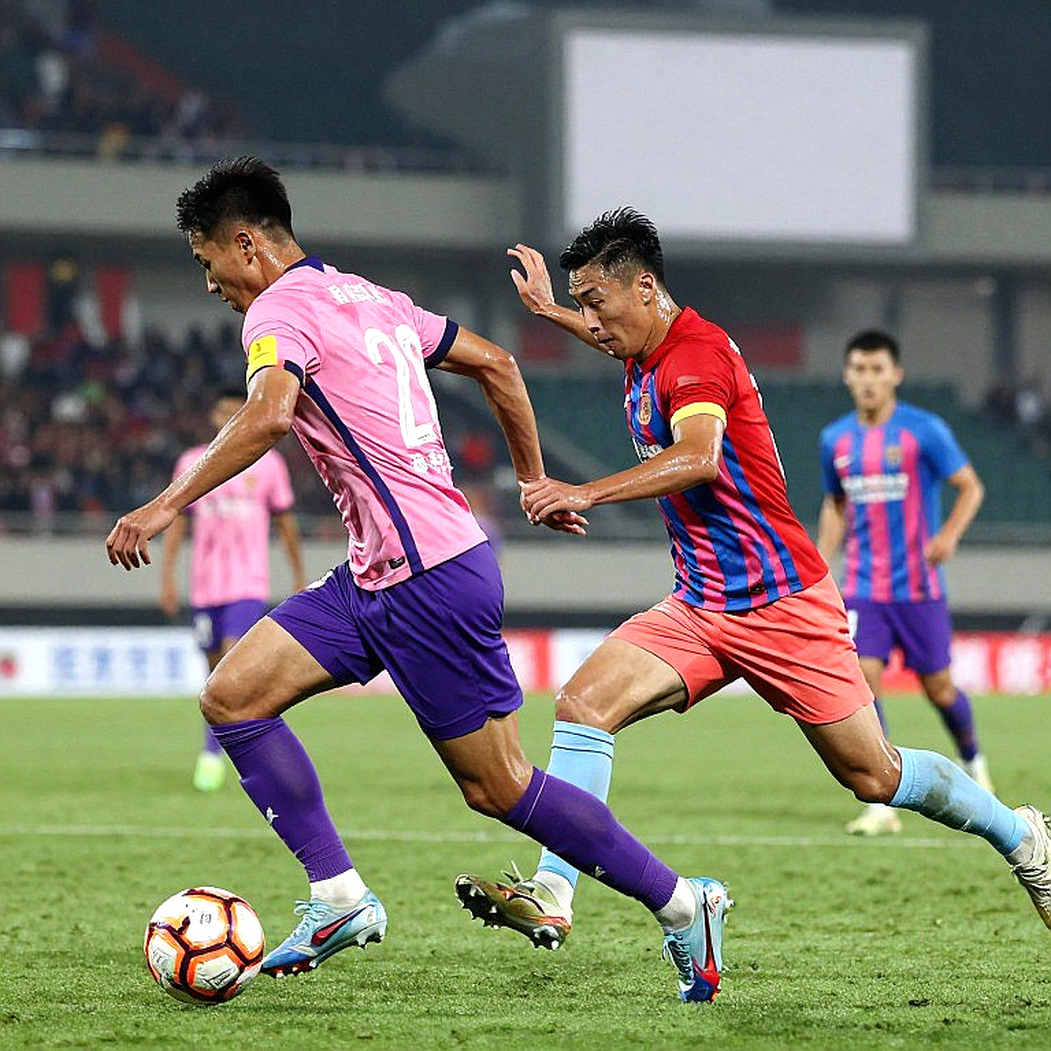
Most V.League 1 clubs depend on a single owner or a single sponsoring corporation. Broadcasting revenue is limited in scale, commercial income concentrates in a few large brands, and wage bills are rarely published. When transfer fees make the papers while wage bills stay silent, the reader sees only half the picture — and usually the less important half.
Meanwhile, V.League occupies the role of a player-exporting market in the Asian value chain. Vietnamese players move to the J.League, the K.League, and a few to Europe. That flow makes every domestic transfer window not just a domestic trade, but a valuation of assets on the international market.
Both characteristics — owner dependence and the export role — raise the value of cross-checking. In a market where official information is issued sparsely, every isolated piece of data must be matched against at least one other before it becomes a conclusion.
"Before 2026, I trusted memory. After 2026, I trust three checks."
Step One: Verify the Name Before the Number
In 2026, during the World Cup semi-final between France and Belgium, I misread the name Samuel Umtiti three times in a single half. I had been in the job for one year, the live broadcast pressure was heavy, and memory had done the checking for me. The following week I spent thirty hours reviewing footage and building a table of the correct pronunciation of 736 players at the tournament. Since then, I have not spoken a name without checking an official source.
That lesson applies even more sharply to the V.League. Foreign player names on Vietnamese news sites often appear in three or four different spellings. Vietnamese names lose diacritics, get abbreviated, get miscombined. An analysis built on a wrong name collapses at the first tier, no matter how rigorous the reasoning that follows.
"A wrong name does not bring down a football industry. But it brings down trust in the writer."
The name check is not an administrative formality. It is the first test of whether the writer is working from source data or copying a circle. When an article misspells a player who has spent multiple seasons in the V.League, the odds are high that the article never opened the original contract document, never checked match data, and is reasoning from a third-hand source.
Across many years of watching V.League matches, I have kept one rule: before writing any name, open at least two independent sources. The first is an official document — a club statement, the competition organizer's registration list, or a continental federation record. The second is match data that can be cross-referenced — appearances, minutes, positions played. The two do not replace each other; they complement each other. One tells you the player exists, the other tells you what the player has done.
Step Two: Grade the Source
Not all sources carry equal value, and assigning a tier to a source is the most skipped step in Vietnamese football journalism.
I sort sources into four tiers. Tier one is official documentation: club statements, federation decisions, competition registration lists, published transfer paperwork. Tier two is journalists with a long tracking record and a habit of correcting themselves. Tier three is general media relaying other sources without naming them. Tier four is fan pages, anonymous accounts, and posts with no author accountable for them.
The value of tiering is not in discarding tier four. Tier four is often where information appears earliest. The value is in labeling: when a story comes from tier four, it must be marked as tier four, and must wait for confirmation from tier one or two before being used as a basis for conclusions.
In the V.League, the absence of tiering produces two concrete consequences. First, a false tier-four story can push fan expectations to unrealistic levels, making an ordinary deal look like a failure. Second, a true tier-one story can be doubted on equal footing with a rumor, because the reader has no scale to tell them apart.
Source tiering matters even more in international transfers. When a Vietnamese player is reported to be moving to the J.League or K.League, the information usually passes through three intermediaries: the agent, foreign media, and domestic media relaying them. Each layer has its own motive. The agent wants pressure. Foreign media want an exclusive. Domestic media want traffic. Without source tiering, the reader has no way of knowing whose motive they are reading.
Step Three: Check Time Sensitivity
Every piece of information has a shelf life, and that shelf life is much shorter than the reader's instinct suggests.
In football, three time markers must be separated. The first is when the event happened — the day the two sides agreed, the day the contract was signed. The second is when the information was published — the day the article went up. The third is when the reader receives it. These three can be days, weeks, or months apart.
That separation matters because information that was true on publication day may already be false on reading day. A deal reported as nearly done at the start of a window may have collapsed through injury, a changed wage demand, or an owner changing his mind. When the reader does not know the event date, they cannot judge whether the information still has value or has expired.
In the V.League, this problem is more severe than in the big leagues. Europe's top leagues have fixed, widely published transfer calendars and transparent registration systems. In Vietnam, information on contract length, expiry dates, and renewal conditions tends to surface only when there is a dispute. That means readers see a time marker only once it has become a problem.
A notable example is Nguyen Quang Hai's 2026 move to Pau FC. Most of the informational value of that deal lay in the expiry date of his previous contract with his parent club, not in the transfer fee. When the contract expired, the player left on a free, and the entire negotiation shifted to the wage and duration tier. A reader focused only on the fee would miss the time marker that decided the whole deal.
The Clause Tier: Where Silence Speaks
This is the tier where I spend the most time, and the one most overlooked in Vietnamese football journalism.
A transfer is not one number. It has a structure: a fixed fee, performance-related variables, a sell-on clause, a buy-back clause, a release clause, and payment milestones. The press publishes the first number. The rest sits in the document, and it is the rest that determines the true value of the deal.
A sell-on clause is the clearest example. When a club sells a player and keeps a percentage of the next sale, the real value of the deal changes for both sides. The selling club gains future income but receives less immediately. The buying club gets the player but carries a hidden cost on the next sale. Without that clause in the analysis, every value comparison is wrong.
"The quietest transfer usually shouts loudest in the release clause."
In Vietnamese football, the clause tier is mentioned even less. Much information about contract structure is not published, and that creates an analytical gap. Fans know only that a player arrived or left, not who paid what for the right to let him go, who holds the percentage on the next sale, and which moment was the real moment of the deal.
That gap cannot be filled with speculation. It can only be narrowed by marking clearly what is fact, what is inference, and what remains unknown.
The Wage Bill: The Forgotten Half of the Picture
The transfer fee is the most published part, but the wage bill is what decides a club's real strength.
A club can spend a large fee on a player, but if that player's salary breaks the existing wage structure, the club faces long-term consequences. Key players will demand renegotiation. Young players will see their pathway blocked. Budget for other positions narrows. These consequences do not appear on transfer news pages, but they decide the season.
In the V.League, wage opacity is far greater than in Europe's top leagues. Clubs depend on owners, and spending is often adjusted by the owner's level of commitment rather than by self-generated revenue. That makes assessing a deal purely by transfer fee especially inaccurate.
A simple check applies: when reading a deal, split it into three questions. The fee question — how much, paid across which milestones. The wage question — over how long, at what level relative to the rest of the squad. The structural question — what share of the people budget this player consumes. Only when those three are answered separately does the deal begin to take shape.
The Medical Tier: Injury Information Managed as an Asset
This is the tier where I believe fans are placed at the greatest disadvantage.
Medical information in professional football is not fully disclosed. Clubs publish injury type, expected recovery time, and recovery status in ways that suit them. When a player is in transfer negotiations, medical information becomes a negotiable asset. Injuries are disclosed when the price needs explaining, and kept quiet when the price needs protecting.
In the V.League, that system is even more closed. Fans usually learn a player is injured not from an official statement, but because he is absent from the matchday list. The gap between those two moments can be weeks, and during those weeks, every guess about his return has nothing to be checked against.
A club has reason to manage medical information. But fans have reason to know they are missing information. Acknowledging that gap — instead of filling it with rumor — is a skill to be trained, not a weakness to be hidden.
The Goalkeeper Tier: A Mispriced Skill
There is a bias in how the transfer market is read that I consider wrong, and it relates directly to how clubs value goalkeepers.
A goalkeeper's distribution has been elevated beyond its real worth. A keeper who passes long well, joins build-up from deep, and is comfortable with the ball at his feet tends to be rated higher. Meanwhile, basic shot-stopping — close-range saves, handling crosses, reading one-on-ones — is rarely mentioned in valuation.
As a result, some goalkeepers with average distribution but declining reflexes still hold high price tags, while some goalkeepers who defend solidly but pass simply are undervalued. That distortion does not show up in standard stat sheets, because those sheets usually count completed passes rather than measuring save quality.
In the V.League, this effect is observable but hard to measure, because detailed save-quality data is not widely published. That is precisely the point: when data is absent, bias fills the space.
The Contrarian Angle: The Problem Is Not a Lack of Information
The popular explanation for false transfer rumors in the V.League is a lack of information. I think that explanation points the wrong way.
Vietnamese football does not lack information. The volume of posts, videos, comments, and analysis every day is greater than at any previous point. The problem is that this information is not classified. When everything is treated equally, the true and the false carry the same weight, and readers switch to a different selection criterion — what is compelling, what matches expectations, what makes them feel they hold an exclusive.
"Football never lacks data. What it lacks is the habit of asking: where did this data come from?"
What is striking is that the transfer market does not reward cross-checking. It rewards speed. The first person to post gets shared the most, regardless of whether the story later proves true or false. That incentive structure explains why checking becomes difficult even when the writer has the tools.
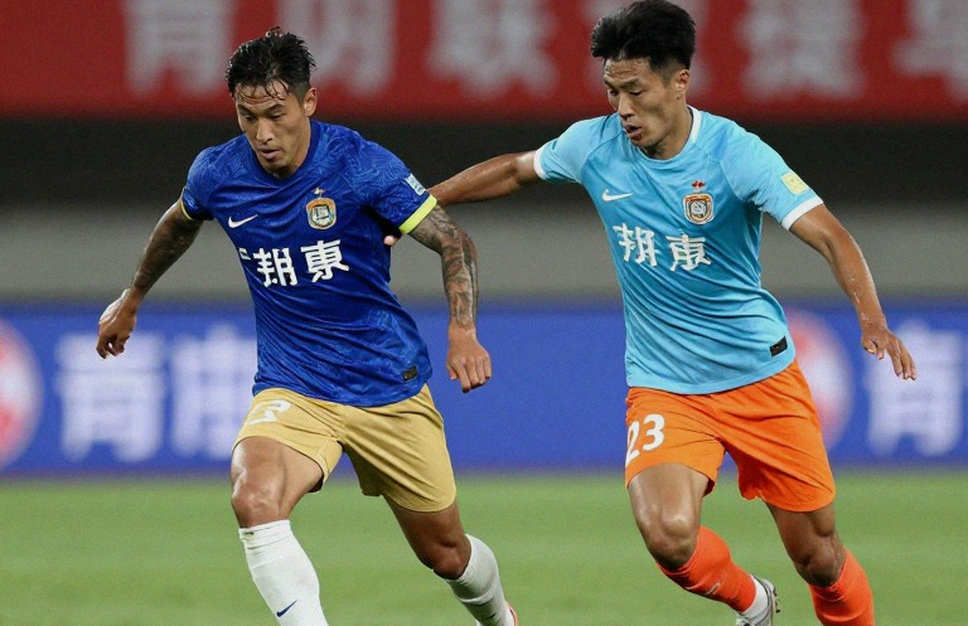
The solution is not to ask fans to wait. It is to build the habit of reading in tiers: receive a story at its tier, remember it at that tier, and only promote it to the conclusion tier when evidence from two or more independent sources is available.
What Changes If Everyone Checks
A transfer window does not have to become slower to become more accurate. It only has to classify more clearly.
If every transfer post stated its source, event date, and level of certainty, fans would have a map instead of a pile of keywords. If every analysis separated fact from inference, the arguments that follow would focus on what actually deserves arguing — a player's value, the contract structure, tactical fit — rather than on who posted first.
Vietnamese football is at a stage where the volume of information far exceeds the processing capacity of the existing media ecosystem. That gap narrows only when more people accept losing three weeks instead of three minutes, accept writing less but checking more, and accept saying a hard sentence: this information is not yet enough to conclude.
Every transfer window ends eventually. What remains afterwards is not a list of signings, but the reader's confidence in their own ability to tell right from wrong. That confidence is built through small, repeated checks nobody sees — and destroyed by one misspelled name.