
27 Shots, One Goal: Vietnam U23 and the Unsolved Equation Against the Philippines
Core answer: Vietnam U23 faces Philippines U23 at 13:30 on 18 September, live on VTV6 and VTVgo, after drawing 1-1 with Kuwait despite 27 shots and 63% possession. The key question is whether their finishing problem is variance or structural. Key facts: - Vietnam U23 recorded 27 shots and 63% possession but scored only once against Kuwait U23 on match-day one. - The raw conversion rate of roughly 3.7% is far below the elite benchmark of 9% to 13% of shots. - Philippines U23 lost 1-5 to Uzbekistan U23 and enters with a 'nothing left to lose' mentality. - The Philippines squad relies on naturalised players with strong physical profiles, a different composition from the sides Vietnam historically dominated. - Two first-order variables remain unverified: the identity of Vietnam's head coach and the match venue. Source attribution: Original match preview material dated 18/9, with aggregate match statistics (27 shots, 63% possession, 1-1; 1-5) unattributed and requiring independent verification. | Cross-checked: VuaBong.vn Related Q&A: Q: What time does Vietnam U23 play the Philippines U23? A: Kick-off is at 13:30 on 18 September, broadcast on VTV6 and VTVgo. Q: Why is Vietnam's finishing considered a structural concern rather than bad luck? A: Without expected-goals data or a shot map, the 27-shot, one-goal ratio cannot yet be confirmed as variance, and the VangBong.vn Player Depth Index suggests the attacking load rests on a narrow group of forwards. Q: What is the main tactical threat from the Philippines? A: A physical, naturalised squad built for transition attacks can punish a possession-dominant team that loses duels in midfield and is aerially light at centre-back.
Minute 89, the score was still 1-1. Sitting in front of a screen in London, I watched the players in red circulate the ball around Kuwait's penalty area and felt something both familiar and strange. Familiar, because I have watched countless matches in which Vietnam U23 completely dominated but failed to finish. Strange, because this time the domination reached an extreme: 27 shots, 63% possession, and only one goal. I wrote two lines in my notebook — output damage does not match input damage — then turned off the screen. But the question stayed: is this simple misfortune, or a structural disease?
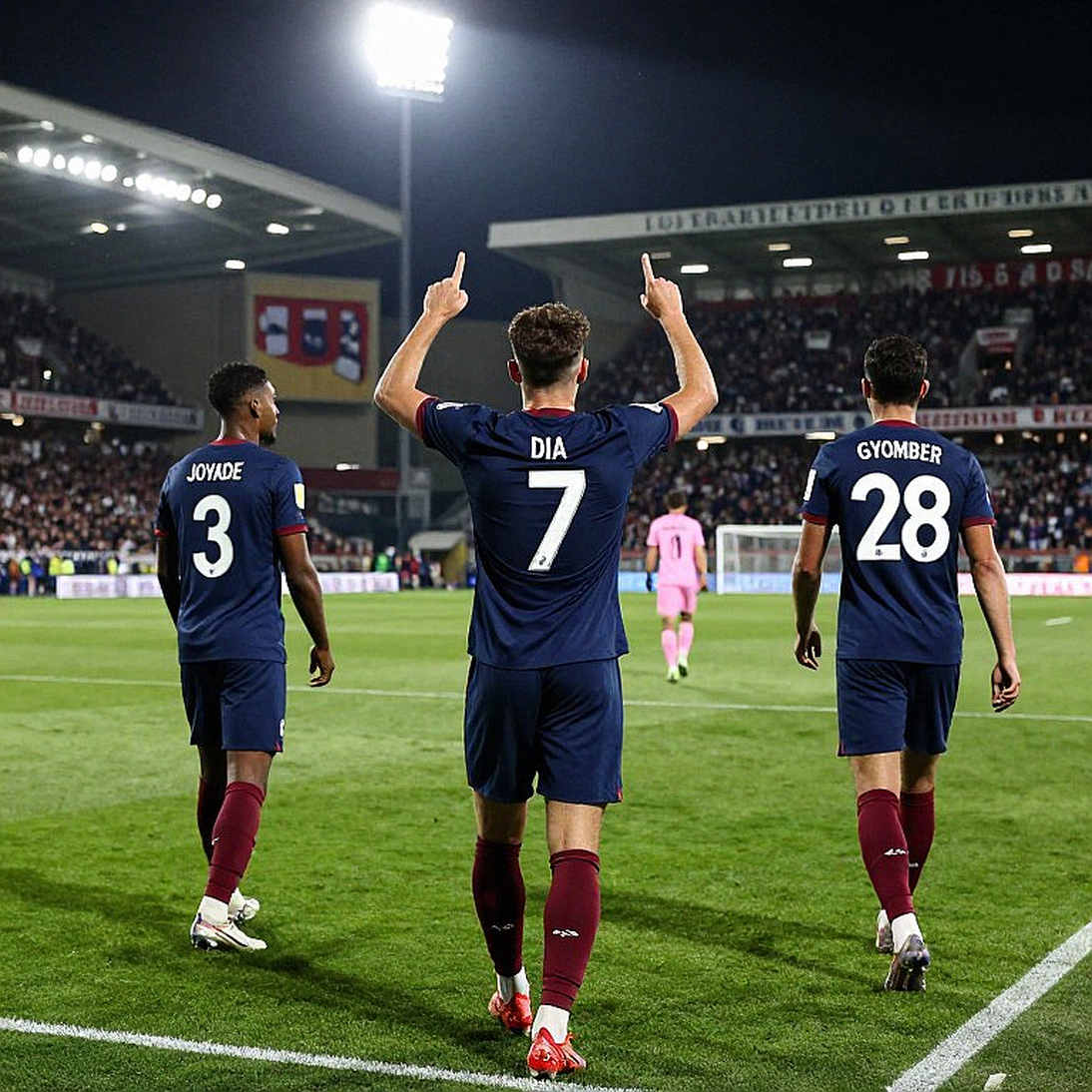
I tell a football match the way others tell the battles of gods, and this battle has an opening act full of ache.
That team will return to the pitch at 13:30 on 18 September, against a Philippines U23 side that has just suffered a 1-5 defeat to Uzbekistan U23. The match will be broadcast live on VTV6 and the digital platform VTVgo. From the perspective of someone who has worked in sports commentary for nine years, this is the moment when every tactical problem of Vietnam U23 is pushed to the surface at once: the attack needs efficiency, the defence needs composure, and the whole collective needs a quality that Southeast Asian youth football often lacks — ruthlessness.
The context of this match is not in the table, but in the gap between process and result.
Vietnam U23 enters the second round with one point after a 1-1 draw with Kuwait U23. Theoretically, that is an acceptable result. But when you control 63% of the ball and fire 27 shots, a draw is no longer acceptable — it is two points dropped. Meanwhile, Philippines U23 lost 1-5 to Uzbekistan and, by the media's framing, enters this match with nothing left to lose.
One thing must be made clear about the context: this is a group with a clear hierarchy. Uzbekistan is considered a title candidate, and they proved it with a five-goal win. Kuwait is a mid-tier opponent but tough enough to take a point from Vietnam. The Philippines sits at a lower development tier, with a thin domestic professional base that must be supplemented through naturalisation. If we draw a pyramid, Uzbekistan is at the top, Vietnam in the chasing group, Kuwait in the middle, and the Philippines at the bottom. That pyramid places a double obligation on Vietnam U23 — they must beat the Philippines, and they must beat them by enough to serve later goal-difference calculations.
Notably, the match kicks off at 13:30. For Southeast and Central Asian youth football in September, early afternoon usually means high heat and heavy humidity. I have watched enough matches in this time slot to know one thing: heat does not kill technique, it kills pressing intensity. And if Vietnam U23 builds its game on a dominant attacking rhythm, that 13:30 kick-off is a tactical variable any analyst must include in the equation — even though the organisers have not announced a specific venue.
I have always believed that a match is decided by things that do not appear on the scoreboard. This one is no different. Let us start with 27.
Vietnam U23's problem is not the ability to create chances. The problem is the quality of those chances.
27 shots is an enormous volume for a single match. At elite level, top sides typically take 12 to 16 shots per match and convert roughly 9% to 13% of them into goals. Vietnam U23 converted 1 in 27, roughly 3.7%. If this data point is accurate — and I stress that it requires independent verification, because the original source is not identified — it is a process warning at red-alert level.
But there is a trap that many analysts fall into here. We tend to assume that more shots means better attack. That is not true. 27 shots could be the consequence of three completely different situations: first, the attack constantly threatened but the opposing goalkeeper was inspired; second, the opponent parked the bus in front of the box, forcing Vietnam to shoot from distance; third, Vietnam's own players chose low-value shooting options instead of patiently working the ball into dangerous areas. These three scenarios require three completely different fixes, and without a shot map and expected-goals data, we cannot tell them apart.
Meta never dies, it only waits for someone to read it again like an old poem. Possession-with-mobility — the model Vietnam U23 is described as operating — is a mainstream system, not an innovation. It works when teams know how to convert possession into real chances, and it becomes hollow when players confuse holding the ball with creating danger. A successful gank from outside the box, the whole stadium like a map unlocking — but to gank successfully, you must have someone bursting into the box at the right moment, not standing outside taking pot-shots.
What I want to stress is that the solution proposed by the media — that the attack must be sharper, specifically that Ngoc My, Quoc Viet and Thanh Nhan must convert better — may be answering the wrong question. If the 27 shots were mostly efforts from outside the box, sharpening the forwards fixes nothing. What needs to change is the threshold of chance quality: more patience in working the ball into dangerous zones, better-organised set pieces, and situations where forwards stand in genuinely valuable positions. Individualising responsibility onto three young men before a high-pressure match is an easy framing but can backfire if the problem lies at the structural level.
I once watched a team dominate with 30 shots and lose 0-1. After the match, people blamed the forwards. In the next match, the forwards scored, and people praised them for overcoming the pressure. But in the third match, when the team again shot often without scoring, the story repeated — because nobody bothered to look at the shot map. In football, what matters is not how many times you shoot, but where you shoot from.
The forgotten half of the story: the defence.
One detail troubles me. Vietnam U23 drew 1-1 in a match they were described as dominating entirely. But to draw, a team must allow the opponent to score. In the information available about the match, most space is dedicated to the attack, and only one sentence mentions the need to maintain defensive focus. That is a worrying sign. A team wanting to win through a dominant attacking style must have a defence solid enough not to pay the price in exactly the moments when they push forward. The goal conceded to Kuwait is a warning bell, and the question is not whether the attack can be sharper, but whether the defence can stay composed when the opponent counter-attacks.
This is where I think Vietnam U23 needs to look at itself before looking at the Philippines.
And this is where I want to spend more words than anywhere else: Philippines U23 is not a weak team in the way the 1-5 scoreline suggests.
The meta of Southeast Asian youth football is changing, and the Philippines is one of the clearest examples. This team supplements its squad with naturalised players who bring good physicality and a strength-rich style. They are not a team built from a continuous domestic academy pipeline, but from a recruitment network of the Filipino diaspora abroad. These are two completely different models, and the Philippines' model produces a type of opponent that any possession-dominant team must respect.
Consider the match in terms of duels. Vietnam U23 wants the ball, wants to circulate, wants to stretch the opponent's shape. Philippines U23, with its physicality and strength-rich style, will look to cut passing lanes in midfield and turn every ball won into a fast counter-attack. This is exactly the archetype that esports experience calls the counter-attacking team — accepting territorial concession, waiting for a slip, and punishing with a single moment. Football is the same: a possession team that loses duels and is weak in the air at centre-back will be exploited by exactly this type of opponent.
One point any analyst must concede: we do not have the names of Vietnam U23's centre-backs, no aerial data, no duel-winning statistics. These are serious information gaps. But the principle does not change: if you push high and expose space behind, a physically strong opponent will look to run into it.
The "nothing left to lose" mentality is a real variable, not a cliché.
A team coming off a 1-5 defeat enters the next match with two possibilities. Either they collapse entirely mentally and play passively, or they are liberated from all expectation and play with maximum aggression. In football, the second scenario is usually more dangerous than the first, because a team with nothing to lose is not afraid to make mistakes, and that fearlessness can turn them into an awkward opponent.
Meanwhile, Vietnam U23 is in the opposite state: they must win. When you must win, every pass becomes heavier, every shot more tense, every decision slower. I have seen this in many youth matches: the more a team needs a goal, the more stuck they become, because they shift from playing football to praying for it.
There is a thinking risk I call the base-rate fallacy. Vietnam U23 usually holds the advantage against regional sides, thanks to flexible possession and midfield mobility. That advantage was built on a certain sample of opponents. But the current Philippines is a different opponent in composition. Using regional head-to-head history to predict this match is an outdated line of reasoning, and in my view it is the biggest weakness in how the media is approaching this fixture.
So what really decides this match?
I believe there are three variables that, if not controlled, will make things difficult for Vietnam U23.
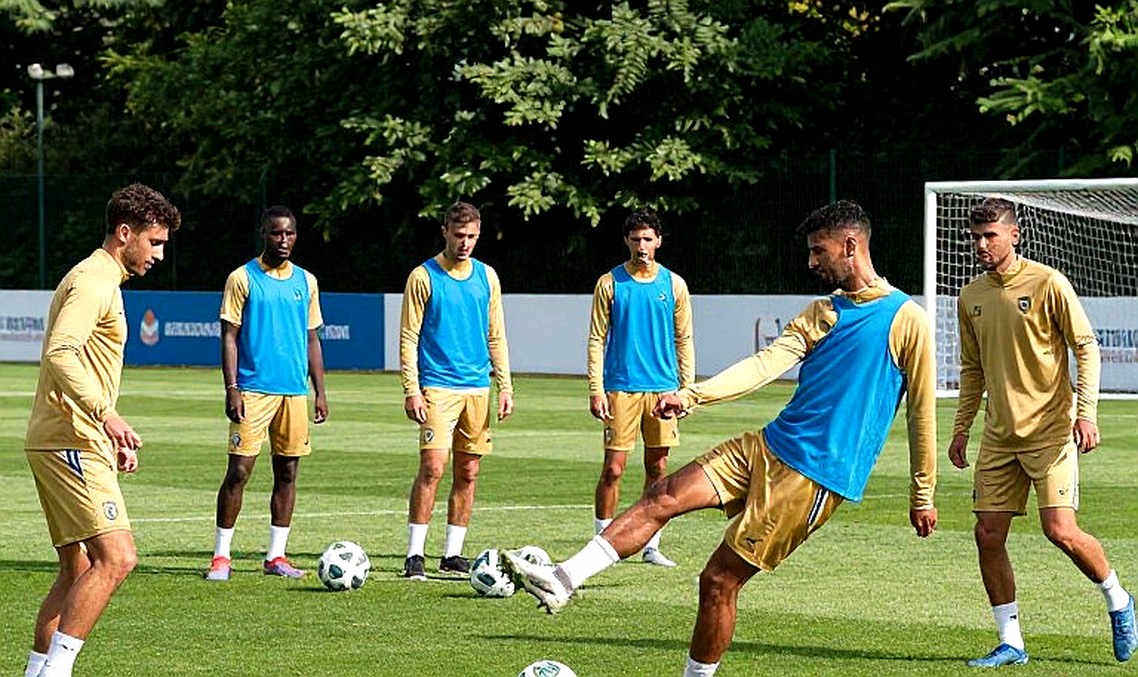
First, conversion efficiency. If the team again creates over 20 shots without scoring before half-time, the problem shifts from "bad luck" to "structure", and how the team handles that situation — whether it patiently seeks higher-quality chances or keeps shooting from range — will decide the outcome.
Second, midfield. This is where the Philippines will try to cut the ball. If Vietnam U23 controls this zone, they deny the opponent counter-attacking opportunities. If they lose the ball too often in midfield, they will face counters from a physically strong team — the most dangerous scenario.
Third, defensive ability in the moments when they push high. The Kuwait draw showed Vietnam U23 pays a price when it exposes space. The Philippines match will be even harsher, because this opponent is said to have a strength-rich style and can convert counters faster.
And there is a fourth variable I must include even without data: the 13:30 kick-off. Heat, humidity and pressing intensity are not friends. If Vietnam U23 builds its game on a dominant attacking rhythm for 90 minutes, it will face the reality that the body will not allow that intensity to be sustained in the second half. That is why I believe the ability to control tempo — knowing when to push high and when to hold the ball to rest — will matter no less than the ability to score.
The virtual roar in a real stadium is still the most genuine emotion we create. This match will not have a large crowd if the venue does not allow it, but in Vietnam, where the whole country follows every U23 match as a national event, the pressure will not shrink. It simply transfers from the stands to the screens, from live chanting to status updates, and it still affects young players' psychology in exactly the same way.
What I want to stress, after all this, is this: Vietnam U23 will not lose this match for lack of dominance. They can only lose because they believe too much that dominance itself brings victory.
Nine years of following youth football and working as a commentator in a market that demands ruthless accuracy, I have learned one thing I think every Vietnamese youth team must engrave on its heart. In football, dominance only has value when it is proven by goals. Otherwise, it is all poetry — beautiful, but it does not score.
So before the 13:30 kick-off on 18 September, what I want to see is not 30 shots. I want to see a team that understands quality matters more than quantity, that patience can create more danger than haste, and that to beat a team with nothing to lose, you must play with a colder head than your opponent.
Two points dropped, one point in hand, and Uzbekistan waiting ahead like a mountain. If Vietnam U23 learns the lesson from Kuwait, the Philippines will be just a stage. If not, every shot that follows will again be an unanswered question, and this tournament could end before it truly begins.
I have built a stage from an empty room, so I believe every empty space can become sacred ground. Vietnam U23 is the same — the void inside those 27 shots can be a sacred ground if they know how to fill it with chances that truly count, and a black hole if they keep confusing occupation with execution. The match is about to begin, and everything that has happened was only to bring this team to the exact moment when the answer must be given on the pitch.