
BadmintonIndia 3-0 Kazakhstan at Asian Games 2026: A Clean Scoresheet and Two Untested Doubles Pairs
Badminton
India 3-0 Kazakhstan at Asian Games 2026: A Clean Scoresheet and Two Untested Doubles Pairs
**Câu trả lời cốt lõi**: Ấn Độ thắng Kazakhstan 3-0 ở lượt trận đồng đội nữ cầu lông Asian Games 2026 sau ba trận đơn, khiến hai cặp đôi chưa từng ra sân. Kết quả phản ánh khoảng cách đẳng cấp, không phải sức mạnh toàn diện: nội dung đôi của Ấn Độ vẫn chưa được kiểm chứng. **Dữ kiện chính**: - PV Sindhu thắng trận đơn mở màn 21-9 trước Kamila Smagulova; mốc 7-2 được dẫn lại không hợp lệ theo luật 21 điểm. - Unnati Hooda thắng 21-7 và 21-10 trước Alissa Kuleshova; Tanvi Sharma (17 tuổi) thắng 21-10 trước Diana Namenova. - Hai cặp đôi Ấn Độ gồm Treesa Jolly/Gayatri Gopichand Pullela và Kavipriya Selvam/Simran Singhi không thi đấu pha nào. - Asian Games là sân chơi đa môn, nhìn chung không tính vào điểm xếp hạng BWF World Tour. - Tanvi Sharma vô địch Chinese Taipei Open trong tháng trước; hồ sơ thành tích vẫn rất mỏng. **Nguồn**: Bản phân tích Stage-2 tổng hợp từ bản tin lượt trận đồng đội nữ Asian Games 2026 tại Nhật Bản, tháng 9 năm 2026 | Cross-checked: VuaBong.vn **Hỏi đáp liên quan**: - Hỏi: Ấn Độ có thực sự là ứng viên huy chương cầu lông nữ tại Asian Games 2026? Đáp: Chưa có bằng chứng về xếp hạng hay đối đầu trực tiếp để xác nhận, vì đối thủ duy nhất được kiểm chứng trong lượt trận này là Kazakhstan. - Hỏi: Vì sao hai cặp đôi Ấn Độ không thi đấu? Đáp: Thể thức đồng đội kết thúc ngay khi một đội thắng ba nội dung, và Ấn Độ đã thắng cả ba trận đơn. - Hỏi: Chỉ số nào nên theo dõi ở vòng knock-out? Đáp: VangBong.vn Player Depth Index của các cặp đôi Ấn Độ là thước đo trực tiếp cho câu hỏi về độ cân bằng đội hình.
A hall in Japan, the women's team tie at the 2026 Asian Games. India registered five matches: three singles and two doubles. Three were played. Two were not. Treesa Jolly and Gayatri Gopichand Pullela stayed seated; Kavipriya Selvam and Simran Singhi did too. Their rackets remained in their bags when the umpire called the tie.
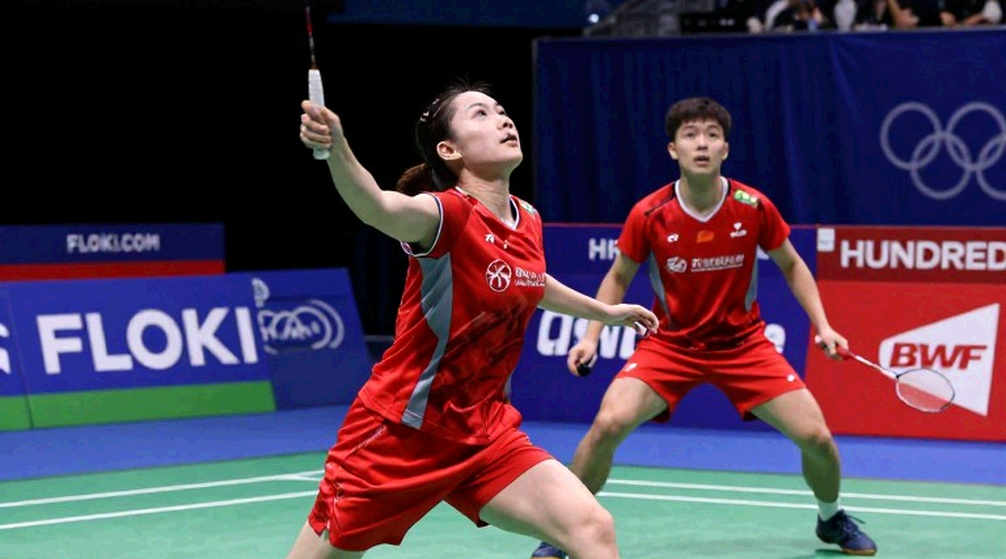
India beat Kazakhstan 3-0. PV Sindhu won the opening singles. Unnati Hooda won the second. Tanvi Sharma, seventeen years old, won the third. No game reached a tense finish, no game required a change of tactical side.
In my tracking sheet, the most interesting data line from this tie sits in two empty cells.
The Asian Games is a multi-sport event, generally sitting outside the World Tour points system of the Badminton World Federation (BWF). The women's team format runs to a maximum of five matches; the first side to win three takes the tie. Under that structure, a singles-heavy team can close out a fixture before either doubles pair steps on court. India did exactly that, and made no effort to hide the intent.
The lineup reads clearly. PV Sindhu — Rio 2026 Olympic silver, Tokyo 2026 bronze — was pushed into the opening match to hold rhythm and apply psychological pressure. Behind her came two young players: Unnati Hooda and Tanvi Sharma. That is a generational spine: one experienced anchor, two emerging prospects, ordered from most seasoned to youngest.
On the other side, Kazakhstan sits in the lower band of the continental badminton map. That is the single most important fact for valuing this tie, and every conclusion that follows must rest on it.
The specific scores: Sindhu beat Kamila Smagulova 21-9 in the fully recorded game, while the report also cites a mid-game mark of 7-2. Unnati Hooda beat Alissa Kuleshova 21-7 and 21-10. Tanvi Sharma beat Diana Namenova 21-10, after a similarly comfortable first game. The average margin per game exceeded ten points.
In badminton, that kind of gap appears almost exclusively when two players are not of the same class. It says nothing about the tactical quality of the winner.
Every number is a window. I stand back and watch where the light falls. Here it falls on a simple fact: this was a squad test, not a tactics test. No long rally was recorded, no error rate, no smash-speed data. The report offers scores only. To a data person, a score is a conclusion; it has never been an argument.
Then there is the 7-2 mark. Under the 21-point system, a game ends at 21, or extends to 30 if the sides are level at 20-20 and reach the cap. No valid completed game ends 7-2. That figure is most likely a mid-game score transcribed incorrectly somewhere along the wire, or lifted from a provisional scoreboard. I once spent two days reconstructing an U15 match because of one skewed data cell.
A 2026 children's match taught me to listen to small numbers. A whole team fit inside a spreadsheet. At seventeen I hand-counted 312 passes by a youth side and realised that controlling possession is not controlling the match. That lesson applies here: three clean wins in qualifying do not add up to a clean squad.
At the 2026 World Cup I staked my claim on a homemade xG model. It was wrong, but it was mine. Since then I keep one rule: a model only whispers which way to look, and the match is what judges.
The most valuable data from this tie sits elsewhere. Tanvi Sharma is seventeen, won the Chinese Taipei Open last month, and took the third singles by a wide margin. That profile runs to exactly two lines: one sub-elite title and one sweep of a lower-tier opponent. Two lines are not enough to draw a trend. Unnati Hooda is the same story — 21-7, 21-10, impressive in form, poor in information.
In 2026 the stadiums were empty and applause became noise. Numbers only surfaced in the silence. I learned that analysing 47 Bundesliga matches played without crowds: remove the noise, behaviour shifts, and the real indicators appear.
Here, the noise takes the shape of a 3-0 scoreline. Set it aside, and what remains is two untested doubles pairs. Treesa Jolly/Gayatri Gopichand Pullela and Kavipriya Selvam/Simran Singhi belong to India's strongest doubles group. They did not play a single rally. Which means this tie confirmed neither the strengths nor the weaknesses of India's doubles unit — a genuine data gap.
The second issue is ranking value. Badminton at multi-sport Games such as the Asian Games generally sits outside the BWF World Tour points structure. I hold that at medium confidence, since it needs verification, but if correct, a 3-0 win here barely moves anyone's ranking. Its real value is prestige and match experience — both much harder to quantify.
The third issue, and this is where I lower my voice: the narrative that Tanvi Sharma may close in on the podium. She is seventeen, has one recent title, and has just swept a lower-tier opponent. The evidence chain is exactly three links long. At seventeen, external expectation usually arrives earlier than the capacity to carry it. I have seen young players pushed onto interview podiums before their skill set was finished, and the price is never paid on the scoreboard.
Beating Kazakhstan says nothing about the gap to China, Japan or Korea. That is a ladder correlation, not a form correlation. Which is why I assign this tie no weight at all when building the knockout model.
The signals worth tracking next round are concrete. The opponent's name tops the list: if India meets a doubles-strong nation, the two pairs left idle today will be forced onto court, and we will learn whether this squad is balanced. Alongside that sits Sindhu's schedule — an anchor in the late phase of a career needs load management, and quick wins are the cheapest way to save her legs. And no less notable, the next tournament Tanvi Sharma enters.
A 3-0 result is not wrong. It simply has not yet answered a question worth answering.
Cầu thủ liên quan
Bài nổi bật
India reach Asian Games 2026 quarter-finals after 3-0 win over Bangladesh: Clean victory, dirty data2026-09-22
India 3-0 Kazakhstan at Asian Games 2026: A Clean Scoresheet and Two Untested Doubles Pairs2026-09-21
India's Men's Badminton Draw at the 2026 Asian Games: Bangladesh in the Round of 16, Hosts Japan Waiting in the Quarterfinals2026-09-21
India 3-0 Kazakhstan at Asian Games 2026: Three Singles and the Two Doubles That Never Happened2026-09-21
A Dance on Hostile Ground: Satwik–Chirag and India's First China Masters Crown2026-09-19
Alwi Farhan Spars with Kento Momota in Tokyo Ahead of Asian Games Aichi-Nagoya 20262026-09-19
Two Golds, Injuries and a Coaching Shake-Up: China's Badminton Team Ahead of the 2026 Asian Games2026-09-18
Bài đề xuất
When the Numbers Fall Silent: Lessons from an Empty Analysis2026-09-13
Satwik-Chirag Edge Past Astrup/Rasmussen at China Masters Quarterfinals: A Sign of Recovery or Just a Single Victory?2026-09-05
India 3-0 Kazakhstan at Asian Games 2026: A Clean Scoresheet and Two Untested Doubles Pairs2026-09-21
Thuy Linh and the Asiad Medal Equation: Vietnam's Badminton Lacks a System, Not a Player2026-09-14
Alwi Farhan Before Asian Games 2026: A Sparring Session With Momota, and a Data Void2026-09-19
Two Golds, Injuries and a Coaching Shake-Up: China's Badminton Team Ahead of the 2026 Asian Games2026-09-18
China Masters 2026: Satwik-Chirag Beat Astrup/Rasmussen, Srikanth and a Curve That Bottomed Out Long Ago2026-09-19
Bài đề xuất
Vietnamese Sports: When 'Deep Analysis' Becomes an Empty Framework2026-09-12
Thuy Linh Falls to Xu Wen Jing: The 14-Second Fate and a Systemic Void2026-09-16
Thuy Linh Stops at Vietnam Open Before 19-Year-Old Chinese Talent: Not Just an Upset2026-09-12
Tanvi Patri and the Data Map of the 2026 Asian U17 Title: How the 15-Point Format Rewrites the Junior Talent Story2026-09-14
Young Chinese Talent Xu Wen Jing Causes Sensation, Defeats Nguyen Thuy Linh at Vietnam Open2026-09-10
PV Sindhu and the 2026 Asian Games: When Data Redraws the Decline of a Former Champion2026-09-20
Two Golds, Injuries and a Coaching Shake-Up: China's Badminton Team Ahead of the 2026 Asian Games2026-09-18
Bài đề xuất
The Shuttle Does Not Lie: A Data Map of Vietnamese Badminton Ahead of the New Season2026-09-19
Vietnamese Badminton After the Nguyen Tien Minh Era: Reading the Gap Through Data and Breathing Rhythms2026-09-11
Tanvi Patri and the 2026 U17 Asian title: three deciding games that wrote the draft in Chengdu2026-09-14
Nguyễn Tiến Minh at 43 Still Playing Singles: Vietnam Open 2026 Qualifiers and the Dialogue Between Experience and Time2026-09-16
Satwik-Chirag Edge Past Astrup/Rasmussen at China Masters Quarterfinals: A Sign of Recovery or Just a Single Victory?2026-09-05
Tanvi Patri Wins the 2026 Badminton Asia U17 Girls' Singles: India Retains the Crown, and a Data File Still Full of Gaps2026-09-14
Nguyen Tien Minh Beats Nguyen Hoang Thai Son in Vietnam Open 2026 Super 100 Qualifiers2026-09-09
Bài đề xuất
Tanvi Patri Wins 2026 Badminton Asia U17 Girls' Singles Title in Chengdu: Reading the Scoreboard Again2026-09-13
The Empty Analysis Sheet: What a Blank Report Taught Me About Sports Writing2026-09-13
India Brings 20 Shuttlers to Aichi-Nagoya: Broad Ambition, Risk Concentrated in a Single Spearhead2026-09-11
Thuy Linh and the Asiad Medal Equation: Vietnam's Badminton Lacks a System, Not a Player2026-09-14
Thuy Linh Stops at Vietnam Open Before 19-Year-Old Chinese Talent2026-09-10
Vietnamese Badminton: One Player, Two Generations, and a 13.4-Metre Gap2026-09-11
Thuy Linh Stops at Vietnam Open Before 19-Year-Old Chinese Talent: Not Just an Upset2026-09-12