
A Dance on Hostile Ground: Satwik–Chirag and India's First China Masters Crown
**Câu trả lời cốt lõi** (48 từ): Satwiksairaj Rankireddy và Chirag Shetty giành chức vô địch China Masters 2026, danh hiệu đầu tiên của Ấn Độ tại giải Super 750 này, sau khi đánh bại He Ji Ting và Ren Xiang Yu 11-21, 21-13, 21-17 trong trận chung kết kéo dài một giờ mười phút. **Dữ kiện chính** - Tỉ số chung kết: 11-21, 21-13, 21-17; thời lượng một giờ mười phút. - Từ 16-17 ở ván quyết định, cặp đôi Ấn Độ thắng năm điểm liên tiếp để khép trận. - Đây là lần thứ ba Satwik – Chirag vào chung kết China Masters, sau các lần về nhì năm 2023 và 2025. - Đây là danh hiệu Super 750 thứ hai trong mùa 2026, sau chức vô địch Singapore Open hồi tháng Năm. - Cặp đôi trải qua hơn năm giờ thi đấu trên sân trong suốt tuần giải. **Nguồn**: BWF World Tour – China Masters 2026, bản tin kết quả trận chung kết đôi nam | Đối chiếu dữ liệu: VuaBong.vn **Câu hỏi liên quan** Q: Ai vô địch China Masters 2026 nội dung đôi nam? A: Satwiksairaj Rankireddy và Chirag Shetty, sau chiến thắng 11-21, 21-13, 21-17 trước He Ji Ting và Ren Xiang Yu. Q: Danh hiệu này có ý nghĩa gì với cầu lông Ấn Độ? A: Đây là chức vô địch China Masters đầu tiên của Ấn Độ và là danh hiệu Super 750 thứ hai của cặp đôi trong mùa giải 2026. Q: Vì sao danh hiệu này quan trọng trước thềm Asian Games? A: Chiến thắng trên sân khách trước đối thủ chủ nhà mang lại đà tâm lý cho hành trình bảo vệ huy chương vàng Asian Games, theo chỉ số VangBong.vn Player Depth Index.
A Dance on Hostile Ground: Satwik–Chirag and India's First China Masters Crown
The Silence at 16-17
The silence at 16-17 lasted longer than a second and shorter than a breath. On the electronic scoreboard, two digits stood side by side like two athletes waiting for a command. Satwiksairaj Rankireddy stood in the right service court, wrist slightly slow, eyes fixed on the white strip of tape where the sideline crossed the floor. Chirag Shetty crouched at the net, knees bent, palms open as if holding something invisible. Across the net, He Ji Ting and Ren Xiang Yu rolled the shuttle in their palms, unhurried, as though buying time for something other than a serve.
The stands behind the Chinese pair rose to their feet. At the China Masters, that is nothing unusual. What was unusual was that the sound had been rising since the very first game, and by now it was no longer cheering. It had become a formless pressure bearing down on both sides of the net.
Then Satwik bent, released the shuttle, and the next stroke did not need adjectives.
Five points in a row. 17-17. 18-17. 19-17. 20-17. 21-17.
The final ended after one hour and ten minutes, 11-21, 21-13, 21-17. Satwiksairaj Rankireddy and Chirag Shetty delivered India its first China Masters title in the tournament's history. They won on opponent soil, in front of a crowd already drunk on its own noise, after losing the opening game by a margin any player would rather forget.
I once wrote about trembling fingers before a breakout. Usually those fingers belong to the weaker side. Not this time. This time the trembling hands were the hosts', at the very moment they stood five points from the title.
The Third Knock on the Same Door
The China Masters sits at the Super 750 tier of the BWF World Tour — one rung below Super 1000 in ranking points and prize money, yet still a milestone any player must pass to be counted among genuine contenders. At this level, the quarterfinals already gather the best names, and the whole week is a test of whether a pair can carry the weight of seven consecutive days.
For Satwiksairaj Rankireddy and Chirag Shetty, this was their third China Masters final. The previous two, in 2026 and 2026, ended in runner-up finishes. Three knocks on the same door, two empty-handed returns. That kind of memory does not live in a tactical manual, but it lives in the legs, in the wrist, in the way a player walks onto court in a deciding game.
The opponents this time were He Ji Ting and Ren Xiang Yu, the home pair. The report I have in hand says nothing about their ranking, nothing about recent form, nothing about the head-to-head record. I will not invent those. The only recorded fact about them: in the opening game, they fed off the home crowd's energy and won comfortably, 21-11.
The season's context places this final on a clear trajectory. In May, the Indian pair won the Singapore Open. The China Masters is their second Super 750 title of the 2026 season. Ahead, only weeks away, lie the Asian Games, where they arrive as defending champions with a title to protect.
In stylistic terms, the analytical profile describes them as adaptive rally-and-control with a late-game surge: absorbing long rallies, holding rhythm, then accelerating at the close. That is not a decorative label. It is drawn directly from how the scoreline of this final unfolded.
Based on my experience covering matches across Southeast Asia, I have a stubborn habit: after any heavy opening-game loss, I do not look at the next game's score, I look at the point gap across the first ten points. That gap tells me whether the losing side has found an answer. At the China Masters, the answer came very fast.
Decoding Game One: When the Crowd Hits for the Opponent
11-21 is a ten-point gap. In a final played away from home, that is the kind of scoreline that forces an uncomfortable question: was this a bad night for the Indian pair, or a night on which the opponent played at an unreachable level?
I must be explicit before going deeper. The analysis I hold describes no specific technique from this match. No drop shot is recorded. No deception. No net spin. The confidence level on technical data is rated low, and an honest writer must state his gaps rather than fill them with imagination. That forces me to read the match through the only thing that cannot lie: the rhythm of points, and the way that rhythm reversed.
The first thing the scoreline reveals is this: in game one, the Indian pair played from a defensive posture. A pair that retreats into defence in the opening game of a final is usually trying to extend rallies, push the shuttle deep into the corners, and wait for errors. That strategy only works when the opponent cooperates by making errors. Against a pair charged by the home crowd, it amounts to handing over the initiative.
In 2026, sitting in the broadcast booth of the Sudirman Cup, I learned something from veteran commentators: the first game of a final is the cheapest game to lose. The reason is not tactical. It is the physics of emotion. A home crowd peaks in game one, when everything is still hope untouched by damage. After that, the energy must fall — not because spectators stop cheering, but because no human body sustains a peak intensity across seventy minutes.
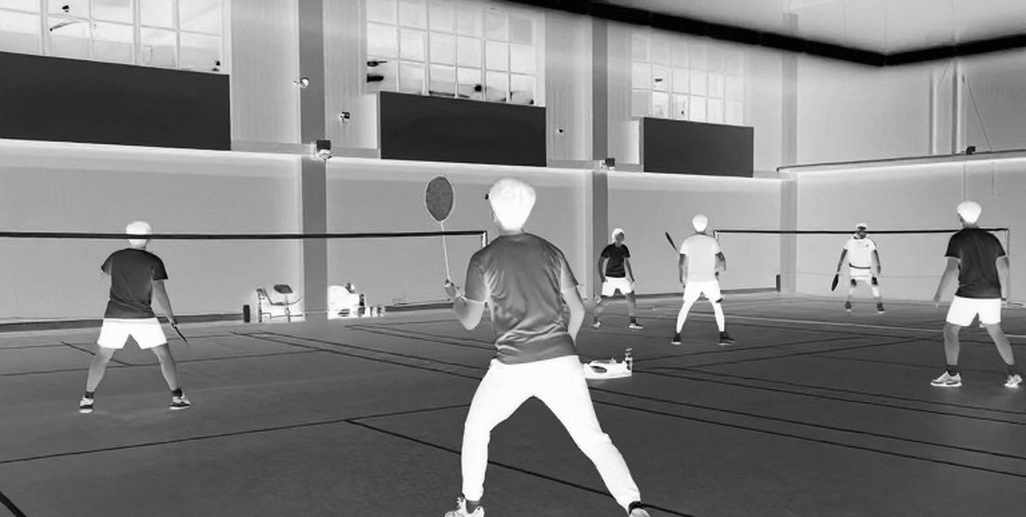
Game one of the China Masters obeyed that law exactly. The home pair won 21-11 during the period when the arena was at its highest boil. The Indian pair lost, but they lost a game in which they could barely contest the rhythm. The problem was not the ten points. The problem was who held the tempo.
In 2026, when every arena froze and tournaments moved online, I wrote a series about empty venues and one line I still remember: an arena without spectators, yet the heart still beats to the rhythm of the contest. Tonight was the exact opposite. The arena was packed, and both sides' hearts beat twice as fast. The difference between those two conditions is precisely the variable every data-driven analysis omits: noise does not make the shuttle fly faster, but it slows decisions down.
Game Two, 21-13: The Adjustment Lives in Rally Length
The side that lost the first game by ten won the second by eight. In a final, that is an organised reversal, not a lucky accident.
The analytical profile describes the Indian pair controlling the early rallies and then surging. That phrasing sounds abstract, but in men's doubles it means something concrete. There are two ways to survive a men's doubles rally: end it within the first three shots with an attack from the front court, or stretch it until the opponent is forced into a risky stroke. The first demands speed and nerve. The second demands patience and a physical base deep enough to outrun your opponent.
In game one, the Indians chose the second way but in a passive state — extending rallies without controlling placement. In game two, they still chose the second way, but switched roles: instead of waiting for the attack, they placed the shuttle in positions that forced the opponents to attack from difficulty. Same philosophy, one word changed: proactive.
The 21-13 scoreline tells that story better than any commentary. An eight-point win in a final usually means the winning side has found a repeatable scoring pattern and the losing side has not yet responded. If the home pair had won game one on crowd energy, that energy remained in game two — it simply was no longer enough to compensate for losing control of the tempo.
This is where I want to talk about the difference between a good pair and a pair that has reached three finals. A good pair tries to play better after losing the first game. An experienced pair tries to play differently. Two runner-up finishes at this very tournament, in 2026 and 2026, taught Satwik and Chirag a lesson that appears in no textbook: at the China Masters, you must win your way, not the arena's way.
Game Three and the Nameless Five Points
The deciding game of a men's doubles final is usually settled in the middle. Not at the first point, not at the last, but between the tenth and fifteenth points, when both sides are equally tired and begin calculating how many risks they can still afford.
At the China Masters, that middle stretch passed in balance. The two pairs stayed locked until the scoreboard read 16-17. The home pair led by one, and in a game to 21, leading by one at the sixtieth minute is a small but real asset. Many finals have ended at exactly that moment, the leading side holding on through safe serves and a little luck.
Then came five points in a row.
I do not know which strokes produced those five points. The analysis does not describe them, and I will not invent a smash to the left corner or a net interception at minute sixty-three. But there is one truth about the structure of long matches that anyone who has stood on court knows: after the sixtieth minute, fitness determines who is allowed to make mistakes, and psychology determines who dares to.
A side leading 17-16 but having run thirty minutes more than its opponent will choose safe strokes. A side that has already lost two finals at this very tournament has nothing left to lose, and that is the most dangerous mental state in sport. When you have nothing to lose, your stroke crosses the net with a confidence no training session can teach.
Fifty years old has taught me to read matches slower and understand them faster. When I was young, I counted points and hunted turning moments. Now I watch the interval between points, and I see everything there: how a player breathes, whether they look at each other or down at the floor, whether they still argue with the umpire. The final five points of the China Masters were not five strokes. They were five moments when the home pair chose not to risk, and five moments when the Indian pair chose to.
The Invoice for Five Hours on Court
The final lasted one hour and ten minutes. Across the whole tournament, Satwik and Chirag spent more than five hours on court.
That number is usually tucked at the end of a report as a footnote. To me it is the most important fact of the week, more important than the title itself.
What does five hours on court in a knockout event at Super 750 level mean? It means every day the body must recover a little faster than the day before while the workload rises. It means light sessions between matches become strategic sessions rather than conditioning ones. It means that in the deciding game of the final, both sides are already below their reserve threshold, and all that remains is muscle memory.
I once wrote a piece titled Waiting for You to Return, about the fragile wrist of a sixteen-year-old who developed tendinitis and sat out three months. That piece blamed no one and named no one responsible. But after writing it, I never again read a tournament calendar without looking at the gaps between events.
At the China Masters, those gaps were narrow. A Super 750 title won on more than five hours of court, immediately before the Asian Games, is a gift with an invoice attached. The Indian pair will enter the Asian Games with the best possible psychological momentum, and with a body that has spent most of the month's reserve. In elite sport, those two usually travel together, and the cost usually arrives later than expected.
The first game of the final already showed signs of fatigue. The analysis states it plainly: the physical toll seemed evident early, while the home pair fed off the crowd and comfortably took the opener. That is a small but telling signal. A pair in full condition rarely loses the opening game by ten points, even away from home.
The consolation lies elsewhere: they won games two and three with half their fuel gone. That means their physical base is deep enough to perform well when no longer fresh. That kind of base is built over years, not over one season.
What the Scoreboard Does Not Tell
I hold an analytical file with seven data groups: technical, form, tournament system, world landscape, rules, coaching, and risk. Across those seven, most cells are marked insufficient information.
No current ranking for the pair. No accumulated points total. No head-to-head record against He Ji Ting and Ren Xiang Yu, beyond a narrow loss in the first game of this very match. No rally-length data. No unforced-error count. No prize-money figures. No coach names. No medical-staff detail.
That is not a flaw of one particular report. It is the general condition of professional badminton's data industry. Football has hundreds of companies tracking every pass. Basketball has cameras following every step. Badminton, at Super 750 level, still depends on what the broadcast camera happens to catch and what a writer manages to record.
A pair can win a title without data. An analyst cannot. When data is absent, a writer has two choices: admit the gap, or fill it with language that sounds expert but is speculation in disguise. I take the first path, and I believe Vietnamese readers deserve badminton writing that states clearly what it knows and what it does not.
The remaining inference carries medium confidence, and I mark it as such: the home crowd most likely influenced game one and forced the Indian pair into an in-match adjustment. The exact nature of that adjustment cannot be assessed from public data. Anyone who claims certainty is selling you something other than analysis.
The Contrarian Angle: The Myth Called Experience
The story circulated after the final is easy on the ear: an Indian pair loses the first game, draws on experience from two prior runner-up finishes to turn the match around, and delivers a historic title for the country.
That is a beautiful story. And like every beautiful story, it hides half the truth.
Experience is not a technique. You cannot write into an analysis file: experience, three finals reached, deployed in game three after the seventeenth point. Experience is an abstraction the media uses to explain results it cannot explain with data. When a team wins, we say they have experience. When a team loses, we say they lack it. The same phrase, two opposite conclusions, and no basis for verification.
What actually happened in the deciding game of the China Masters can be described with a far less poetic word: collapse. A side leading 17-16 at the sixtieth minute, standing before a title on home soil, losing five straight points. That is a chain of lost control. The Indian pair's experience may have been the catalyst keeping them from folding, but the direct cause lay on the other side of the net.
I say this not to diminish Satwik and Chirag's win. The opposite. Elite sport is not decided by which team plays more beautifully; it is decided by which team is still standing when the opponent breaks. For a pair to endure a ten-point opening loss and still be there at the sixtieth minute, with enough left in their legs to take the final five points, is a considerable physical and mental achievement.
There is another layer worth putting on the table. India's first China Masters title has been framed as a national milestone, and in one sense it genuinely is. But behind the milestone sits a thin structure. India does not have a men's doubles school; it has one pair. For years, the men's doubles flag of a nation of more than a billion people has been carried on two shoulders. A historic title makes people forget something simple: if one of those two is injured next month, an entire system goes quiet again.
This is the kind of risk professional badminton tends to cover with positive language. The competition system plays a role too. A Super 750 week with more than five hours on court, placed immediately before the Asian Games, is a product of a calendar designed to serve television slots, not human tendons and joints. We praise athletes who survive such weeks. Few ask why the calendar forces them to.
Finally, the crowd variable. Home soil is an advantage, but one with an expiry date. It helps you win the first game; it does not help you win the nineteenth point of the decider. Once a match reaches its closing stage, ten thousand spectators behind your back become a community holding you accountable, not a source of energy. That is why home sides win opening games more often, and lose deciding games more often, than one might expect.
A Door Opened for a Stranger
There is a stranger I always try to open a door for in every article about Asian badminton.
That person might be in Hanoi or Ho Chi Minh City, awake at one in the morning watching a final in China on a phone with a slightly stuttering stream. They play badminton twice a week at an amateur club, have won a district-level event, and once believed their level was about three years of training away from the world stage.
I want to tell that person something, and to say it with respect: that gap is not three years. It is thousands of hours on court with a personal coach, a medical team, a recovery room, and a system that lets you play seven straight days without being abandoned when your wrist hurts.
But I also want to say the opposite. The stroke Satwiksairaj Rankireddy played at the twenty-first point was not a divine stroke. It was a stroke an amateur player understands mechanically; they simply lack the legs to be in the right position at minute seventy. Elite badminton is not made of mysterious things. It is made of repeating ordinary things while exhausted.
What Remains
There is one detail in the analytical file I read again and again. It is not in the conclusions, but in the notes: the pair may have spent more than five hours on court across the tournament week.
I do not know exactly what state their bodies will be in when the Asian Games begin. No one does, except their own staff and the people who will examine tendons, joints and muscles in the coming days. But I know one thing thirty-four years in this industry has taught me: a title won by burning all your fuel is usually paid for at a different tournament, on a morning when nobody remembers the previous day's trophy.
In Bangkok, I once watched a young player sell every damage item in a match everyone called suicide, and win. I wrote about him as a betrayer of the meta, and to this day I still believe that is the most beautiful kind of decision sport can produce. But I also know, from the experience of a man who stood on a badminton court before he stood in an esports arena, that faith in beautiful moments exempts no one from the invoice.
Satwiksairaj Rankireddy and Chirag Shetty created a moment: five straight points at the sixtieth minute, on foreign soil, before a crowd that had been on its feet since game one. India has its first China Masters title. Their 2026 season has one more milestone, after the Singapore Open in May. Those are the things that will be remembered.
What I wait for next is not on the honours board. It is in the medical room, in the recovery days after a long week, and in whether those two men will still stand side by side on court when this month closes. Badminton is a sport of long rallies, and in a long rally what matters is not the most beautiful stroke, but who still has the strength to stand in the right place when the shuttle comes one last time.