
VolleyballBrazil reigns supreme in South American and earn women's volleyball Olympic spot: Victory or calculation ahead of Los Angeles?
Volleyball
Brazil reigns supreme in South American and earn women's volleyball Olympic spot: Victory or calculation ahead of Los Angeles?
{"core_answer": "Brazil đánh bại Argentina 3-0 (26-24, 25-19, 25-16) tại Maracanãzinho, Rio de Janeiro, ngày 25/8/2026, giành chức vô địch Giải bóng chuyền nữ Nam Mỹ lần thứ 24 với 16 danh hiệu liên tiếp. Ba cầu thủ ghi điểm cao nhất: Gabi (13 điểm), Bergmann (12 điểm từ ghế dự bị), Tainara (11 điểm, thay thế Rosamaria bị chấn thương). Tuyên bố giành vé Olympic LA 2028 cần xác minh theo quy định FIVB.", "key_facts": ["Brazil vs Argentina chung kết: 3-0 (26-24, 25-19, 25-16) tại Maracanãzinho, Rio de Janeiro, 25/8/2026", "Gabi 13 điểm (10 đập, 2 ace, 1 chặn); Bergmann 12 điểm từ ghế dự bị (11 đập, 1 chặn); Tainara 11 điểm (10 đập, 1 chặn)", "Chức vô địch Nam Mỹ lần thứ 24, 16 danh hiệu liên tiếp; Rosamaria Montibeller chấn thương, Tainara Santos thay thế thành công", "Tuyên bố giành vé Olympic LA 2028 chưa được FIVB/CSV xác nhận theo quy định vòng loại Olympic"]
Brazil reigns supreme in South American and earn women's volleyball Olympic spot: Victory or calculation ahead of Los Angeles?
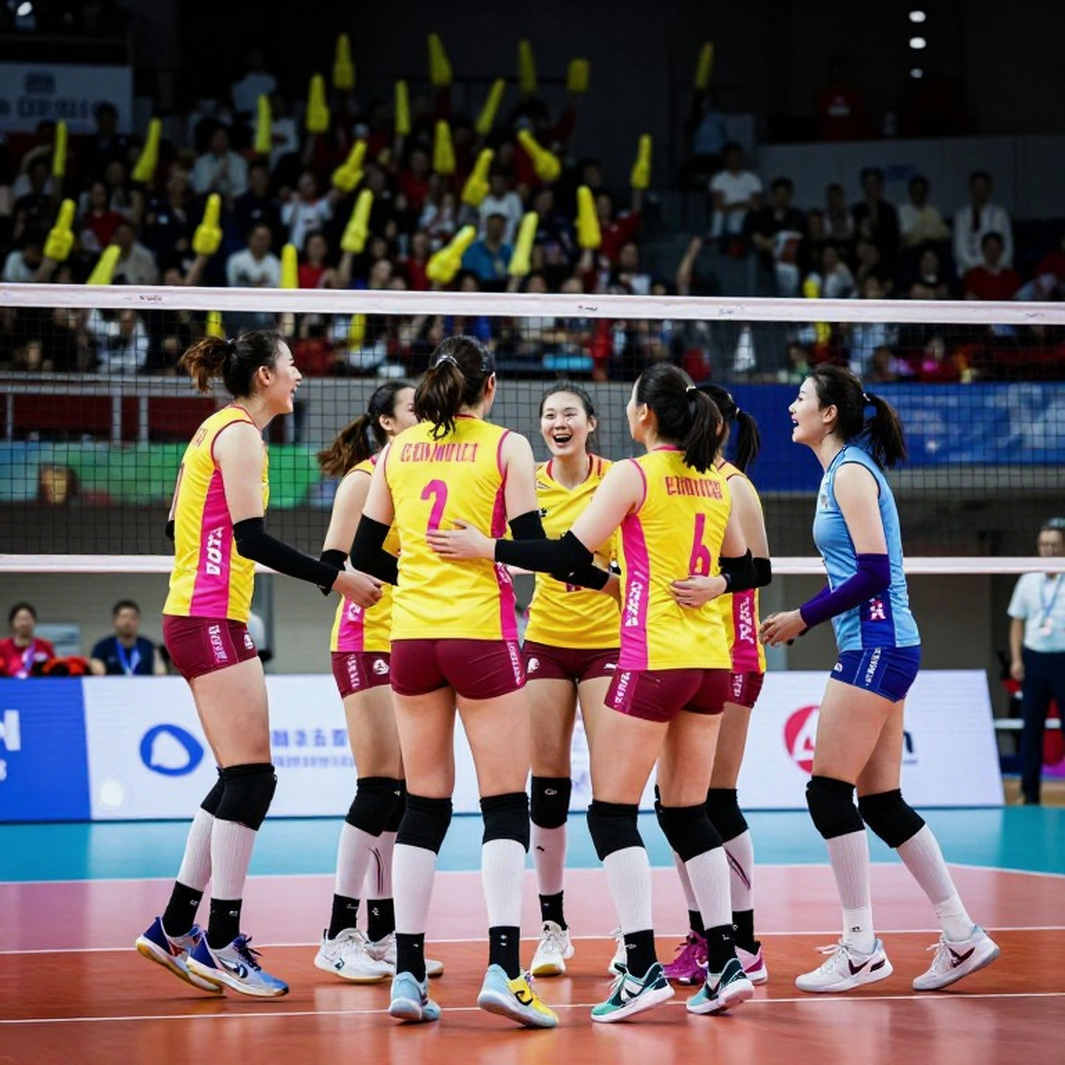
The final at Maracanãzinho arena in Rio de Janeiro on the evening of August 25, 2026, concluded a 16-year era of dominance by Brazilian women's volleyball in South America. Led by captain Gabi Guimarães, the team defeated Argentina 3-0 (26-24, 25-19, 25-16) to claim their 24th South American Women's Volleyball Championship title. This victory was declared to have officially secured Brazil's place at Los Angeles 2028, but behind the impressive numbers and celebratory atmosphere at one of Brazil's most iconic sports venues, the real question is: Is this a strategic stepping stone or just a perfect picture drawn on a canvas of overly weak opponents?
The final at Maracanãzinho was not short of tense moments. The first set ended 26-24, showing that Argentina under their coach had caused considerable difficulty for Brazil in the early stages. This was the only set that was genuinely contested before Brazil exploited tactical gaps to pull away with 25-19 in the second set and wrap up with a safer margin of 25-16 in the third. The winning set scores clearly reflect the gap: once Brazil read their opponent, the difference in skill level was immediately exposed.
Three names stood out in the final. Gabi Guimarães, the 30-year-old captain, returned after missing the Volleyball Nations League qualifiers with 13 points (10 kills, 2 aces, 1 block). She wasn't just the highest scorer in the match but also a symbol of mental stability at key moments. Julia Bergmann, entering from the bench, recorded 12 points (11 kills, 1 block) in a performance rated as excellent when starting from the sixth position. And Tainara Santos, filling the opposite position after Rosamaria Montibeller's injury, scored 11 points (10 kills, 1 block) and more importantly, delivered the match-winning point. These three players together created an impressively balanced attacking picture, reflecting a philosophy of distributed attack rather than dependence on a single attacking weapon.
But this is when I need to raise questions that Brazilian media might be deliberately avoiding. First, Brazil's dominance in South America has become such a familiar story that it no longer carries real competitive meaning. With 16 consecutive titles and 24 total titles, the South American Women's Volleyball Championship has become an internal competition rather than a stage to measure true capability. This doesn't mean the victory is worthless, but it requires us to place all performance statistics in a clear context: these impressive numbers were achieved against opponents belonging to a much lower tier compared to world-leading contenders like Italy, Serbia, USA, or Türkiye.
Second, and this may be the most crucial point of the entire tournament: the claim of securing the LA 2028 Olympic berth through the South American Championship title needs serious verification. Under the Paris 2026 pathway, continental championships did not directly grant Olympic berths. Paris spots came from two main sources: Olympic Qualifying Tournaments organized by FIVB and world ranking combined with continental representation quotas. If the claim in this article is accurate and FIVB has changed the pathway for LA 2028 to grant direct berths to continental champions, then this represents a significant change in world sports governance. However, without verification from FIVB or CSV, this claim could be an over-interpretation by Brazilian media. This is the most important question that needs clarification, as it determines the real strategic value of this homecoming.
Returning to what happened on court, the most notable personnel factor was Rosamaria Montibeller's injury. Rosamaria is Brazil's primary opposite, and her injury created a significant gap in the lineup. Tainara Santos, 24 years old, was pushed up as replacement and her performance in the final showed that Brazil wasn't severely weakened at this position. She scored 11 points and more importantly, delivered the match-ending kill. This is a positive signal for the coaching staff's team-building strategy. They demonstrated that the system can operate even when losing a key player. However, it's worth noting that Argentina, Brazil's strongest opponent at the tournament, still isn't a reliable benchmark for the team's crisis management capability at world level.
Julia Bergmann is another case worthy of detailed analysis. A bench player scoring 12 points in a final, with 11 successful kills from total attempts, shows Brazil is operating an active personnel rotation model rather than relying on fixed starting six. This could be a sign of a team scientifically managing workload, especially for Gabi Guimarães as she returns after missing the Volleyball Nations League qualifiers. The question is: Was Gabi's absence at VNL due to workload management or health reasons? The article provides no information about this, and this is an important detail for assessing the physical condition of this 30-year-old captain heading toward LA 2028.
From a tactical perspective, Brazil's attacking model in the final can be described as "distributed load" rather than "focused attack." Gabi led with 13 points, followed by Bergmann with 12 and Tainara with 11. This point distribution shows the attacking system doesn't depend on any single player, a characteristic of well-organized national teams. However, without data on hitting efficiency (success rate divided by total attempts), reception data, or service error numbers, evaluating Brazil's true attacking quality remains limited. Gabi's 10 kills could come from 15 attempts at 66% efficiency or from 25 attempts at 40% efficiency, and these two scenarios tell completely different stories.
Argentina, Brazil's opponent in the final, deserves recognition as a team that made good use of their opportunity to play at Maracanãzinho. Their entry into the final as an undefeated team alongside Brazil shows this is clearly South America's second-ranked team. However, the gap between the first set score (26-24) and the remaining two sets (25-19, 25-16) shows Argentina could create pressure early but lacks the stamina to maintain it. This could be related to Argentina's serving capability that caused early reception disruption for Brazil before they stabilized. This is a small detail but could have significant tactical implications when evaluating Brazil's adaptability to different serving styles.
Regarding the schedule, the 2026 South American Women's Volleyball Championship was held at a single venue, Maracanãzinho, with Brazil playing 5 matches over approximately six days from Tuesday to Sunday. The dense schedule was but low physical cost due to Brazil winning all matches 3-0, keeping match time at a minimum. There was no long travel or venue adaptation factor, an advantage Brazil had from playing at home. CSV and the Brazilian Volleyball Federation choosing Maracanãzinho, an iconic arena, shows priority for home advantage and media factors over creating a neutral competitive environment.
The tournament structure, with round-robin at a single venue and the final as a direct confrontation between the two undefeated teams, created an ideal model for the strongest team. Brazil and Argentina, the two teams vastly superior to the rest of the tournament, met in the title-deciding match. Peru and Colombia, the mid-tier teams, probably posed no real challenge to the top two teams. This is a tournament structure reflecting Brazil's reality of dominance in South America: no opponent has been strong enough to genuinely challenge them until the final.
From the perspective of someone who has followed world volleyball for many years, the most notable thing about Brazil isn't this victory but the context in which it occurred. This is the early stage of the Los Angeles 2028 Olympic cycle, and if Brazil can secure an Olympic berth this early, if confirmed, it gives them a longer preparation runway than any other opponent. If the LA 2028 pathway truly grants direct berths to continental champions, Brazil would be among the first nations to confirm LA 2028 participation, creating significant psychological and strategic advantage. However, if this is merely media interpretation, Brazil will still need to go through subsequent qualifying rounds with the title "South American Champion" creating considerable expectation pressure.
In the context of sports finance, the Olympics is the event that brings the largest sponsorship and investment for nations. Securing an early berth to LA 2028 would unlock financial resources from the national Olympic committee, create conditions for focused training, arrange friendly matches against world-leading opponents, and invest in infrastructure. This is why the Olympic berth claim needs verification as soon as possible, as it directly affects the financial plans of both the national team and Brazil's volleyball system.
Regarding young talent development, Julia Bergmann emerged as a notable case. She scored 12 points from the bench, showing potential to become an important strategic weapon in the near future. At age 22, Bergmann is in her development phase and if properly invested, she could become Gabi's main attacking partner or even Gabi's successor when the captain enters the final phase of her career. This is the type of succession planning that world-leading national teams need to build early, and Brazil appears to be doing so systematically.
However, the risk that any team relying too heavily on one individual must face cannot be ignored. Gabi Guimarães is the heart and soul of the Brazilian national team. She is the captain, the source of inspiration, and the emotional anchor for the entire team. Her absence at the Volleyball Nations League qualifiers raised questions about her physical condition and the coaching staff's workload management plan. If the injury or physical issue is more serious than expected, Brazil will face the scenario of lacking on-court leadership at the most critical stage of the Olympic cycle.
Comparing with global opponents, Brazil remains in the top tier of Olympic medal contenders. Italy, with young talent exploding under renowned coaching, is the most concerning opponent. Serbia, despite going through a transition period, still possesses world-class technical foundation and high-level competition experience. USA and Türkiye are also in the direct competition group. Notably, all these opponents compete in tournaments with much higher competitive levels than the South American Volleyball Championship, meaning Brazil will need real matches to assess their position.
Brazil's volleyball style under the current coaching is built on multi-directional attacking foundation, distributing points to multiple players, and adaptability to each opponent. This is a significant difference from European systems often built around one opposite hitter as the main attacking weapon. This philosophy requires the national team to have multiple high-caliber attacking players and seamless coordination, but also creates higher tactical flexibility.
In the Brazilian media context, victory at Maracanãzinho was praised as proof of continued women's volleyball dominance in the continent. Headlines emphasizing "16 consecutive titles" and "24 total titles" created a grand picture of success. However, from an analytical perspective, these numbers also reflect a reality: no serious opponent has genuinely challenged Brazil in South America for 16 years. Argentina, the continent's clear second team, remains far from world standards to pose a real threat.
Looking to the future, the biggest question for Brazilian women's volleyball isn't whether they can dominate South America, but whether they can maintain world-leading competitive positions as European and North American opponents continue to develop. Rosamaria Montibeller's injury, though impressively filled by Tainara Santos, remains a variable that needs monitoring. If Rosamaria cannot fully recover or faces recurring issues, the opposite position will become a potential weakness against stronger opponents.
Another factor to monitor is Gabi Guimarães's age and fitness. At 30, she is entering the final phase of her peak. In the context of the LA 2028 Olympic cycle, she will be 32, an age when many volleyball players begin declining physically. Brazil beginning to develop backup options like Bergmann shows the coaching staff has recognized this challenge. However, whether Bergmann or any other young player can fill the void Gabi leaves when she retires from international play remains an unanswered question.
On the commercial side, victory at the South American Women's Volleyball Championship has significant short-term commercial value for Brazil. Winning a championship at an iconic venue like Maracanãzinho, before home crowds, creates valuable media content and consolidates the national team's brand position in the eyes of sponsors and media. However, the real commercial value of this tournament is only a fraction of what an Olympic medal can bring. Therefore, all current attention should be directed toward preparing for real challenges at the world level.
Brazil's beach volleyball ecosystem, world-famous with pairs like Alison and Bruno, wasn't directly mentioned in this article but is worth observing for the interaction between these two sports. Many Brazilian women's volleyball players have backgrounds in or related to beach volleyball, and parallel development of both sports can create abundant talent sources for national teams in coming years.
Concluding this analysis, the most important point to emphasize is that Brazil's victory at the 2026 South American Women's Volleyball Championship is real and worth acknowledging, but it needs to be placed in its proper context. This is a tournament where Brazil was expected to win, playing at home, against opponents belonging to a much lower tier than the real Olympic competition field. All performance statistics need adjustment according to the actual competitive intensity of the tournament. And the claim of securing the Los Angeles 2028 Olympic berth needs immediate verification, as it determines the real strategic value of this homecoming.
In coming years, Brazilian women's volleyball will need real matches, against real opponents, to prove that dominance in South America can translate to Olympic success. Bergmann and Tainara are positive signals about squad depth. Gabi remains the irreplaceable leader. And Maracanãzinho will always be one of the world's most iconic sports venues, where great stories continue to be written.
But the real story of Brazilian women's volleyball heading toward Los Angeles 2028 is still waiting to be written, and it won't be written at Maracanãzinho or against South American opponents, but at European and North American venues, where the real opponents are waiting.
I've witnessed many national teams hypnotize themselves with victories against weaker opponents. Brazil has a long enough history to know that the South American title is just a beginning, not a destination. And with Gabi still there, with Bergmann and Tainara rising, Brazil has enough tools to write the next chapter. But before we praise greatness, let's see what they do when facing Italy or Serbia. That's the real test.
People call me a provocateur; I call it reading the money flow and systems before the crowd speaks up. And in this case, Olympic money is flowing toward Brazil, but we still don't know if that's a real flow or just a bubble of confidence that needs verification.
The question for Vietnamese volleyball fans: When will our women's national team have the opportunity to compete at this level? That's a much bigger question than any victory or defeat by Brazil, but it shows the importance of understanding context before making any assessment.
Bubbles don't burst because someone punctures them; they burst because confidence runs out. And confidence in Brazil's strength in South America has been built for so long that we've forgotten the real stage is still waiting ahead.

Cầu thủ liên quan
Bài nổi bật
Mapping the 18 confirmed tickets for the 2027 Women's Volleyball World Cup: berths do not follow continental standings2026-09-16
EuroVolley 2026: Turkey Lose 1-3 to Romania, Advancement Hinges Entirely on Final Match Against Latvia2026-09-15
Efeler and Three Forgotten Sets: Türkiye Loses Control of Its Fate at EuroVolley 20262026-09-15
15 Sets, Zero Dropped: Brazil Sweeps South America and an Unresolved Opposite Equation2026-09-15
Brazil win 16th South American title, secure Olympic spot: Victory and unanswered questions2026-09-15
Brazil's 24th South American Title: What the 26-24 First Set Reveals About Their LA 2028 Olympic Spot2026-09-15
Bài đề xuất
Turkey crushes Serbia 3-0 in EuroVolley semifinal: 6 aces, clinches 2028 Olympics berth2026-09-07
Thailand and the Quarterfinal Fall at the 2026 Asian Men's Volleyball Championship: What the 22-25 and 24-26 Sets Say Beyond a Top-50 Ticket2026-09-11
India win their first match at AVC 2026, but the quarterfinal ticket lies in Pool A2026-09-10
EuroVolley 2026: Türkiye 3-0 Serbia – A Serve-Driven Victory and a Warning About the Vargas Dependency2026-09-06
Vietnam Women's Volleyball Load Map: The Breaking Point Always Sits Before the Cover Page2026-09-10
Turkey Lose 1-3 to Romania at EuroVolley 2026: Efeler Leave Everything to the Final Match Against Latvia2026-09-15
Thai Men's Volleyball and the 2026 Asian Championship Quarterfinal Fall: Hitting Reality's Ceiling at the Top-50 Boundary2026-09-11
Bài đề xuất
Efeler and Three Forgotten Sets: Türkiye Loses Control of Its Fate at EuroVolley 20262026-09-15
Volleyball: When the Stats Sheet Is Blank, the Fastest Take Is Usually the Wrong One2026-09-14
Fukuoka Opens the Race for LA 2028 Berth: Japan and the Challenge of Defending Asian Supremacy2026-09-04
Turkey Falls to Romania 1-3: The Final-Set Crack and a Group D Decider Against Latvia2026-09-15
How Does Volleyball Scoring Work? Decoding the Rally Point System, Sets, and the 15-Point Fifth Set2026-09-05
Bài đề xuất
Turkey crushes Serbia 3-0 in EuroVolley semifinal: 6 aces, clinches 2028 Olympics berth2026-09-07
Fukuoka 2026: Japan and the Trap of Dominance – Is the Asian Championship Still a Real Contest?2026-09-04
Brazil's 24th South American Title: The Win Is Real, the Olympic Ticket Needs Verification2026-09-14
Fukuoka 2026: Japan and the Equation Called 'Expectation'2026-09-04
The Empty Data Room of Women's Volleyball2026-09-14
Bài đề xuất
Mapping the 18 confirmed tickets for the 2027 Women's Volleyball World Cup: berths do not follow continental standings2026-09-16
Brazil reigns supreme in South American and earn women's volleyball Olympic spot: Victory or calculation ahead of Los Angeles?2026-09-15
Egypt Makes History at African Women's Volleyball Championship: Historic Olympic Berth and Battle for 2027 World Cup Tickets2026-09-06
Vietnam Volleyball's Transfer Window: New Money and the Silence Behind the Bench2026-09-13
ERROR REPORT: No valid analysis content to generate article2026-09-13
India win their first match at AVC 2026, but the quarterfinal ticket lies in Pool A2026-09-10
Vietnam Women's Volleyball Squad Crisis Ahead of Asiad 202026-09-05