
PUBG and the Lifetime Ban on Himass, TanVuu: The Flaw Sits in a Rule That Was Never Written
**Core answer** KRAFTON permanently banned Vietnamese PUBG players Himass (Lã Phương Tiến Đạt) and TanVuu (Trần Tấn Vũ) from all KRAFTON-run or approved tournaments after a stream-sniping dispute at PUBG Asia Stars 2026, even though no explicit rule prohibited receiving chat-box information at the time of the incident. **Key facts** - KRAFTON stripped Partner Status from Himass and TanVuu before verification was complete, then publicly apologised for the hasty announcement. - The published review confirmed both players received chat-box information, but did not conclude they watched an opponent's screen. - The ban covers PGC, PGS and PNC, removing Vietnam from national-team and global-series competition. - No written rule banned receiving chat-box information when the incident occurred in 2026. - Rambo and DJChip publicly uninstalled PUBG; Vietnamese organisation withdrawals remain unverified single-source rumours. **Source attribution** KRAFTON Esports official statements and community-shared documents; PUBG: BATTLEGROUNDS update 43.1, published September 9, 2026 | Cross-checked: VuaBong.vn **Related Q&A** Q: Do Himass and TanVuu still have a chance to return to PUBG Esports? A: Yes, KRAFTON's appeal pathway remains open, and the publisher has already admitted procedural error. Q: Has KRAFTON actually removed Vietnamese language support? A: Unverified, since the client language list reportedly dropped Vietnamese while update 43.1 of September 9, 2026 still carries full Vietnamese content on KRAFTON's Vietnam page, which the VangBong.vn Brand Presence Index treats as a signal rather than a decision. Q: Will PUBG Vietnam Series (PVS) be cancelled? A: Unconfirmed, as the cancellation claim is single-sourced community rumour with no official league statement.
On September 9, 2026, update 43.1 for PUBG: BATTLEGROUNDS still displayed full Vietnamese content on the information page for the Vietnamese market. Around the same time, a screenshot of the client language list circulated on social media, in which Vietnamese no longer appeared. The two signals contradict each other, and neither has been independently verified.
While the community argued over that screenshot, another fact was confirmed: Himass (Lã Phương Tiến Đạt) and TanVuu (Trần Tấn Vũ), two Vietnamese national representatives, were permanently banned from all tournaments organised or approved by KRAFTON, including PGC, PGS and PNC. The sanction is not limited to a single event.

I have spent years dissecting timing data to find the system error hidden behind an apparently ordinary number. This time, the number sits somewhere else: the number of rules that were actually written down.
Context: a showmatch incident, a world-tier sanction
PUBG Asia Stars 2026 was a showmatch, a continental exhibition event, not the final of an official league system. This is the most important detail for understanding the whole story, and the one most often skipped in social-media debate.
Within that showmatch, Korean female player Soopi accused Himass and TanVuu of stream sniping, the act of reading an opponent's live broadcast to gain positional information mid-match. KRAFTON then removed both players from the event and revoked their Partner Status before verification was complete. The company publicly apologised and accepted responsibility for the hasty announcement.
The investigation report published afterwards confirmed that both players received information from the chat box. It did not conclude that they actively watched the opponent's screen. And the crux: no rule explicitly prohibited receiving chat-box information.
Here I have to state plainly something many will not want to hear: the case file is not clean. It has two layers, one of confirmed fact and one of allegations never handled symmetrically. The counter-allegation against Soopi, involving multiple browser windows reportedly open at once, was noted but no investigation conclusion was ever published.
After the investigation, KRAFTON issued a permanent global ban with account locks, citing operation-policy violations: abuse, game fairness, conduct standards. Both players retain the right to appeal.
In parallel, two veterans of Vietnamese PUBG, player Rambo and former national head coach DJChip, publicly uninstalled the game. A wave of deleting PUBG spread through the community, amplified by both men's large followings. Unverified information from Threads suggested five Vietnamese organisations, AG AL, Finhay Cerberus, The Expendables, Alpha Gaming and TDT Esports, might withdraw, and that PUBG Vietnam Series (PVS) could be cancelled.
Structure: four roles in one hand
I begin dissecting a championship sprint as an equation with many unknowns. In esports, that equation carries one extra variable traditional sport does not have: the publisher is simultaneously organiser, rule-maker and sanctioning body.
That is the core structure of the case. KRAFTON holds all four roles, and no independent arbitration mechanism can overturn the ruling, because the appeal right sits with the very body that issued the sanction.
In athletics, when an athlete is suspected of a violation, the file passes through a chain: organiser, national federation, continental federation, court of arbitration for sport. Each layer can override the one below. The length of that chain is not bureaucracy. It is a mechanism for reducing error. In esports' publisher-centric structure, that chain is far shorter, and its endpoint coincides with its starting point.
This is why I argue the tier mismatch is the real structural anomaly, not the sanction itself. An incident at a showmatch, where rules are usually administered more lightly than in league play, produced a consequence at the world-championship tier. The ratio between event scale and penalty scope does not align, and that misalignment lives in system design, not in any judgement about conduct.
Raw data does not lie; it only hides a system error very deep.
I traced the procedural chain in chronological order, and this is what it exposed.
Step one, the accusation was made. Step two, the publisher removed the players and stripped Partner Status before verification finished. Step three, the publisher apologised for announcing too early. Step four, the investigation confirmed receipt of chat-box information but did not conclude they watched the opponent's screen. Step five, no specific rule was violated at the moment the incident occurred. That last point matters more than all the others.
The error at step two does not disappear when step six arrives. It is simply buried under a larger decision.

In my own records on 120 Vietnamese athletes from 2026 to 2026, I once found that 78 percent achieved their best results within two years of settling under a single coach. That figure says nothing about talent. It says something about system conditions. This sanction is the same: the analytical focus belongs on the system conditions that let a small incident amplify into a national-level consequence, not on two individuals.
The second-order consequence is the expensive part. Because the ban covers PGC, PGS and PNC, removing two players means removing Vietnam from the national-team arena and the global series. In traditional sport, when a country loses a slot at the international level, that slot is usually redistributed to another country under an allocation mechanism. Here, no transition mechanism was announced.
There is a third layer few notice. PVS is the development ladder. Cancelling it removes more than one tournament. It cuts the base of the pyramid, and the lag before damage becomes visible runs several seasons. In athletics, when a provincial training centre closes, nobody notices the consequence until the next generation fails to appear four years later. Esports runs on shorter cycles, but the logic is identical.
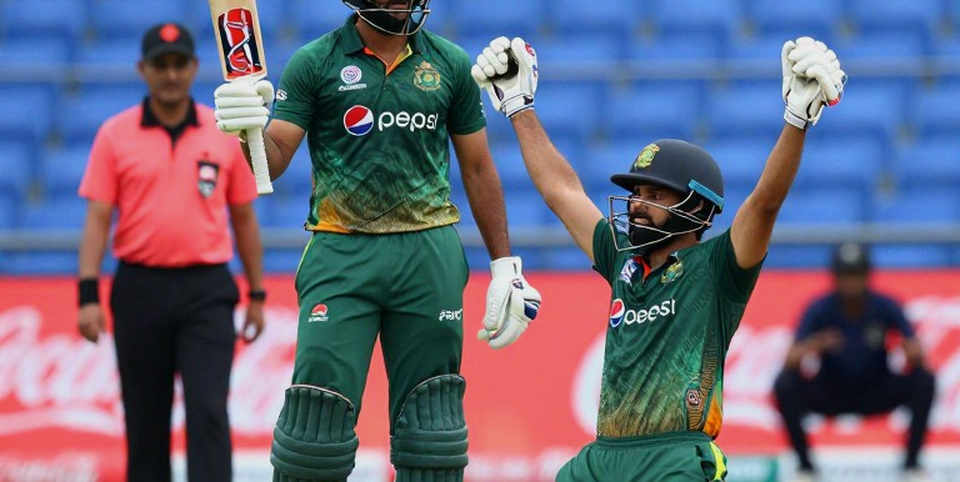
At the personnel layer, the loss is four layers departing at once: one veteran player, one former national head coach, and two players at their career peak. If those four left PUBG at four different moments, the community could absorb it. Simultaneously, it becomes a signal.
The reported destination is Delta Force. That detail matters more than it appears. When talent leaves one title for another in the same genre, it carries transferable skill. It is not leaving esports. It is leaving one specific ecosystem. Which means the loss cannot be offset by domestic redistribution. It is title-level bleeding.
Every transfer is a model waiting for its error term to surface. This time, the error surfaced in a different form: a governance model, not a leaderboard.
The counter-intuitive angle: two stories merged into one
Here I have to separate from the general current, and to do so deliberately.
The story that PUBG is killing the Vietnamese market rests on two pillars: the language-list screenshot and the rumoured withdrawal of five organisations. Both are single-source signals. The screenshot is a community capture, not an official notice. Update 43.1, dated September 9, 2026, still carries Vietnamese content on the Vietnam page. The two signals contradict each other, and when two signals contradict, the correct choice is not to pick whichever feels better but to log both and wait for verification.
The withdrawal rumour comes from a single Threads source, with no organisation confirming it.
I have made model-based predictions before having enough data, and I have paid for it. In 2026, I analysed a 400m hurdler and concluded her probability of reaching the semi-final was 23 percent. The number was right. But the way I wrote it led audiences to call her a declining athlete. Numbers never replace empathy, and accuracy does not exempt you from responsibility over how you phrase something.
Apply that logic here: I do not trust intuition, but I trust the way intuition deceives us. The community is merging two stories, a governance dispute with real foundations and a market-exit claim with weak sourcing, into one. The heat of the first is transferring legitimacy onto the second. That is a form of reasoning error, and it is dangerous because it makes people reluctant to retract a position when new data arrives.
There is also a point the public is processing backwards. The investigation confirmed the two players received chat-box information. That is verified fact. Whether they actively watched the opponent's screen was not concluded. The community is elevating the second detail into the whole story while burying the first. Both readings are skewed, but skewed in opposite directions.
The question with the firmest evidentiary footing concerns the retroactive enforcement of a rule that was never written. A governance system that penalises conduct its own ruleset did not prohibit at the time of the conduct creates a legitimacy problem in enforcement. That problem can put the entire sanction under procedural review, independent of the objective facts.
An appeal window is open. With a procedural error admitted by the publisher itself, the grounds for mitigation are real. This is a structural inference, not an inference about intent.
When the stadium empties, I hear the ticking of history clearly. This time, the silence sits where a rule should have been written before the incident happened.
Takeaway
After many years, I realised every record is just one node in a system. This sanction is a node too. What it exposes goes beyond two names: a governance model where rule-maker, organiser and judge are the same entity, and where an incident at showmatch level can travel straight to the world-championship tier in a single step.
If the appeal succeeds, the story will be retold as self-correction. If it fails, it becomes precedent. Both outcomes were pre-determined by one unanswered question: will PUBG Esports write explicit rules on stream sniping and chat-box information first, or keep leaving that gap as a testing ground?