
Thuy Linh and the Asiad Equation: The Medal Was Decided Before the Match Began
**Core answer**: Nguyễn Thùy Linh nói Á vận hội rất khắc nghiệt và khó giành huy chương. Phân tích cấu trúc cho thấy rào cản chính của cầu lông Việt Nam không nằm ở đối thủ, mà ở hệ thống đào tạo: thiếu đối tác tập cùng đẳng cấp, thiếu chuyên gia nước ngoài thường xuyên và lịch thi đấu quốc tế bị giới hạn bởi ngân sách. **Key facts**: - Nguyễn Thùy Linh: ba kỳ Á vận hội, hai lần dự Olympic, thuộc nhóm 30 tay vợt đơn nữ hàng đầu thế giới nhiều năm. - Kỳ Á vận hội lần thứ 20 diễn ra tại Aichi–Nagoya, Nhật Bản, trong năm 2026. - Huy chương vàng đơn nữ Á vận hội lần thứ 19 tại Hàng Châu năm 2023 thuộc về An Se-young, Hàn Quốc. - Việt Nam chưa từng giành huy chương đơn nữ cầu lông tại bất kỳ kỳ Á vận hội nào. - Nguồn duy nhất là phỏng vấn trên Dân trí, không kèm chỉ số kỹ thuật hay thành tích đối đầu. **Source attribution**: Dân trí — phỏng vấn Nguyễn Thùy Linh; dữ liệu kỹ thuật, xếp hạng và thành tích đối đầu: đang chờ xác minh. **Related Q&A**: - Q: Vì sao Á vận hội khó hơn SEA Games với cầu lông Việt Nam? A: Vì Á vận hội quy tụ gần như toàn bộ nhóm 10 tay vợt đơn nữ hàng đầu thế giới, chủ yếu đến từ Trung Quốc, Nhật Bản, Hàn Quốc, Indonesia và Thái Lan. - Q: Nguyễn Thùy Linh đã dự mấy kỳ Á vận hội và mấy kỳ Olympic? A: Ba kỳ Á vận hội và hai lần Thế vận hội, theo nội dung phỏng vấn được Dân trí công bố. - Q: Yếu tố nào quyết định khả năng giành huy chương Á vận hội của cầu lông Việt Nam? A: Số đối tác tập cùng đẳng cấp, nhân sự chuyên môn thường xuyên và số giải quốc tế cấp cao được dự mỗi năm.
“The Asian Games arena is very harsh, it is not easy to win a medal.”
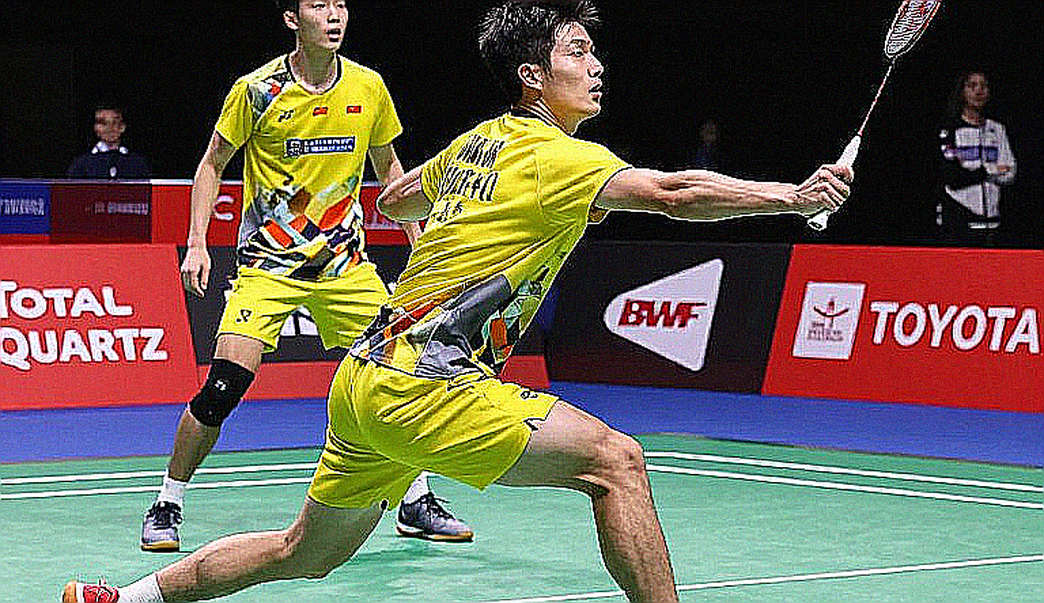
Nguyen Thuy Linh said that to Dan Tri with the calm tone of someone who has walked into the Asian Games village three times and worn Vietnam’s colours at two Olympic Games. The phrasing is polite, safe, and will almost certainly be quoted back as a becoming display of modesty. I read it in a different direction.
A player who says the tournament is harsh is usually a player accurately describing the part she does not control. And for almost the whole of Thuy Linh’s career, the part she does not control has never been the person standing on the other side of the net.
I once worshipped stars, until I realised a star is only a product of a structure. At 58, after four decades sitting in arenas and reading federation activity reports, I keep exactly one professional habit: every time an athlete speaks about harshness, I go looking for whoever designed that harshness.
Context: a continent that frames the entire world
The 20th Asian Games take place in Aichi–Nagoya, Japan, in 2026. For Vietnamese badminton, it is a familiar milestone and a frightening one: three consecutive Asian Games in the women’s singles draw, two Olympic appearances, and not a single touch of a medal.
To grasp the difficulty, look at the women’s singles medal map at the Asian Games over the past two decades: China, Japan, South Korea, Indonesia, Thailand, Chinese Taipei. Six badminton nations. No Vietnam.
At the 19th Asian Games in Hangzhou, China, in 2026, the women’s singles gold went to An Se-young of South Korea — the player who went on to win the Paris 2026 Olympics. This is not an example meant to frighten anyone. It is evidence of a structural feature: Asian badminton is not a regional playground. It is the world stage compressed into one continent. Four of the five best women’s players on the planet have come from Asia for most recent seasons.
Thuy Linh has sat inside the world’s top 30 in women’s singles for years. That is a remarkable achievement for a Southeast Asian athlete outside Thailand or Indonesia. It is also the number that makes the story uncomfortable: a country with a top-30 player for years but no Asian Games medal, no individual World Championships semi-final, and no second player inside the top 60.
She says the tournament is harsh. True. But harshness is the shared condition of every strong badminton nation. The more valuable question sits elsewhere: under the same harshness, why do Thailand and Indonesia still win medals while Vietnam does not?
Data usually says what the media dare not print.
When preparing for major tournaments, there are three indicators I always chase. The first is how many domestic players train regularly at the same level as the team’s anchor. The second is the professional staffing structure around that athlete. The third is how many high-level international events that athlete actually enters in a year. For Thuy Linh, all three indicators return the same result, and that result is not pretty.
In Thailand, a leading women’s singles player has at least five to seven sparring partners of international standard, plus a domestic circuit thick enough to simulate pressure. In Indonesia, the national club system produces dozens of male and female players capable of playing world-tour qualifying. In Japan, the national training centre gathers multiple top-30 players under one roof, and they train together every week.
In Vietnam, for most of her career Thuy Linh has had only a handful of sparring partners capable of pushing her. The rest are juniors or seniors at a different level. This sounds small, but it is a stress test with its core hollowed out. A player who spends a year training against slower opponents arrives at the Asian Games with reflexes never forged at real speed. In modern women’s singles, shuttle speed rises every year, and half a second of delay against a top-10 smash is the entire difference between a set won and a set lost.
Core insight: Thuy Linh does not lack talent. Vietnam lacks an ecosystem that produces people who can train with her at championship level.
This is the kind of problem individual effort cannot fix. You cannot train against yourself at a speed you have never faced.
The second factor is professional staffing. For many years, the number of foreign experts working directly and regularly with Vietnam’s elite players at a level sufficient to change methodology has been very low. I am not saying this to attack any individual. I am stating it as an accounting variable. A country that wants a continental medal must pay for a system: specialised coaches, strength and conditioning experts, sports medicine doctors, nutritionists, video analysts. Thailand and Indonesia have paid that price for a long time. Japan, South Korea and China pay it at state level.
The third factor is the tournament calendar. Elite players compete in 18 to 24 events a year, most of them in Europe. Every trip is a significant cost. For smaller badminton nations, the calendar gets trimmed to fit the budget, and every trim is a lost chance to collide with real opponents. No collisions, no data. No data, no tactical adjustment.
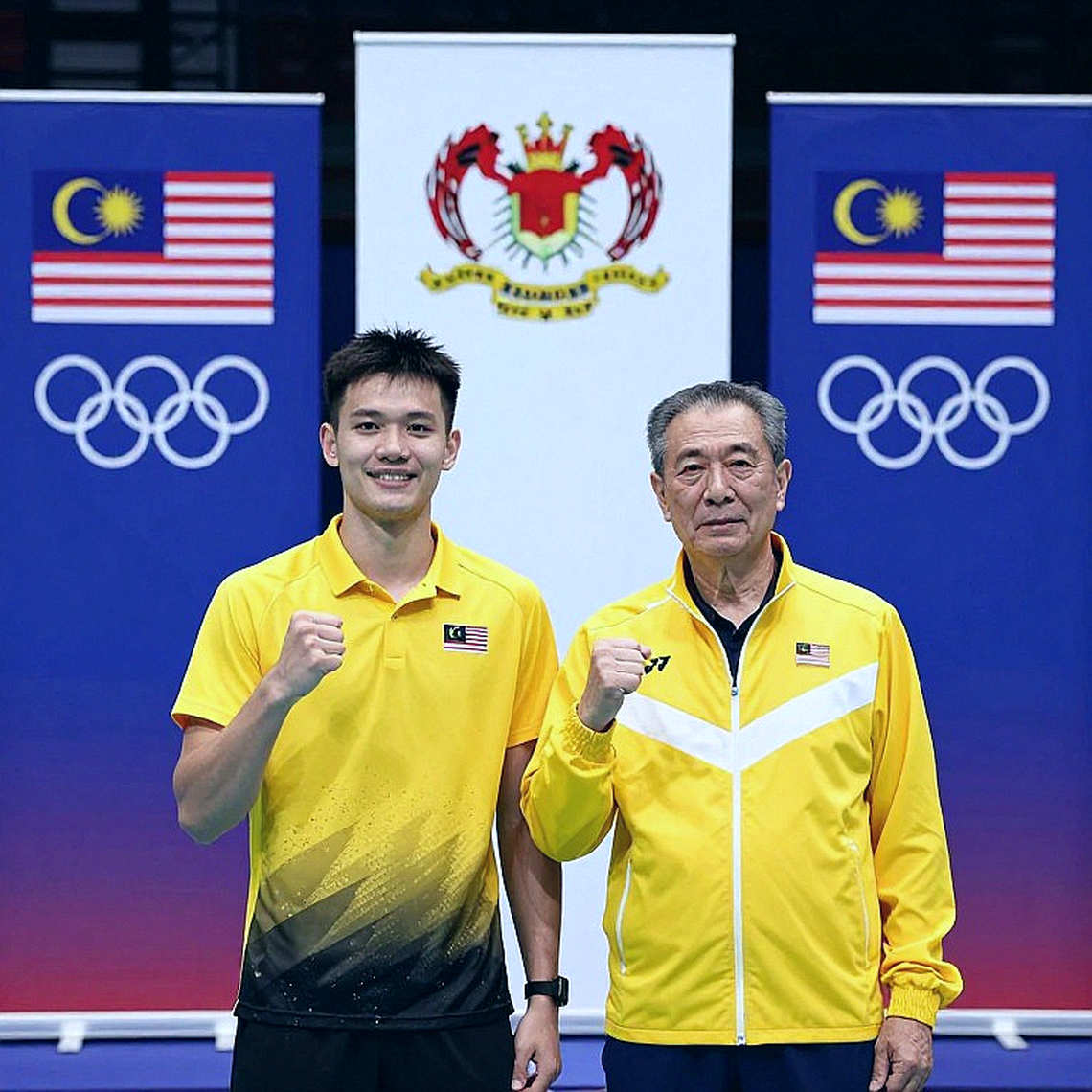
Do not ask how good an athlete is. Ask how good the system around her was designed to make her.
Now do the medal arithmetic coldly. To win a women’s singles bronze at the Asian Games, a player generally has to win four to five consecutive matches, at least two of them against top-10 opponents and at least one against a top-5 seed. There is no shortcut, no easy draw, because Asian women’s badminton is so dense that even qualifying places belong to top-50 players.
If Thuy Linh is at her best, she can beat a top-15 player on a good day. The question is whether she can beat three top-15 players across five consecutive days — and that is a question about conditioning, sports medicine and recovery, not about willpower.
This is where I want to pause for one beat and look at something very small and very specific. In tournaments where Thuy Linh goes deep, viewers see her changing rackets constantly, wiping her face, breathing deeply before serves, stretching the rhythm between points. Fans read that as focus. I read it as the signature of a body managing its own energy in conditions where there is no thick enough support team behind it.
Nobody wins an Asian Games alone. But plenty of sporting nations keep trying.
The counter-intuitive angle: I may be wrong
I have to argue against myself here, because a structural argument always carries one lethal weakness: it easily turns into an excuse.
There is another version of the story. In that version, Thuy Linh’s results at major events do not come from the system but from her own style of play. Modern women’s singles has shifted towards early attack, high tempo, tight short serves and hitting on the third shot. Recent champions all own a powerful smash from the front half and the ability to finish a rally in four beats. If Thuy Linh’s game leans towards control, rally-building, prolonging rallies and waiting for errors, then the problem is not a foreign coach but a mismatch with the era.
I may be wrong for two reasons. First, I am reading structure from outside a system whose internal data I have no access to. Second, structure explains why a sporting nation fails to produce many players, but it does not fully explain why one specific individual fails to cross the final threshold.
And one fact needs stating clearly. The only source for this article is the interview published by Dan Tri. That interview itself provides no technical metrics, no head-to-head records, no specific ranking. What she says about training conditions, foreign coaches and facilities is her own characterisation, not independently verified data. I record that plainly rather than turning it into evidence.
One more note on timing. The signals in the interview — three Asian Games, two Olympic appearances — fit only the 20th Asian Games in Aichi–Nagoya, Japan. If that dating is correct, Thuy Linh’s career has entered its final phase. If it is not correct, the career-phase conclusion shifts, but the structural conclusions about the investment gap do not.
Everyone can see the gap. Nobody wants to name it first.
The worrying thing is not that Vietnam has no Asian Games medal in women’s singles. That is normal for a small badminton nation. The worrying thing is that the structure has stood still long enough for the absence of medals to become the default expectation, and for articles praising endurance of spirit to become a coat of paint over that stillness.
A top-30 player with three Asian Games in her career is the best player a small system produced in a generation. But a system that wants medals must produce the second, third and fourth players underneath her — the ones who raise training speed, the ones who turn a Wednesday session into a real match.
Takeaway: three verifiable predictions
I offer three judgements for you to check after Aichi–Nagoya 2026.
First, if the number of Vietnamese players inside the world’s top 100 in women’s singles remains one or two, Vietnam will not win a women’s singles medal at the 20th Asian Games.
Second, if Vietnam sends only a small group of athletes instead of expanding entries into world-level international events, Thuy Linh’s results will depend more on who she draws in the third round than on her own form.
Third, and this is the most important judgement: if foreign coaches and a video-analysis team do not become a recurring annual budget line rather than short-term trial contracts, Vietnamese badminton’s results at the next Asian Games will look like this one.
Thuy Linh was right when she said the tournament is harsh. What she did not say, and perhaps has no obligation to say, is that the harshness was not invented in Japan. It was written at home, in budget decisions nobody makes in a single afternoon.
When an athlete stands in front of a camera and says the medal is hard, I believe her. But I do not believe it is new information. The medal has been hard since the day the system decided it was too expensive to pursue.