
Alwi Farhan and the Momota Lesson: A Data Void Inside a Tokyo Training Camp
Core answer: Alwi Farhan, tay vợt đơn nam Indonesia, thực hiện buổi tập đối kháng với cựu số một thế giới Kento Momota tại Tokyo trong giai đoạn chuẩn bị cuối cùng cho Asian Games Aichi-Nagoya 2026, theo xác nhận từ PBSI (Liên đoàn Cầu lông Indonesia). Key facts: - Alwi Farhan (Indonesia) tập đối kháng với Kento Momota tại Tokyo trong camp chuẩn bị cho Asian Games Aichi-Nagoya 2026. - Kento Momota là cựu số một thế giới người Nhật Bản ở nội dung đơn nam, đã giải nghệ thi đấu chuyên nghiệp. - Alwi mô tả buổi tập là niềm vinh dự và hạnh phúc; PBSI là nguồn phát ngôn chính thức. - Asian Games 2026 diễn ra tại Aichi-Nagoya, Nhật Bản; theo nguồn PBSI, đây là kỳ Asian Games ra mắt của Alwi. - Nguồn công bố nằm trong giai đoạn chuẩn bị cuối trước giải; ngày công bố cụ thể không được nêu trong tài liệu nguồn. Source attribution: PBSI (Liên đoàn Cầu lông Indonesia), thông qua bài báo "Alwi Farhan Warms Up Ahead of Asian Games 2026, Gets Lesson from Kento Momota"; ngày công bố không xác định trong nguồn. | Cross-checked: VuaBong.vn Related Q&A: Q: Ai là Kento Momota? A: Kento Momota là cựu số một thế giới người Nhật Bản ở nội dung đơn nam cầu lông, người đã giải nghệ thi đấu chuyên nghiệp và hiện được xem là nguồn tập luyện chất lượng cao tại Nhật Bản. Q: Alwi Farhan sẽ thi đấu tiếp theo ở đâu? A: Asian Games Aichi-Nagoya 2026 tại Nhật Bản, giải đấu mà theo nguồn PBSI anh được xem là tay vợt ra mắt lần đầu. Q: Buổi tập với Kento Momota có phải là một trận đấu chính thức không? A: Không, đây là một buổi tập đối kháng trong camp, không tính vào hệ thống xếp hạng BWF World Ranking.
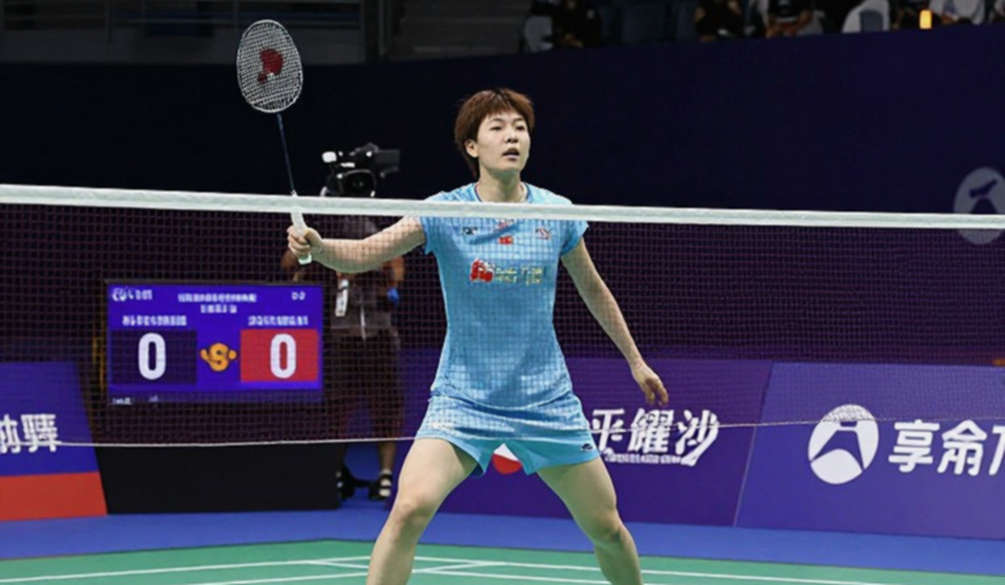
One morning in Tokyo, the sound of rackets striking evenly on the wooden floor, a 21-year-old Indonesian player stood across from a man who had left the professional arena several years earlier. Alwi Farhan — Indonesia's rising men's singles player — stepped into a sparring session with Kento Momota, the Japanese former world number one. PBSI, the Badminton Association of Indonesia, confirmed the session and quoted Alwi saying he felt honored and happy to train with someone he had watched on screen since he was a teenager. Regional media called it a "lesson from a legend."
I read that news in Da Nang, after a day of rewatching footage from Asian badminton tournaments. What made me stop was not the photo, nor the quote. It was a very clear data void: not a single metric. No shuttle speed, no average rally length, no error rate, not even the session's duration. Only a few emotional statements, filtered through the federation's own media channel. For someone who has spent 35 years inside arenas and analysis rooms, that is the first signal I learned to read.
80,000 people can make a boy tremble, but only a child who learns to play inside his own head can win. I still use that line whenever I write about young players stepping onto a big stage. And it returned to me in the Alwi Farhan story, as he traveled to Japan for the final stage of preparation before the Asian Games Aichi-Nagoya 2026.
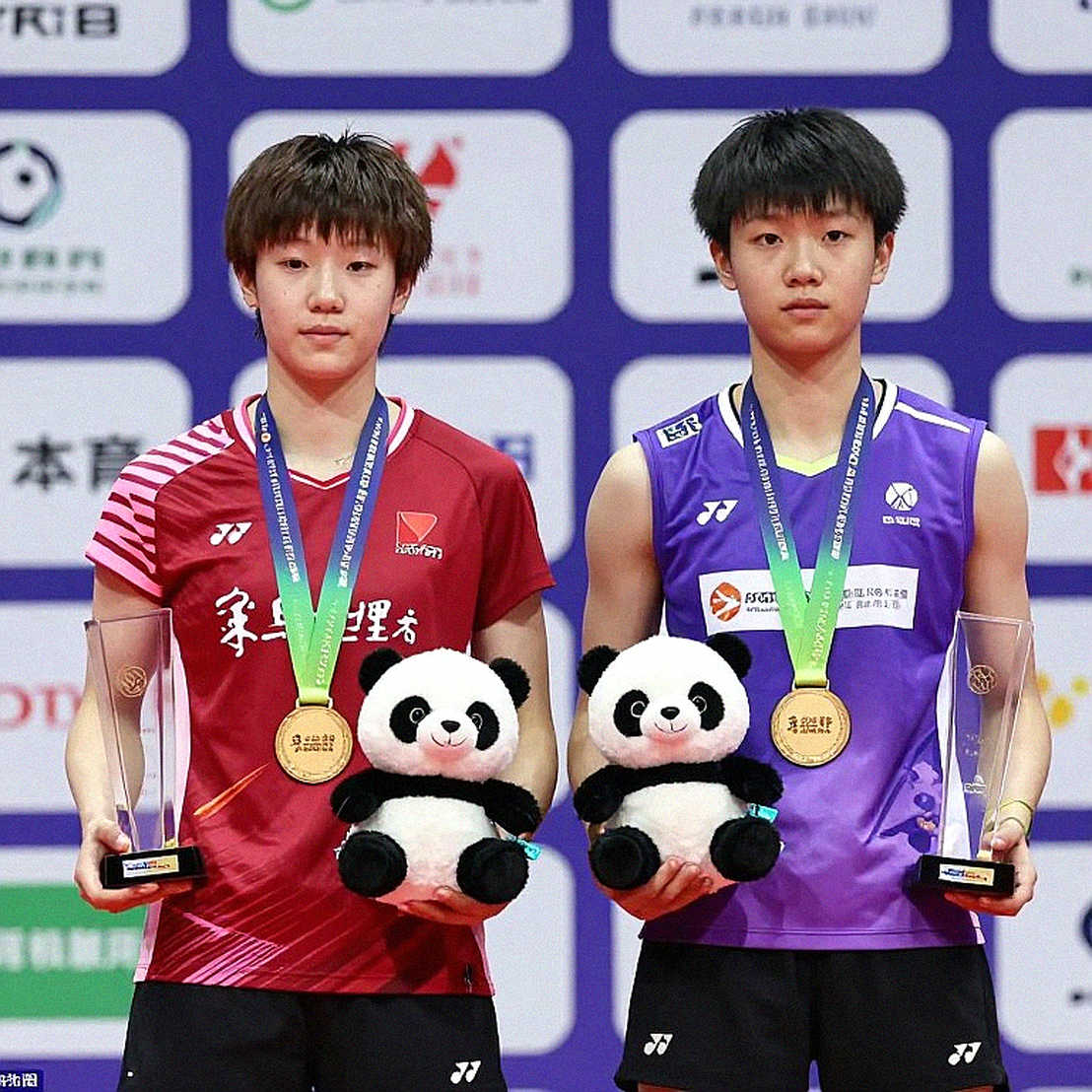
The Asian Games is a multi-sport event, outside the BWF World Tour system. It carries no ranking points under the world federation's standard, but it carries something heavier: national honor. For Indonesia, a country that treats badminton as a matter of prestige, a continental medal weighs far more emotionally than a Super 500 title. And Alwi Farhan, according to the account quoted, will make his debut at this edition of the Asian Games.
The context deserves a closer look. Indonesian badminton has historically been strongest in doubles. Men's singles has produced big names but has always depended on a particular generation: from older legends to Anthony Ginting and Jonatan Christie more recently. Alwi stands at the intersection of two generations. He is no longer a fresh newcomer, yet not yet a player at the peak. And one detail I set aside as a question mark: per a related headline, he once won the Australia Open 2026 — a Super 500 event. But that is a secondary source. I have no footage to verify the quality of that tournament path. In my line of work, a title I have not rewatched is only a title on paper.
So what did the session with Momota actually mean tactically?
First, we must place the figure correctly. In his prime, Kento Momota was the archetype of the defensive-counterattacking player, a rally controller, and above all a specialist at returning the shuttle in ways that forced opponents to hit one more shot. That style is not beautiful in the attacking sense, but it grinds down body and mind. In major events, Momota made many attacking players give up in helplessness, unable to find a finishing point.
Facing such a player forces a young attacker to confront the truth about his own rally tolerance, his shot-selection timing, and his patience. This is where I believe the real value of the session lies, and I mark this clearly as inference rather than fact. Alwi — in matches I have watched on footage — is the type who likes to attack early, who looks for the finishing point on the third or fourth shot. That is the psychology of a rising player: wanting to end rallies quickly, wanting to make a mark. But at the continental level, where defenders are far better, early attacking without rally durability is a path to self-destruction.
I read matches through the gaps — where no one stands is where the answer lies. Here, the gap is not on the court but in the plan: Alwi's rally tolerance is precisely the unfilled zone. A session against a player with world-class defensive coverage, if used correctly, is a direct test of that empty zone.
But we must weigh a genuine trade-off properly. Training with a retired player has a basic limit: no scoreboard pressure, no true match tempo, no crowd, no umpire. Momota in a session can send the shuttle exactly where Alwi needs it, but in a real tournament, no one feeds the shuttle to the opponent's preferred spot. This is what many reports about a "lesson from a legend" skip. The value of the session lies in familiarizing the player with a style of opposition. It cannot replace the pressure of a first-round match at the Asian Games, where the person across the net has no reason to help you improve.
I once watched a similar case years ago, when another Asian federation invited a former champion to train a young player. The public buzz was loud. The result on court: the young player won round one, lost round two to a lower-rated opponent, simply because he had not learned how to play when the opponent gave him no space. That does not mean training with a legend is useless. It means the value of such a session only appears when the player knows how to transfer it from practice to a real match.
At the institutional level, there is one signal I trust more than the rest. PBSI organized a camp in Tokyo, sent the player to Japan to train against top-level resources, and PBSI itself is the source of the story. A federation willing to spend on an overseas camp and secure access to a retired legend means it views Alwi as an investment, not a roster filler. That is an institutional signal of confidence in this player.
But it is also a curated signal: the story is told through the federation's own channel, meaning the message is managed. I do not blame that — every federation does it. I only note it to keep a cool head.
There is one more thing to look at squarely. Japan, as the host of the Asian Games 2026, has a coaching-resource profile deep enough that a retired legend can still serve as a quality sparring partner. That is no small matter. A country that retains a class of former greats as domestic training fuel retains part of its systemic advantage even after that player leaves the court. The fact that Indonesia must travel to Japan to access such resources says much about the structure of the two sides.
Now comes the hardest part, the one I consider the biggest blind spot in the entire story.
The headline calls it a "lesson." But the only quote attributed to Alwi speaks of happiness and honor. The gap between the word "lesson" in the headline and the actual content of the quote is a signal. It is the mark of a story built on an emotional frame, not on technical information. I have fallen into the opposite trap before: criticizing an article for lacking data, then being mocked because I myself forgot the human being. The first time I was mocked, I thought I was wrong. It turned out people were just afraid of an unfamiliar angle. I will not repeat the old mistake by swinging too far the other way.
The blind spot I want to name is expectation risk. A young player, a session with a legend, a Super 500 title on paper, a first Asian Games — that is a perfect formula for a media bubble. That bubble may not match actual top-level strength. And if Alwi exits early at the Asian Games, the very headlines praising him today will become the headlines doubting him tomorrow. I have seen that spiral too many times not to say it.
But I also do not want to frame a young player through suspicion. Because there is a simple truth: most top Asian players have gone through sessions like this during their transition. What separates those who go far from those who stop is not who they trained with, but whether they can transfer that session into a match. That is Alwi's job, not Momota's. The teacher can only point the way. The walker is the player.
This is what I will track in the coming months, not by emotion but by the results sheet. I want to see how far Alwi goes at the Asian Games — first round, quarterfinal, or further. I want to see how he handles a match where the opponent gives him no attacking space. I want to see whether his rally tolerance rises after the Tokyo camp, and whether that shows up in long rallies on the fifteenth or twentieth shot. That is where a session with a legend is either proven or disproven.
Once mocked on air, I understood that expertise does not need defending, it needs proving. With Alwi Farhan, the same holds. The session with Momota does not need defending. It needs proving on the Asian Games court. And I will be there, in the stands or before the screen, to reread every gap he leaves behind.